BYD postpones European production until the end of 2026
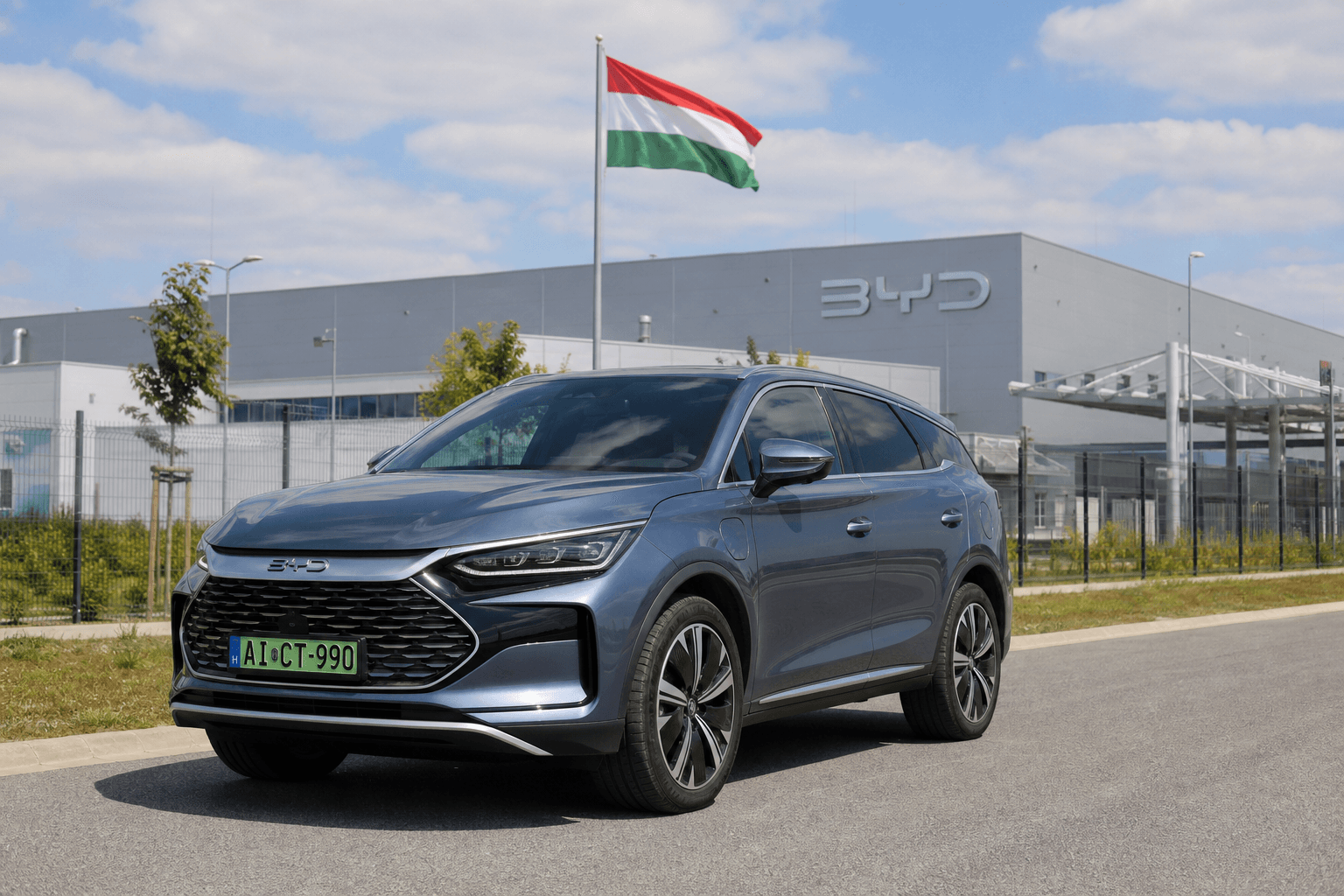
Under its current plans, BYD will not begin operations at its new plant in Szeged, Hungary, until November or December 2026. Production was originally scheduled to start in 2025. The timeline has therefore been pushed back by at least one year, while the facility has yet to be fully completed.
The timing is important for BYD. Manufacturing within the EU shortens delivery routes, makes it easier to adapt to European requirements, and can reduce reliance on imports from China. For fully electric cars, local production can also reduce exposure to the EU’s countervailing tariffs, provided the relevant conditions are met.
Hybrids are intended to establish BYD in Europe
During the first phase, the Hungarian plant is apparently expected to produce mainly hybrid models. This fits the manufacturer’s current strategy, as plug-in hybrids are easier to position in many European markets than high-priced electric cars. In Germany, BYD is already supporting this approach with substantial discounts on its plug-in hybrids.
However, the focus on hybrids does not mean abandoning electric cars. BYD instead sees electrified combustion-engine vehicles as a way to build brand awareness, its dealer network, and market share. In the long term, fully electrifying its European model range remains the central goal.
BYD is pursuing a two-stage plan in Europe: hybrids are intended to generate volume in the short term, while fully electric cars will form the core of the business over the long term.
Denza Z9 GT set to receive a lower entry point
Premium brand Denza will not initially produce vehicles in Hungary. Models such as the Z9 GT will continue to come from China. In Germany, the large electric shooting brake is currently offered with a 122 kWh battery, three electric motors, and a starting price of around €144,500.
Another version has been announced for September 2026. The wording used so far mainly points to a lower level of equipment. A smaller battery or a less powerful drivetrain configuration would also be conceivable, but neither has been confirmed to date.
| Feature | Current Denza Z9 GT | Announced version |
|---|---|---|
| Drivetrain | Three electric motors | Not yet confirmed |
| Battery | 122 kWh | Not yet confirmed |
| Equipment | Extensive standard equipment | Expected to be reduced |
| Price in Germany | From around €144,500 | Still unknown, but likely lower |
| Planned launch | Already available | September 2026 |
A more affordable version would be particularly relevant for Denza. In Germany’s premium market, the Z9 GT competes with established brands that have extensive service and sales networks. A smaller battery and less power could reduce the price without fundamentally compromising the practical benefits of the spacious grand tourer.
What the plans mean for Europe
BYD is therefore pursuing a clear dual strategy. Its core brand is intended to grow through locally produced high-volume models, while Denza will initially test the premium segment as an import brand. At the same time, the group is continuing to expand its range of flagship electric models with vehicles such as the Denza Z.
For buyers in the DACH region—Germany, Austria, and Switzerland—technology alone will not be decisive. Prices, delivery times, repair-shop coverage, and residual values will determine whether Denza can compete with established premium manufacturers. A more affordable Z9 GT would therefore be a sensible step, although firm details about its battery, power, and price are still unavailable.
Assessment
The delayed start of production in Hungary is slowing BYD’s European plans, but it does not fundamentally call them into question. The key issue is whether the plant can actually begin operations at the end of 2026 and quickly reach meaningful production volumes. For Denza, the announced Z9 GT version is likely to show how flexibly BYD can adapt its premium strategy to European price expectations.