2 Million Electric BMWs Since 2013, with Dingolfing Producing the “Milestone Vehicle”
BMW says it has reached a major milestone: 2 million all-electric vehicles have been delivered to customers worldwide since the first BMW i3 went on sale in late 2013. Including plug-in hybrids, the group has delivered around 3.5 million electrified BMW and Mini vehicles.
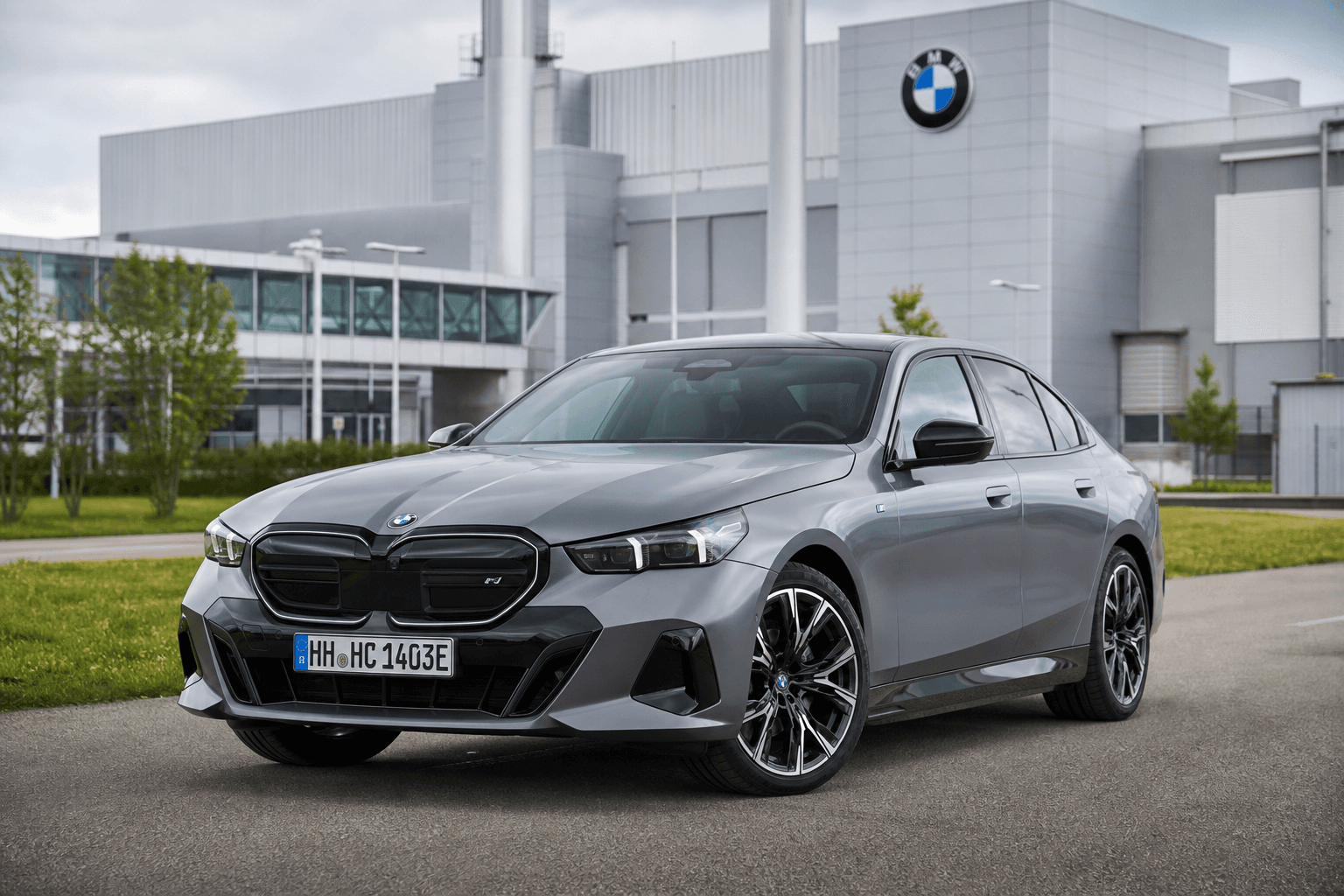
The two-millionth BEV is a BMW i5 M60 xDrive that rolled off the production line at the Dingolfing plant and was delivered to a customer in Spain. This also underscores the role of BMW’s German plants as the backbone of its electric-mobility ramp-up.
For concise specifications and context on the model range, see our page on the BMW 5 Series.
Neue Klasse as a Growth Driver, Especially for the iX3
More interesting than the round number itself is the momentum behind it. BMW largely attributes the current boost to the Neue Klasse, its new generation of EVs and vehicle architecture, which has visibly increased sales of all-electric models since its European market launch.
In the second quarter of 2026, BMW’s European BEV sales rose by 38% to 81,445 units, according to the company. Across the first half of 2026, all-electric vehicles accounted for around 28% of BMW’s total European sales.
Particularly striking is that, since the iX3’s world premiere, one in three all-electric BMW models ordered in Europe is said to have been an iX3. Within the X3 family, BEVs now reportedly account for one in two vehicles, showing how quickly an electric variant can become a major volume driver.
More information about the model is available on our BMW iX3 page.
What the Figures Mean in Everyday Use, and Why Europe Is Crucial
For BMW, a BEV share of nearly 30% in Europe is primarily a sign that production, delivery capacity and the model mix can now keep pace with demand. For customers, that is the real benefit: more available configurations, shorter waiting times and a wider choice of body styles and performance levels.
It is no coincidence that the milestone vehicle comes from Dingolfing. The plant has handled high production volumes and complex powertrain variants for years, and precisely this kind of scalability is needed to ensure that flagship electric models such as the i5 are not merely image builders but are produced in meaningful volumes.
Production Ramp-Up in Munich: The New i3 as the Second Neue Klasse Model
Alongside the milestone, BMW is also reporting production progress in Munich, where series production of the new BMW i3 recently began. It is considered the second Neue Klasse model line after the iX3. According to BMW, demand for the compact model was already high shortly after the early opening of the order books, resulting in a correspondingly steep production ramp-up.
Ultimately, the simultaneous ramp-up at two plants shows how BMW is planning for the coming quarters: not with a single “halo car,” but with a family of models intended to deliver significant volumes. Other manufacturers are pursuing similar architectural changes, making our comparison of 800V vs. 400V EV architectures particularly relevant, as the platform and charging setup ultimately help determine how convincing a new model is in everyday use.
BMW’s EV Strategy in Figures: A Concise Overview
| Metric | BMW Figure | Context |
|---|---|---|
| All-electric vehicles delivered since 2013 | 2,000,000 | Milestone since the i3 launch, demonstrating scale across multiple model lines |
| Electrified vehicles including plug-in hybrids | around 3,500,000 | PHEVs remain a transitional technology but continue to contribute sales volume |
| European BEV sales, Q2 2026 | 81,445 (+38%) | According to BMW, growth correlates with greater iX3 availability |
| BEV share of European sales, H1 2026 | around 28% | A high proportion for a premium manufacturer, provided the supply chain remains stable |
| Two-millionth BEV | i5 M60 xDrive from Dingolfing | Symbolic, but also an indication of Germany’s manufacturing expertise |
For BMW, 2 million electric vehicles delivered is above all evidence that the Neue Klasse is not merely a promise of new technology, but is now measurably boosting sales in Europe.