BYD Yangwang U7 endurance test: 30,000 km, heat and 350+ fast-charging sessions
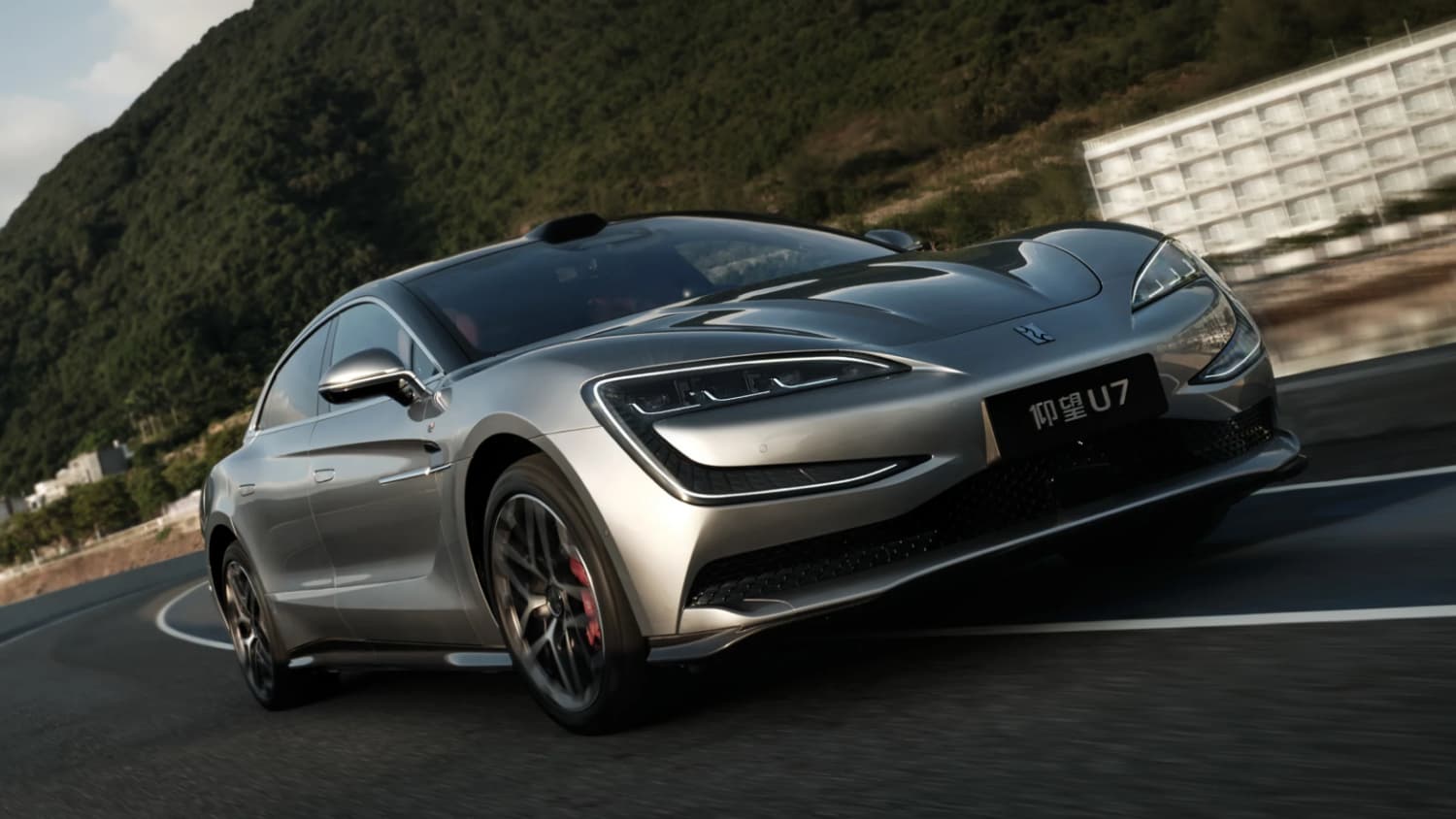
BYD’s premium subsidiary Yangwang reports that the all-electric Yangwang U7 (2026 model year) completed a 30,000-km endurance test in 8 days, 19 hours and 58 minutes. The test took place in Nanning in southern China, under conditions that were anything but easy on thermal management and charging performance.
According to the manufacturer, the traction battery’s capacity retention afterward was 98.7%. That corresponds to a decline of 1.3% after 30,000 km and more than 350 fast-charging sessions within a very short period.
What exactly is BYD claiming, and why is it relevant?
According to Yangwang, the test vehicle was a production car that was randomly selected from retail inventory. Importantly, this is a manufacturer claim, not an independent assessment. At the same time, Yangwang says it explicitly invites independent institutions and individuals to verify the results.
The U7 is Yangwang’s first model with the Blade Battery 2.0. Battery aging is a key issue, particularly at high charging rates and with frequent fast-charging cycles, because high C-rates and heat are typical stress factors. If a battery can handle that well, it provides a genuine real-world benefit, as fast charging is then less likely to be perceived as a trade-off that accelerates wear.
Test conditions: high speed, air conditioning and high humidity
Yangwang says the test was conducted at an average outside temperature of more than 36°C and relative humidity of up to 80%. The U7 is also said to have maintained a continuous cruising speed of 240 km/h, while the air conditioning ran continuously at 24°C.
These are extreme conditions that drivers in Germany, Austria and Switzerland—the DACH region—rarely encounter in precisely this form. However, they are interesting as a stress test because they place constant demands on the battery and cooling system.
350+ “Flash” charging sessions in nine days: What can be inferred
The number of charging sessions is strikingly high. Above all, it shows that the test program was designed to maximize stress: move a great deal of energy through the battery, recharge frequently and continue driving. This exact pattern is considered a worst-case scenario for cell chemistry and battery-pack temperature.
For everyday use in Germany, Austria and Switzerland, the implications are more indirect: Drivers who regularly cover long distances or frequently use DC charging want to know whether modern LFP approaches and new battery-pack generations can deliver high charging performance reliably over the long term. BYD is currently pushing this topic hard, including extremely short charging windows for newer LFP concepts. If that interests you, take a look at our article on the BYD Seal 06 with nine-minute charging.
Why China is tightening its 30,000-km tests, and what that means for Europe
The timing is no coincidence: China is raising the bar for reliability testing. From January 1, 2027, new rules are expected to require vehicles to undergo more extensive reliability verification for approval and market access, including tests covering at least 30,000 km. Further revisions to the standards were also discussed during the summer, intended to define these requirements more clearly and strictly for “New Energy Vehicles” as well, a Chinese regulatory category covering BEVs, plug-in hybrids and fuel-cell vehicles.
For European buyers, this is particularly interesting because China is creating highly formalized pressure on manufacturers to document durability and quality more comprehensively. This could indirectly accelerate the maturity of Chinese EVs that are also likely to become more prevalent in Europe.
Assessment: 98.7% remaining capacity sounds good, but what questions remain?
A single manufacturer test does not yet provide long-term proof of everyday performance over several years. Battery health is influenced by factors including the charging window, calendar aging, temperature profiles over a period of months and software strategies used during fast charging.
Nevertheless, the figure is an interesting signal: It is intended to show that modern battery and charging architectures are not only fast, but also remain robust. If you want a general overview of which cars are currently setting the benchmark for range and efficiency, our 2026 range ranking is also worth a look.
What should always be considered with claims like these
- Measurement method: Capacity retention can vary depending on the definition and test protocol.
- Test period: Nine days constitute a stress test, but they cannot replace long-term use over several years.
- Applicability: Extreme conditions do not correspond exactly to everyday driving, but they are useful for stress validation.
Yangwang as a luxury brand: low volumes, extensive technology showcase
Yangwang is BYD’s showcase for its top-end technology. Accordingly, sales figures are reportedly in the low four digits annually and more likely in the hundreds each month. Above all, the U7 is intended to demonstrate BYD’s technical capabilities, much as Tesla built considerable confidence in its platform with its early performance models and technology flagships.
Yangwang is not currently a high-volume proposition in Europe. More relevant is how technology from programs like these filters down into BYD’s mainstream models, including battery design, thermal management and charging performance. Anyone who wants to see how broad BYD’s current lineup is can find data and key specifications for the BYD Seal in our model database.