Xiaomi’s EV business is growing, but profitability remains elusive
Xiaomi generated revenue of 24.9 billion yuan, equivalent to around €3.0 billion, from its “Smart EV, AI and Other New Initiatives” segment in the second quarter of 2026. That represents an increase of 17.1% from the same quarter last year and 25.3% from Q1 2026. The vehicle business continues to account for the lion’s share.
However, the segment remains in the red overall: Its operating loss was 2.6 billion yuan (around €315 million). That is an improvement on the 3.1 billion yuan loss recorded in Q1 2026, but it marks the second consecutive quarter in the red.
Important context: Cars, AI and “new initiatives” are reported together
Xiaomi does not report its automotive business as a standalone division, instead grouping it with AI and other initiatives. Although 23.9 billion yuan of the segment’s revenue came directly from electric vehicles, this structure means that operating performance figures and the gross margin cannot be attributed solely to vehicle sales. Rising AI costs, including computing power, model training and personnel, can put additional pressure on the segment’s figures.
Gross margin falls to 19.2% as product mix and component prices weigh
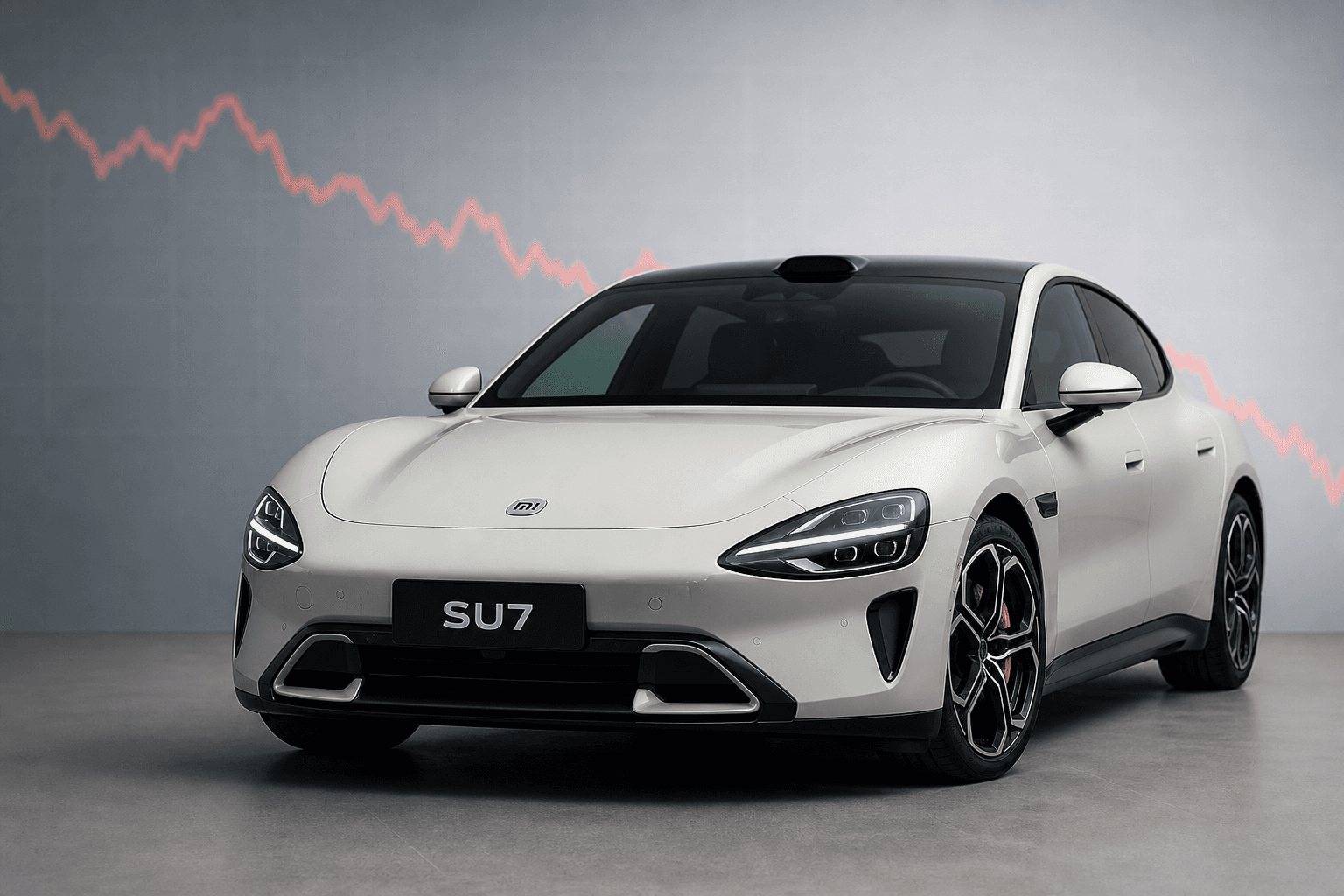
Alongside the loss, the margin also came under pressure. The segment’s gross margin fell to 19.2%, from 20.1% in Q1 2026 and 26.4% in the same quarter last year. Xiaomi primarily attributes this to two factors: a lower share of the high-priced SU7 Ultra in its sales mix and higher prices for key components.
Operating expenses within the segment also rose by 25.7% to 7.4 billion yuan. This is not unusual at a stage when manufacturers are simultaneously scaling up, preparing new variants and expanding their software and AI capabilities, but it makes the path to profitability steeper.
104,199 deliveries in Q2 as average selling price declines
In terms of volume, Xiaomi delivered strong results: Between April and June, it delivered 104,199 electric vehicles. That was 28.2% more than in the same period last year and almost 29% more than in Q1 2026, when it delivered 80,856 units.
At the same time, the average selling price fell to 229,312 yuan (around €27,700), down 9.6% year over year. The lower share of Ultra models also played a role here: Selling more base and high-volume variants drives growth, but tends to weigh on margins and average revenue per vehicle.
SU7 remains the driving force, with scaling the next challenge
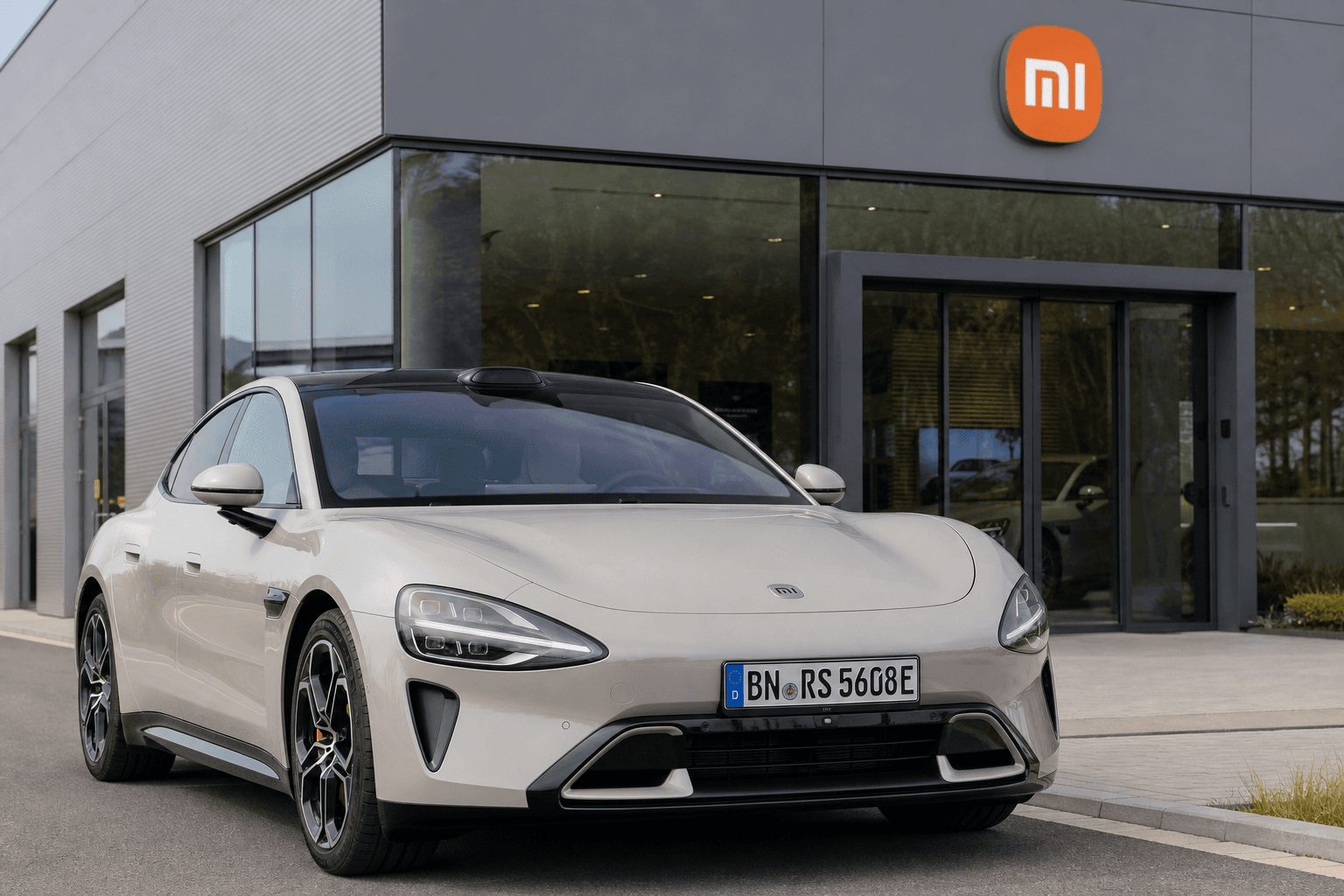
The SU7 remains the main pillar of Xiaomi’s young automotive business. Xiaomi reported that it had delivered more than 500,000 vehicles from the model line as of August 17. In the first half of 2026, the SU7 was also China’s best-selling all-electric sedan priced above 200,000 yuan.
For buyers, the message is clear: The product and demand appear to be well matched. For Xiaomi as a manufacturer, the key question now is whether production, the supply chain and the cost curve can move quickly enough toward profitable volume. This is often where early momentum gives way to a sustainable business—or fails to do so—for new EV brands.
Annual target of 550,000: The math is getting challenging
Xiaomi is targeting 550,000 vehicle deliveries in 2026. According to Chinese industry data, it delivered 216,322 units from January through July. July deliveries totaled 31,267 vehicles, around 10% fewer than in June.
To still reach its annual target, Xiaomi would need to deliver an average of around 66,700 vehicles per month over the remaining five months. That would be more than double the July figure. It will only be possible if capacity continues to ramp up, demand remains stable and delivery logistics scale smoothly.
Investment remains high as Xiaomi continues its expansion
Xiaomi also continues to invest heavily. Of the group’s total capital expenditure of 3.6 billion yuan, 2.4 billion yuan went to the electric vehicle and AI segment in the second quarter. Group-wide R&D spending also rose by 18.9% to 9.2 billion yuan.
This is typical of a phase in which a manufacturer must support not just a single model, but an entire product and software pipeline. How quickly this translates into better margins will depend heavily on volumes, purchasing costs, the mix of variants and the pace at which new, higher-margin models are launched.
Analysis: Early losses are normal for new EV players, but margins are key
A young automotive business posting losses during the scaling phase is not an anomaly, but rather the norm. The trend is what matters: Xiaomi is reducing its operating loss, but its gross margin is falling at the same time. That is a warning sign because it shows that current growth is being driven more by volume and pricing than by earnings power.
The key question will therefore be whether Xiaomi can improve its margin through higher capacity utilization, better component purchasing and a stronger sales mix, including more top-end variants and software upselling. For a comparison of how strongly range and positioning shape the market, see our 2026 range ranking and our coverage of developments in Chinese battery chemistries in the Chinese battery market.
Why this also matters for Europe
Although Xiaomi is currently clearly focused on China, its example shows just how fierce competition has become in the mass-market EV sector. Selling large numbers of vehicles does not automatically make a company profitable, especially when pricing pressure is rising and development budgets for software and AI are soaring. For European buyers, this is likely to mean more choice and increasingly aggressive pricing in the medium term, but it also raises the question of which brands can truly turn scale into stable margins.