Xiaomi prepares to launch its electric cars in Europe
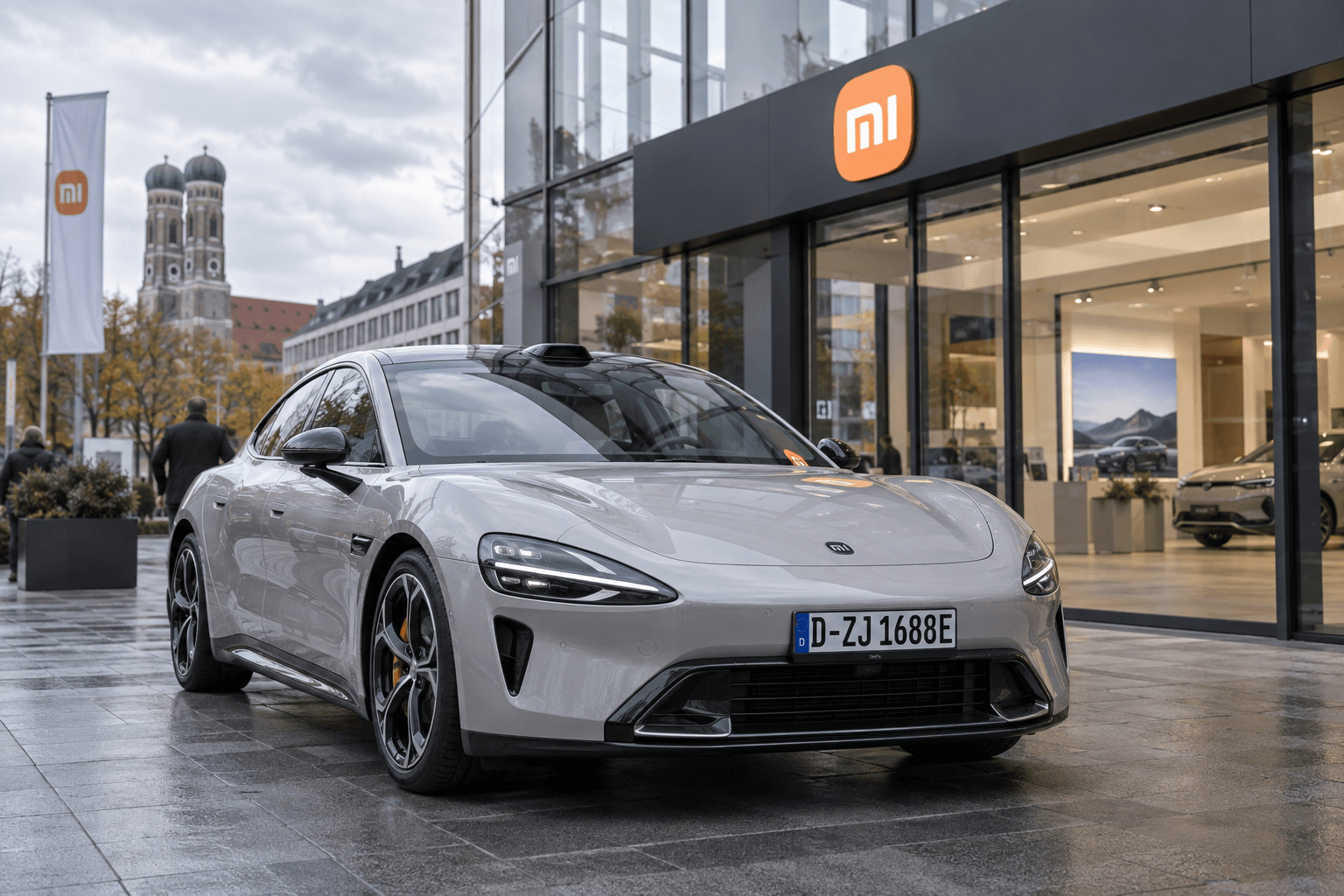
Xiaomi is pressing ahead with its entry into the European automotive market. After previously focusing on China, the technology group’s electric cars are set to become available in Europe in the second half of 2027. Germany is one of its key target markets.
To support the launch, the manufacturer is not only expanding its organization but also appears to be securing major retail partners. This points to a sales model with a stronger emphasis on traditional car dealerships, supplemented by the digital sales platform that Xiaomi customers already know from its electronics business.
The planned 2027 market launch is becoming increasingly concrete, but prices, the model lineup, and launch dates for individual countries have yet to be confirmed.
Experienced automotive executives join Xiaomi
Building a European team is a key part of the strategy. One of its latest hires is Jens Olsen, who previously headed Xpeng’s Northern European business. Before that, he spent many years in traditional automotive sales, including roles at Toyota and Ford.
The Design and Research Center in Munich also plays a role. Xiaomi employs specialists there who previously worked for manufacturers such as BMW and Lamborghini. This helps the company tailor its vehicles, software, and user interfaces more closely to European expectations.
After all, an appealing car alone is not enough for a successful launch. Xiaomi needs a robust dealer network, spare-parts availability, workshop processes, financing options, and software tailored to European regulations.
What is already known about the market launch
| Topic | Current status |
|---|---|
| Launch period | Planned for the second half of 2027 |
| Target region | Europe, with Germany as a key market |
| Sales | Dealer partnerships being established |
| Prices | Not yet known |
| Configurations | Not yet confirmed |
| Positioning | Likely premium rather than focused solely on price competition |
| Austria and Switzerland | No separate launch dates announced |
It therefore remains unclear whether Germany, Austria, and Switzerland—the DACH region—will launch at the same time. A staggered rollout would not be unusual, as the dealer network, service operations, and vehicle homologation must be prepared separately for each market.
SkyNomad could expand the lineup
Models from the new SkyNomad family are also considered possible candidates for Europe. However, there has not yet been any official confirmation for Germany. The vehicles are more than five meters long and, at least in some versions, use a range extender rather than a purely battery-electric powertrain.
With this concept, an electric motor drives the vehicle, while an internal-combustion engine acts as a generator to provide additional energy. This enables a long overall range but also adds technology, weight, and emissions. A look at the development of the SkyNomad range extender shows how much effort Xiaomi put into developing this system.
This type of powertrain is significantly more widespread in China than in Germany. Whether a large extended-range electric vehicle (EREV) SUV can attract enough buyers in Germany is likely to depend heavily on its price, electric-only range, and tax classification. The currently available specifications and prices for the Xiaomi SkyNomad also cannot be applied directly to Europe.
Xiaomi is unlikely to compete on low prices in Europe
Xiaomi is known for aggressive pricing, but a premium strategy appears to be emerging for its European automotive launch. Simply converting Chinese list prices would not be particularly meaningful anyway. Transportation, tariffs, homologation, value-added tax, warranties, and the establishment of a sales network all increase costs.
The market nevertheless offers opportunities. Electric cars continue to gain importance in Europe, as demonstrated by the recently achieved 25% EV market share. At the same time, Xiaomi will face established manufacturers as well as strong Chinese competitors that already have their own sales networks.
What this means for German buyers
Xiaomi appears to be taking a more thorough approach to its European launch than a straightforward importer would. Dealer partners, experienced executives, and the Munich development center point to a long-term strategy. This is more important than a spectacular introductory price, particularly when it comes to service, software support, and spare parts.
However, much will remain uncertain until the first models are announced. European prices, realistic delivery dates, and a convincing service network will be decisive. The planned 2027 launch will therefore be an important test of whether Xiaomi can replicate its success in China’s electric vehicle market in Europe.