Waymo Plans Munich Robotaxi Launch for Late 2027
Autonomous driving is taking more concrete shape in Germany: Waymo intends to launch its commercial robotaxi service first in Munich in late 2027. Before passengers can get on board, an intensive preparation phase will begin in the coming weeks, during which vehicles will map the city and conduct test drives under real-world conditions.
This is notable for the DACH region—Germany, Austria and Switzerland—because the barriers have traditionally been higher here than in many US markets: regulation, permits, data protection and public acceptance all play a greater role. That is precisely why the announcement also signals that robotaxis do not have to remain merely a US experiment.
What Happens Next: Mapping and Validation with Safety Drivers
The first visible step will be mapping drives in Munich. Initially, Waymo vehicles will be operated by human drivers to capture the surroundings in detail and calibrate the system for local conditions, such as construction-zone layouts, road signs, lane configurations and typical traffic patterns.
This will be followed by a validation phase involving trained specialists, during which the interaction between sensors, software and operations will be verified. The goal is for the service to function reliably and predictably by the planned commercial launch, including in complex situations such as dense urban traffic and mixed traffic involving cyclists and pedestrians.
Permits and Legal Framework: Coordination with City, State and Federal Authorities
According to Waymo, it is in discussions with authorities at several levels to obtain the necessary permits. From a political perspective, officials emphasize that Germany already has a legal framework intended to enable the regular operation of autonomous vehicles.
For Munich and Bavaria, the location factor is also a key focus: high-tech jobs and a signal of innovation for the regional economy. In practical terms, however, the decisive issue remains how quickly procedures involving operating permits, safety documentation and regulatory requirements can be translated into a concrete, robust authorization to operate.
Which Vehicles Waymo Uses and What That Means for Passengers
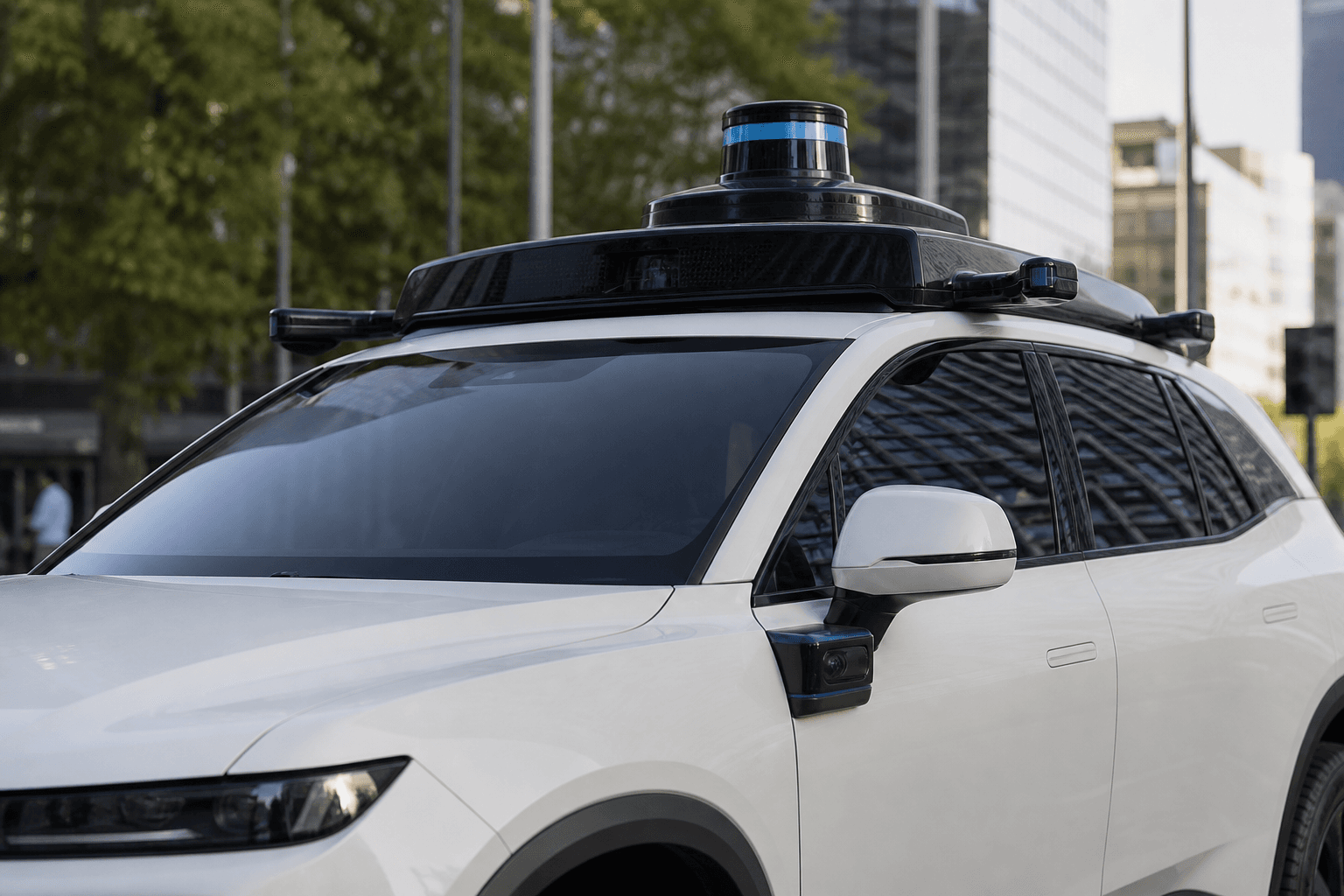
In the US, Waymo now uses an electric van from the Geely Group as the production platform for its robotaxi fleet. The vehicle seats five people and is clearly designed for ride-hailing, including several screens for in-vehicle interaction.
This matters in everyday use because a robotaxi must do more than simply “drive itself”; it must also provide a seamless experience: setting a destination, managing the trip, adding stops, adjusting climate control and accessing support. Waymo takes a software-centric approach, with key functions available directly inside the vehicle.
Autonomous Driving in Practice: Safety Claims, Data and Context
Waymo points to extensive operational experience from fully autonomous journeys and a total distance in the high hundreds of millions of kilometers in autonomous mode. The company also reports significant reductions in certain categories of crashes compared with human drivers.
Such figures are an important part of the debate, but they must always be viewed in context: operating areas, weather, operational rules and the question of which routes a system permits in the first place all have a major impact on comparability. For Germany, it will therefore be crucial to ensure transparency around safety documentation, operating limits and coordination with emergency services and urban infrastructure.
Why Munich Is a Plausible Starting Point
Munich offers a combination of demanding urban traffic, strong digital infrastructure and a high concentration of technology and automotive expertise. At the same time, public transportation is extensive, meaning robotaxis will need to function more as a complement, for example for the “last mile,” off-peak periods or specific corridors.
That is also the key question for their real-world impact: robotaxis are compelling when they are reliably available, integrate well with existing mobility options and are not priced completely out of reach.
Competitive Landscape: Waymo, Tesla and the Robotaxi Market
Waymo is one of the few providers already scaling commercially operated robotaxis across several US cities. Tesla, by contrast, is pursuing a heavily camera-based approach and intends to roll out autonomous mobility primarily through its own vehicle fleet and software. For users in Europe, what ultimately matters less is who has the most attractive roadmap and more who can put a legally compliant and reliable service on the road.
If you are interested in the topic in the context of Tesla, another current question is how Tesla runs its autonomy software on new hardware and what role more efficient model variants play. Read more in our article on Tesla HW4 and “streamlined” FSD models.
What Is Likely to Matter Most to Passengers in Germany
- Trust and transparency: clear communication about what the system can and cannot do, and when
- Operations: availability, pickup points and handling road closures and events
- Integration: a useful complement to public transportation, cycling and walking rather than competition at any cost
Technical Context: Why Robotaxis Are Almost Always EVs
Waymo’s decision to use an electric vehicle as its platform is no coincidence. Robotaxis make many short trips, stop frequently, use climate control extensively and benefit greatly from low operating costs per kilometer. An electric powertrain also integrates very well with the sensors and energy requirements of continuous operation.
More broadly, this fits the trend of a growing number of manufacturers preparing their EV platforms for new use cases, from 800-volt charging to scalable software stacks. If you are looking for a technical comparison, our overview 800V vs. 400V in an EV shows where the differences really matter in everyday use.
Conclusion: A Major Step, but Much Work Remains Before Late 2027
Waymo’s timeline is ambitious but not unrealistic if mapping, validation and permitting proceed smoothly together. Munich could therefore become one of the first German cities where robotaxis are not merely tested but can be used commercially.
Whether the model succeeds will depend less on the driving function alone than on the overall package of safety, operations and acceptance. And that is precisely where Germany will become a tough test—in a positive sense.
Also relevant to autonomous mobility is our latest overview of the 2026 EV ranking in Western Europe, as robotaxi fleets and the EV market are growing in parallel across many regions.