VW Apparently Planning “End of Production” for Several Plants
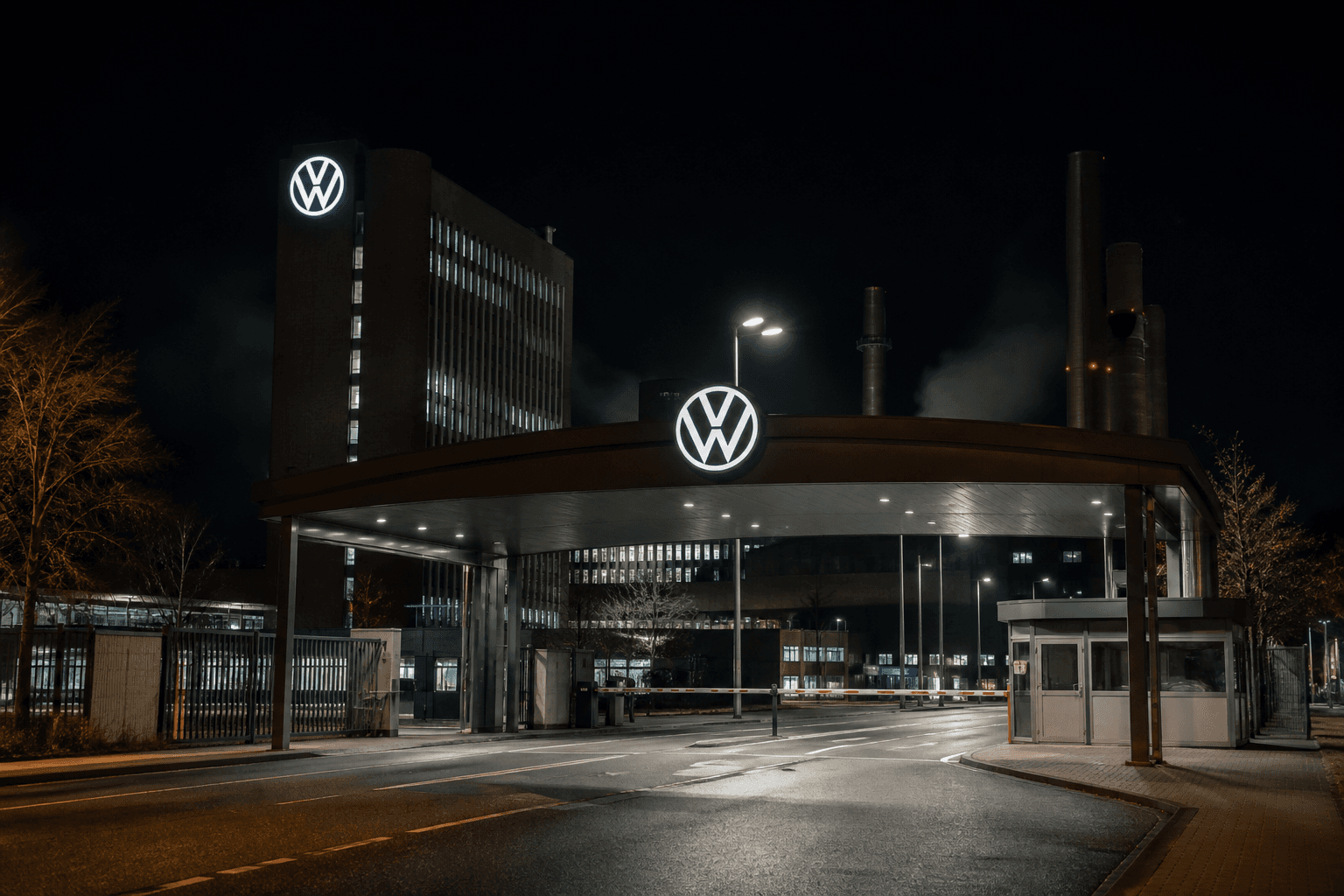
Volkswagen is under enormous pressure to utilize its production capacity, regardless of whether combustion-engine vehicles or electric cars are involved. If too few vehicles are sold overall, plants with excess capacity quickly become a major cost issue. This is precisely what an internal scenario addresses, setting out a multi-year sequence of production closures and model relocations.
Importantly, documents like these often reflect the current state of planning, not final decisions. Nevertheless, they show very clearly how production could increasingly be concentrated at fewer sites if demand and the model mix do not stabilize significantly.
The Planned Sequence: Emden, Zwickau, Hanover, Neckarsulm
The scenario refers to an “End of Production” (EOP) sequence beginning in the early 2030s. At the same time, successor models are to be “relocated” to other plants. This is typical of corporate restructuring: fewer sites, higher capacity utilization and lower fixed costs per vehicle.
| Site | Planned EOP Year | Affected Model (Successor) | New Site According to the Plan |
|---|---|---|---|
| Emden | 2031 | ID.4 successor (also discussed as the ID.Tiguan) | Mlada Boleslav |
| Zwickau | 2031 | Audi Q4 e-tron successor | Bratislava |
| Hanover | 2032 | B-Space (T8) | Poznań |
| Neckarsulm (Audi) | 2034 | Audi A8 successor | Leipzig |
Why Zwickau Is at Risk Despite Its EV Focus
The Zwickau plant is considered modern and has been fully converted to electric-car production for years. That is precisely what makes the situation so paradoxical: efficient manufacturing alone is not enough if model allocations disappear. If high-volume models are relocated, even a site with a good cost structure can suddenly find itself without enough production programs.
The discussion also involves shifting capacity within the group: If high-volume combustion-engine production moves away from Wolfsburg, production lines would become available there and could, in turn, take on EV models. At the same time, other brands within the group could withdraw models from existing EV plants to keep their own sites busy.
Too Little Volume, Too Many Factories: The Core Problem
The central message from the plans is simple: VW would not have enough vehicles to utilize all its plants “adequately.” This is particularly critical during the EV transition because major investments in batteries, platforms, software and charging ecosystems are being made at the same time. Falling production volumes then increase the cost pressure per car.
The effect is also visible in the market: Competition in Europe’s EV segment has become brutal, with strong rivals within the group and external pressure from Tesla and new market entrants. The fact that models such as the Tesla Model Y and other high-volume EVs often rank near the top intensifies the battle for sales volume and margins.
China as an Additional Challenge: When the Major Market Fails to Deliver
China has traditionally been a cornerstone market for VW. If its current EV portfolio fails to achieve broad appeal there while local competitors dominate, the company loses a crucial driver of volume. In addition, new models for China are often developed and produced locally, which does little to help European sites.
For Europe, this means capacity utilization must increasingly come from the regional market. If that does not happen, pressure on the production structure will rise, and decisions about individual sites will be driven more quickly by business considerations than by political ones.
Real-World Impact: What Plant Closures Mean for Regions
For locations such as Zwickau or Emden, a possible shutdown in the 2030s is more than just a corporate announcement. Such plants often support tens of thousands of jobs directly and indirectly through suppliers, logistics companies and service providers. Even if an EOP date is years away, it already affects investment, planning certainty and the ability to secure new production programs today.
At the same time, the period until 2031 is long enough to change course: through new models, significant reductions in costs per vehicle or alternative uses for the plants. In such cases, the industry also repeatedly considers partnerships or contract manufacturing, for example for manufacturers looking to establish production in Europe.
Assessment: What You Should Expect Now
Internal road maps like these are not unusual in large companies; they serve as leverage, scenario planning or a basis for negotiations. Whether the four major sites actually close as described will ultimately depend on demand, model decisions, labor-agreement and structural costs, and how quickly VW can bring its product pipeline and software strategy under control.
Ultimately, the deciding factor is not “electric or combustion engine,” but capacity utilization, cost per vehicle and a model mix that actually sells.
Relevant Context: VW Is Also Under Political and Internal Pressure
The fact that drastic cuts are being discussed within the group fits into a broader picture: cost pressure, shifting software priorities and the struggle to find the right product strategy. Readers who want to follow the debate surrounding the group’s sites and jobs can find more background in our article on VW under pressure, focusing on its works council, plants and future plan. A works council is an elected employee representative body under Germany’s system of workplace co-determination.
And ultimately, the product matters too: Models such as the VW ID.3 and the VW ID.4 are key building blocks for capacity utilization. How this develops over the coming years with further development of the MEB platform and potential successors remains one of the decisive factors for the security of these sites.