VW intensifies cost-cutting and provides concrete figures for the first time
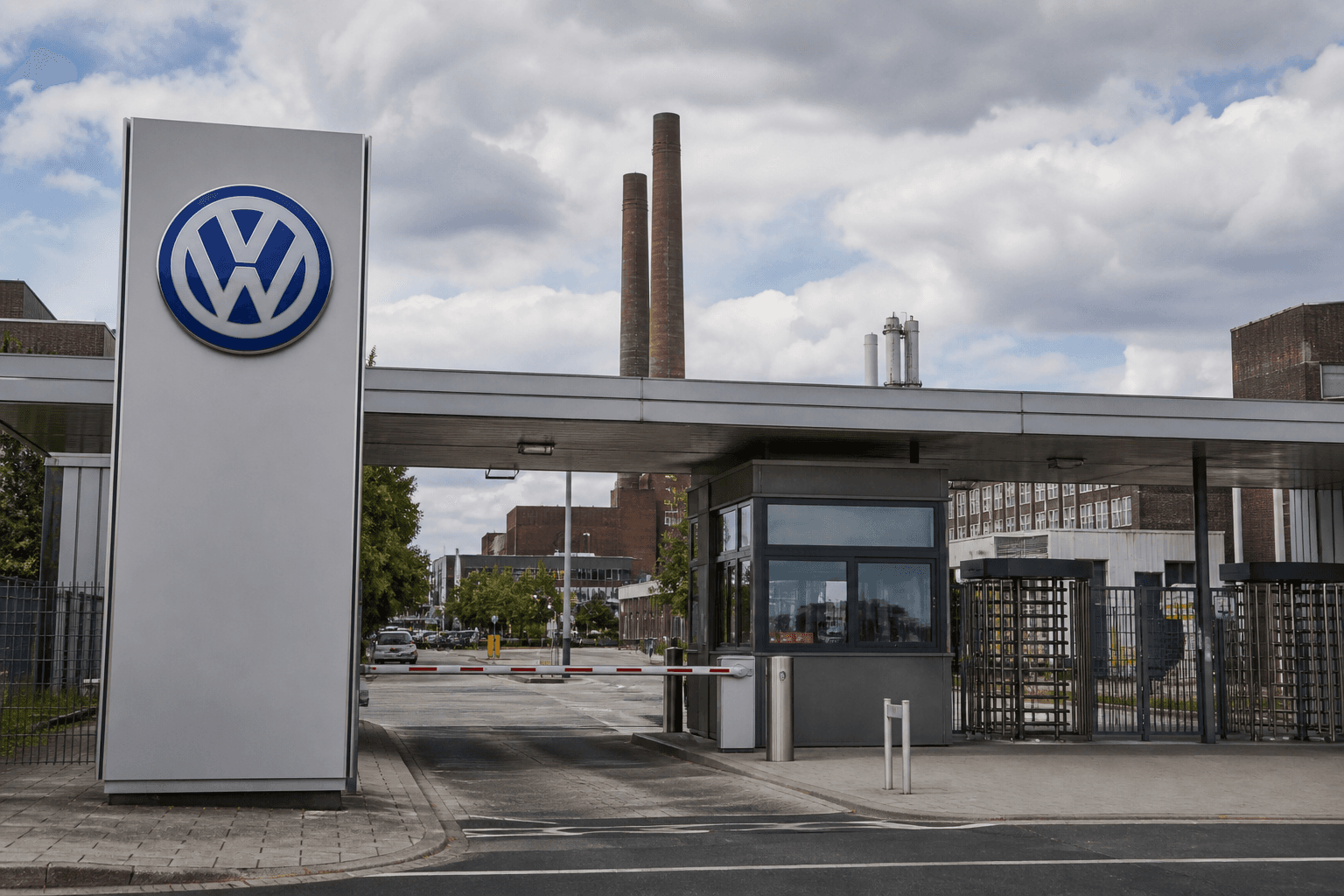
At an extraordinary works meeting in Wolfsburg, Volkswagen presented new details of its planned corporate restructuring. A potential reduction of up to 100,000 jobs worldwide is under discussion, out of around 663,000 employees across the Group. This comes on top of an earlier agreement to eliminate around 50,000 jobs through socially responsible measures by 2030.
An important point of context: The Management Board explicitly says that the figure of 50,000 additional jobs, which frequently appears in the debate, is not a target but a mathematical estimate derived from the pressure to reduce costs. At the same time, the direction remains clear: VW wants to become faster and more cost-efficient because, by its own account, its costs are currently significantly higher than those of comparable companies.
Germany at the center: Four plants without a secure future
The discussion surrounding the Emden, Hannover and Zwickau sites, as well as the Audi plant in Neckarsulm, is particularly sensitive. According to the Group, they employ just over 40,000 people in total and have a combined capacity of around 750,000 vehicles per year.
Management’s central message is that once current production plans expire in the early 2030s, there is not yet any competitive follow-up production allocation. Although no plant closures have been decided and the Group describes them as “the last and most expensive solution,” they remain an implicit option if costs and capacity utilization cannot be brought under control by other means.
How extensive the potential cuts in Germany could be
From the employees’ perspective, the main concern is the cumulative effect of the various programs. In addition to the 25,000 jobs already agreed to be eliminated in Germany through socially responsible measures by 2030, employee representatives emphasize the additional risks at the four plants named above. This has led to the interpretation in the public debate that, over time, significantly more than 100,000 jobs in Germany could potentially be at stake when all the challenges are added together.
Another point repeatedly raised in the discussion is that even major cuts to company-specific collective wage agreements would have only a limited impact on the unit cost of a car. This makes it clear that the issue is not just wages, but also structure, complexity and speed across development, procurement, production and software.
Conflict: Voluntary measures versus severe cuts
The Management Board officially continues to favor voluntary workforce measures. These include retirements, mutual separation agreements, a more restrictive hiring policy and the expansion of phased retirement to additional age groups.
Employees, the works council—the elected body representing employees within the company—and the trade union, on the other hand, have made it clear that compulsory redundancies and plant closures are unacceptable from their perspective. The conflict is therefore clearly defined: VW wants to reduce costs substantially while ensuring, as far as possible, that this happens in Germany without severe political or social disruption.
Political involvement: Lower Saxony as a power broker
The role of the state of Lower Saxony adds further sensitivity. Due to the company’s special voting-rights structure and the state’s 20% stake, Lower Saxony traditionally has considerable influence within the Group, particularly in combination with the employee representatives on the Supervisory Board.
Lower Saxony is pushing back against the narrative that Volkswagen is fundamentally “oversized.” Instead, it argues that scale can be an advantage internationally and that growth in the electric mobility market, along with greater cooperation between Group brands, could help. Even the possibility of bringing additional industrial production to individual sites is being discussed, showing how political the issue has now become.
Why VW is under so much pressure
The cost-cutting debate has not emerged from nowhere; it is closely linked to the company’s current financial performance. Volkswagen generated revenue of €158 billion in the first half of the year, while profit fell to €5.9 billion. In the second quarter, net profit declined year over year to €1.5 billion, a significant setback.
External factors cited include trade disputes and tariffs, weaker sales in China, geopolitical risks and tougher competition in Europe. At the same time, VW also sees causes within its own organization: too many rounds of coordination between brands, development teams and software units, combined with a shift toward software-defined vehicles that the organization has not yet managed smoothly.
Software and Cariad: A key bottleneck
For many manufacturers, software has become a crucial factor in costs, quality and time to market. VW has struggled with complexity in this area for years, particularly around the Group’s software unit. Two strategic approaches are colliding in the current debate: continuing development with a strong internal role for the software unit, or opening up more extensively to external partners, including for vehicle software and automated driving.
For EV buyers, this is not merely an internal corporate detail but something they experience in everyday use: More stable updates, faster bug fixes and better overall integration of driver-assistance systems all influence how “finished” a vehicle feels over the years.
What this means for electric mobility in Germany
The debate comes as the German automotive industry is in the midst of its transformation. Plants that currently build EVs or are preparing to do so need predictable product plans, competitive costs and a clear platform and software strategy. Otherwise, attracting new projects to Germany will be difficult.
This matters to the market as a whole because VW remains one of Europe’s most important trendsetters. If investments in platforms, battery technology, charging performance and software are delayed, this will affect model cycles and competitiveness—and therefore also prices and the range of vehicles available to customers.
Assessment: No decision has been made, but the direction is clear
As things stand, neither specific plant closures nor a final job-cutting plan that definitively confirms the maximum figure have been announced. Nevertheless, the fact that VW is publicly discussing figures on this scale shows how seriously the Group views the situation.
The decisive questions will be which approach prevails on the Supervisory Board and whether VW can combine cost reductions with its transformation in a way that keeps Germany attractive as a production location for future EVs. Readers who also want to understand which Group models already play a role in everyday electric driving can find details on the VW ID.3 and the VW ID. Buzz. For a look at future technology paths, see our overview of 800 volts vs. 400 volts.