VW ID. Up Instead of ID. Every1: Evidence Mounts for the Name of the €20,000 EV
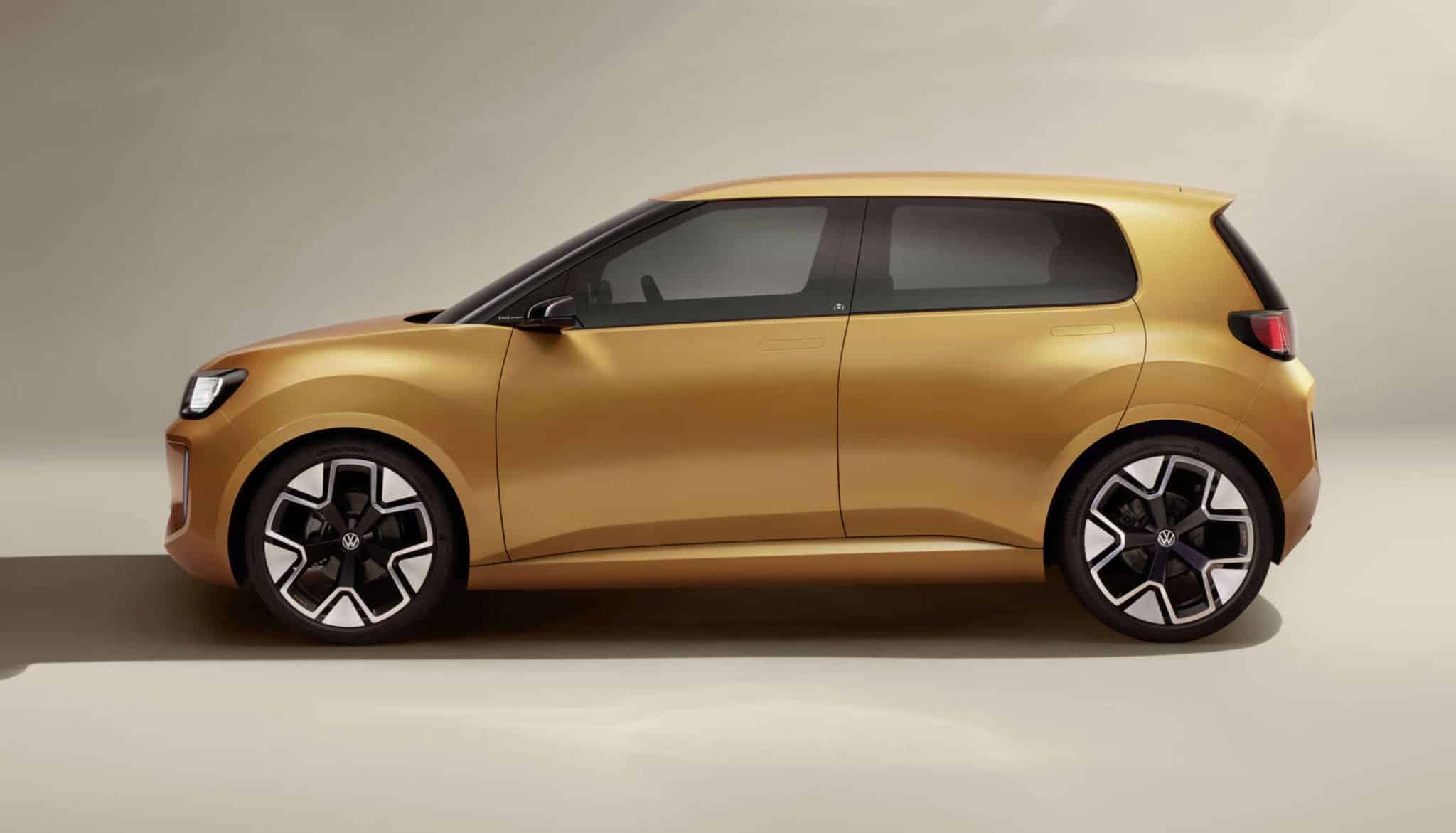
Volkswagen is working on its next major high-volume project below the ID. Polo and related models. This is the production version of the ID. Every1 concept, which is intended to introduce a new price point for the Wolfsburg-based automaker. There are growing indications that the car could be called the VW ID. Up, a clear reference to the familiar Up, including a nod to the e-Up.
The name has not yet been officially confirmed. Nevertheless, it fits the vehicle’s appearance so far, as the concept’s proportions and silhouette look much closer to the Up than to previous small-car names such as Lupo.
What It Means for Germany, Austria and Switzerland
A starting price of around €20,000 would be a genuine game changer in the DACH market—the German-speaking region comprising Germany, Austria and Switzerland—because this is precisely where the biggest gap in the current EV lineup is emerging: small vehicles with practical range, a sensible amount of interior space and a price that does not immediately head toward €30,000. It remains to be seen whether the €20,000 target will also be achievable in practice in these markets, depending on equipment, battery variant and launch offers.
The electric Renault Twingo is already being discussed as a direct alternative in this class, likewise targeting compact exterior dimensions and urban usability.
Size and Range: Small on the Outside, but More Practical
According to current information, the ID. Up will be just under 3.9 m long. That keeps it firmly in the small-car segment, although its interior should benefit from the typical advantages of an EV: less space required for the powertrain and related components, a flat floor and a more usable cabin.
Its range is said to be more than 300 km. That does not sound like a long-distance champion, but it does sound like the sweet spot for commuting, city driving and surrounding areas—exactly the use case this class needs to cover.
Technical Basis: MEB+ and a New Software Architecture with Rivian
What is especially interesting is not just the name, but what is expected to happen beneath the body. A new E/E architecture—the vehicle’s electrical and electronic architecture—and accompanying software developed jointly by Volkswagen and Rivian are anticipated. For buyers, this could above all mean faster updates, a more stable system platform and a more modern approach to control units, instead of numerous siloed solutions that have accumulated over time.
The powertrain is expected to use an MEB+ derivative, an evolution of the familiar MEB platform. That would explain why VW is positioning the vehicle as a genuine fresh start in the entry-level segment without having to reinvent everything from the ground up.
What Rivian’s Software Approach Could Deliver in Practice
- More unified software: fewer disconnects between infotainment, driver-assistance systems and vehicle functions
- Better OTA capabilities: updates and functional improvements without a workshop visit become more likely
- Easier to expand over the long term: new features can often be added more cleanly later if the underlying platform is right
VW Expands Its Family of Small Electric Cars
The ID. Up would join a series of new electric model lines through which VW is gradually bringing classic nameplates into the EV era. This is strategically important for the brand: a genuine entry-level model below the compact class will determine whether electric mobility can once again become as synonymous with “the people’s car” as Volkswagen was in the combustion-engine era.
Related Links for Further Reading
If you want to explore the subject in more detail, these articles provide more information about VW’s new EV offensive and its position in the market:
- VW ID. Polo, Cupra Raval and Skoda Epiq: Why the New Entry-Level EVs Are Attracting So Much Interest
- VW ID. Tiguan with MEB+: How the Platform Is Expected to Change
- EV Models Coming to Germany in 2026: Prices, Ranges and Charging Times at a Glance