Volkswagen drastically revises its forecast
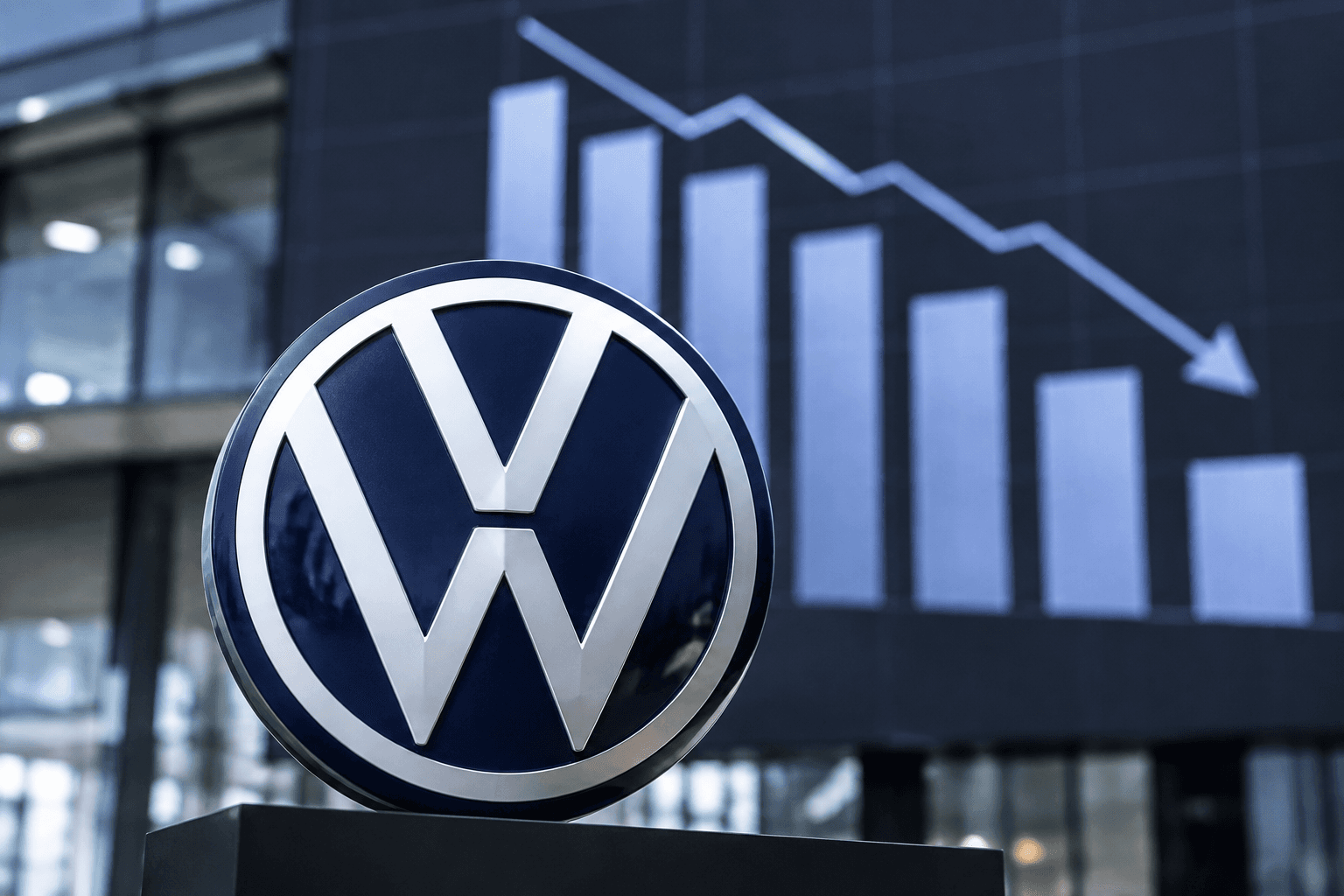
The Volkswagen Group now expects an operating return on sales of no more than 1% for the 2026 financial year. The Group had previously forecast a range of 4% to 5.5%. This means that significantly less operating profit will remain from its revenue than originally planned.
Operating return on sales indicates the share of revenue that remains as operating profit after ongoing operating expenses. At 1%, that amounts to just one euro for every €100 in revenue. For a capital-intensive automaker investing heavily in plants, software, and new platforms, that is an extremely thin cushion.
| Metric | Previous forecast | New forecast |
|---|---|---|
| Operating return on sales in 2026 | 4% to 5.5% | no more than 1% |
| Charges against earnings | not expected at this level | around €10 billion |
| Impairment of the Porsche stake | not included | more than €6 billion |
Multibillion-euro impact is not just a sales problem
Overall, Volkswagen expects charges of around €10 billion. More than €6 billion of this is attributable to an extraordinary impairment of its Porsche stake. Such a write-down significantly affects reported earnings but does not automatically result in an immediate cash outflow of the same amount.
There are also operational challenges. The European automotive market remains strained, Porsche and Audi are grappling with challenges of their own, and Volkswagen has lost market share in China during the rapid transition to electric vehicles. In the United States, uncertainty over trade policy and potential additional costs are also adding pressure.
The low margin results from a combination of exceptional accounting effects, weaker markets, and the high cost of restructuring the Group.
China remains the toughest test
Competition is particularly intense in China. Local manufacturers are bringing electric vehicles to market in short development cycles, combining aggressive pricing with extensive software features. Price adjustments such as the one for the VW ID. UNYX 08 show how quickly Volkswagen has to respond to market pressure there.
Partnerships with Chinese technology companies are intended to accelerate development and localization. This makes strategic sense, but it takes time and initially requires additional capital. New models therefore need not only to be technically competitive but also to sell profitably in sufficient volumes.
New electric vehicles provide initial positive signals
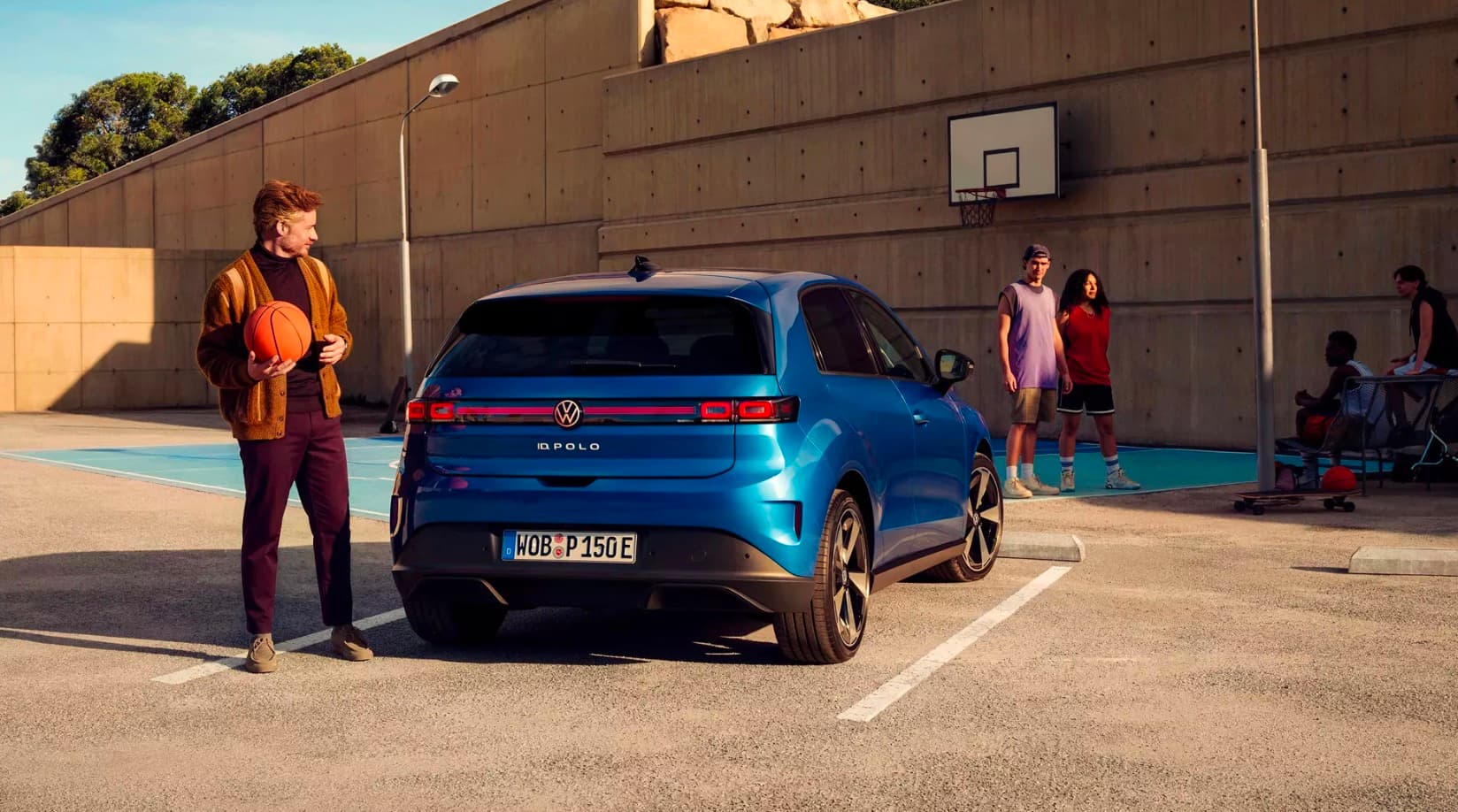
In Europe, Volkswagen is expanding its electric vehicle lineup and moving further into the particularly high-volume vehicle classes. Strong demand for the new entry-level models from VW, Škoda, and Cupra is an important signal. Models such as the ID. Polo and ID. Cross could increase capacity utilization and give Volkswagen a stronger position in a growing segment.
The market offers opportunities in principle, as the electric vehicle share in Europe continues to rise. The key question, however, is whether Volkswagen can manufacture the new vehicles at competitive costs. Higher sales alone are not enough if discounts and high production costs erode the margin.
Restructuring costs money today but is intended to deliver savings later
At the same time, Volkswagen is working on leaner structures, lower fixed costs, and a more efficient model lineup. Plant conversions, workforce measures, and new technical platforms initially entail high expenditure. The anticipated savings will therefore only become fully visible in earnings after a delay.
A margin of no more than 1% is a clear warning sign, but it is not yet proof of a lasting decline. The Group still has strong brands, extensive production capacity, and a growing electric vehicle lineup. Over the coming years, the key issue will be how quickly new models and partnerships can produce a stable, profitable business.