Lower growth expected despite stable volumes
Polestar is lowering its expectations for 2026. Instead of low double-digit volume growth, the manufacturer now expects growth in the low to mid-single-digit percentage range. The adjustment follows its first-half results, which showed no dramatic declines but also no clear upward trend.
Retail deliveries totaled 30,423 EVs in the first half, up 0.4% year over year. The second quarter, however, saw a slight decline: 17,296 vehicles represented a 4.0% decrease year over year. For a brand that relies heavily on leasing and fleet sales in several markets, this signals that buyers are currently focusing more on pricing and terms than on brand growth.
Margins under pressure from price competition, tariffs and more expensive batteries
Polestar’s revenue lost momentum in the first half. Revenue totaled $1.36 billion, down 4.4% from the same period last year. More important than revenue at present, however, is profitability: the adjusted gross margin deteriorated from -1.4% to -8.5%.
Polestar cited pricing pressure, costs from residual value guarantees and expenses related to its US restructuring among the factors weighing on its results. Revenue from CO₂ credits was also lower. On the cost side, the company faced higher tariffs and increased raw material costs, explicitly including batteries. In practical terms, even if sales volumes remain relatively stable, the economics of each vehicle can quickly deteriorate when discounts, financing terms and external costs all increase at the same time.
Operating loss narrows, while adjusted EBITDA deteriorates
The reported operating loss narrowed to $629 million in the first half, compared with $1.096 billion a year earlier. However, the comparison is distorted because the first half of 2025 included $724 million in impairment charges.
The adjusted figures therefore paint a less favorable picture: the adjusted EBITDA loss widened from $302 million to $521 million. Although the net loss narrowed from $1.193 billion to $842 million, the central issue remains: Polestar needs to stabilize its margins, not merely improve its reported financial metrics.
Withdrawal from the US new-car market starting with the 2027 model year
A major setback is the announced withdrawal from the US new-car market. The reason is that the US Department of Commerce did not grant Polestar approval under the Connected Vehicle Rules, US regulations governing connected-vehicle technology, for the sale of vehicles from the 2027 model year onward. Polestar put the resulting negative adjustments in the first half at around $130 million.
Vehicles from earlier model years will continue to be sold from existing inventory in the US. After that, the brand intends to focus primarily on supporting existing customers there. For the DACH region—Germany, Austria and Switzerland—the move is significant mainly as an indication of how strongly regulation and market access can affect even established manufacturers, despite their products having long since entered the mainstream technologically.
Liquidity and capital measures: Polestar shores up its foundations
As of June 30, Polestar reported $888 million in cash and cash equivalents. At the same time, it raised $700 million in new equity during the first half. In addition, around $640 million in loans from Geely Sweden and Volvo Cars were converted into equity.
Like Volvo, Polestar is part of the Geely Group. While this is no guarantee of unlimited support, it can be an important source of stability during a period of high investment and volatile markets.
Model portfolio and a European production focus
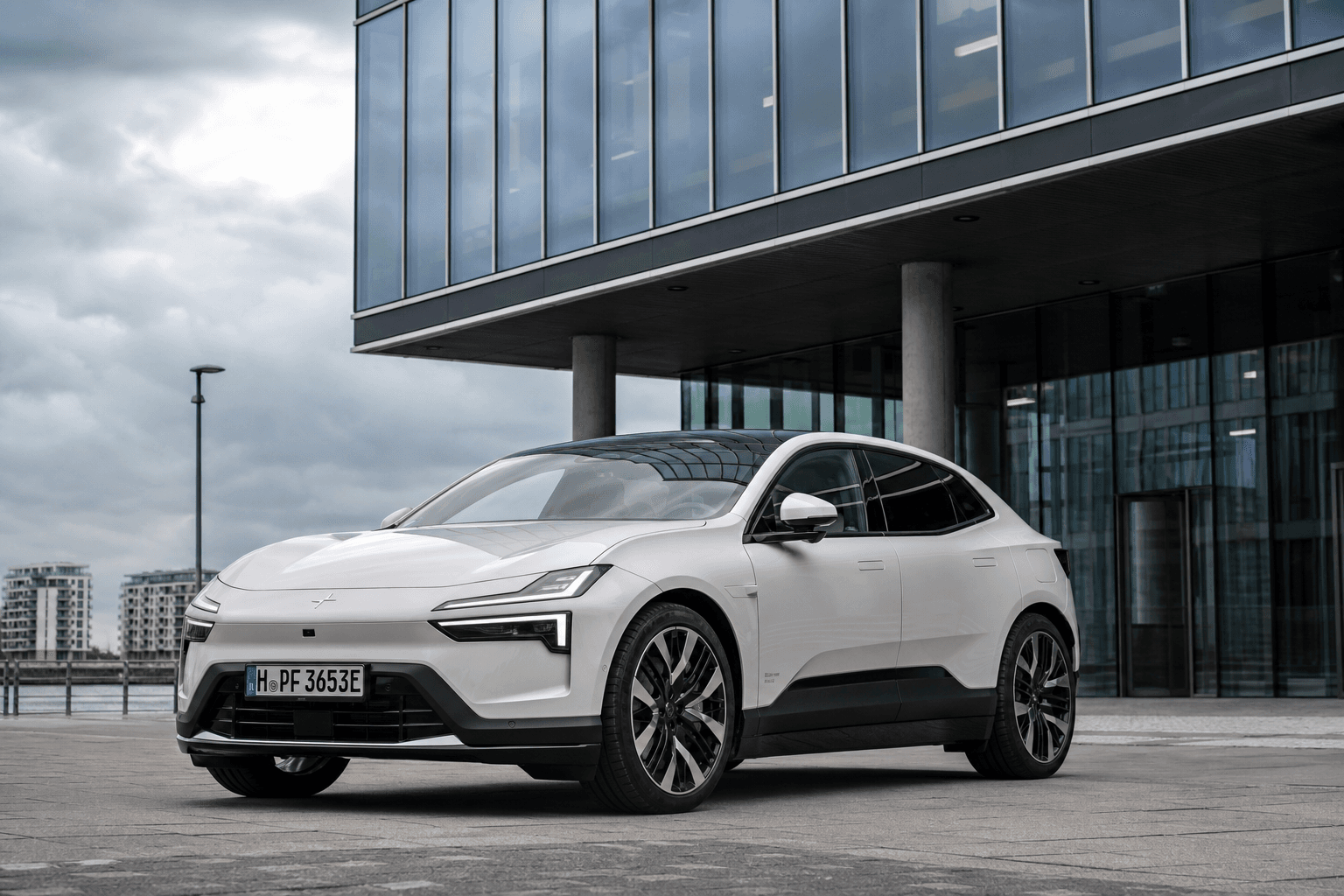
The current lineup comprises five models: the Polestar 2, Polestar 3, Polestar 4 and Polestar 5. Additional vehicles have also been announced, including a Polestar 2 successor scheduled to launch in 2027, the compact Polestar 7 SUV in 2028 and the Polestar 6 roadster.
Production currently takes place in North America and Asia, but manufacturing is expected to become more geographically diversified over time. The Polestar 7 is to be built in Europe. This is also relevant to buyers in Germany, Austria and Switzerland: increasing the European share of production could reduce supply-chain and tariff risks over the medium term, particularly in an environment where trade disputes can quickly alter cost calculations.
Analysis: What this means for the market
At first glance, the reduced forecast looks like a step backward, but in the current EV market it is also an expression of realism. Many manufacturers are simultaneously dealing with discount competition, financing costs, residual value issues and shifting policy frameworks. Polestar’s decision to adjust its outlook now provides a clearer basis for planning than an overly optimistic forecast would.
Those interested in the brand can get a good introduction to its current models through the Polestar 2 and the Polestar 3. Anyone wondering how much range and efficiency really matter in everyday use can find relevant facts and strategies in our guide to EV range anxiety.