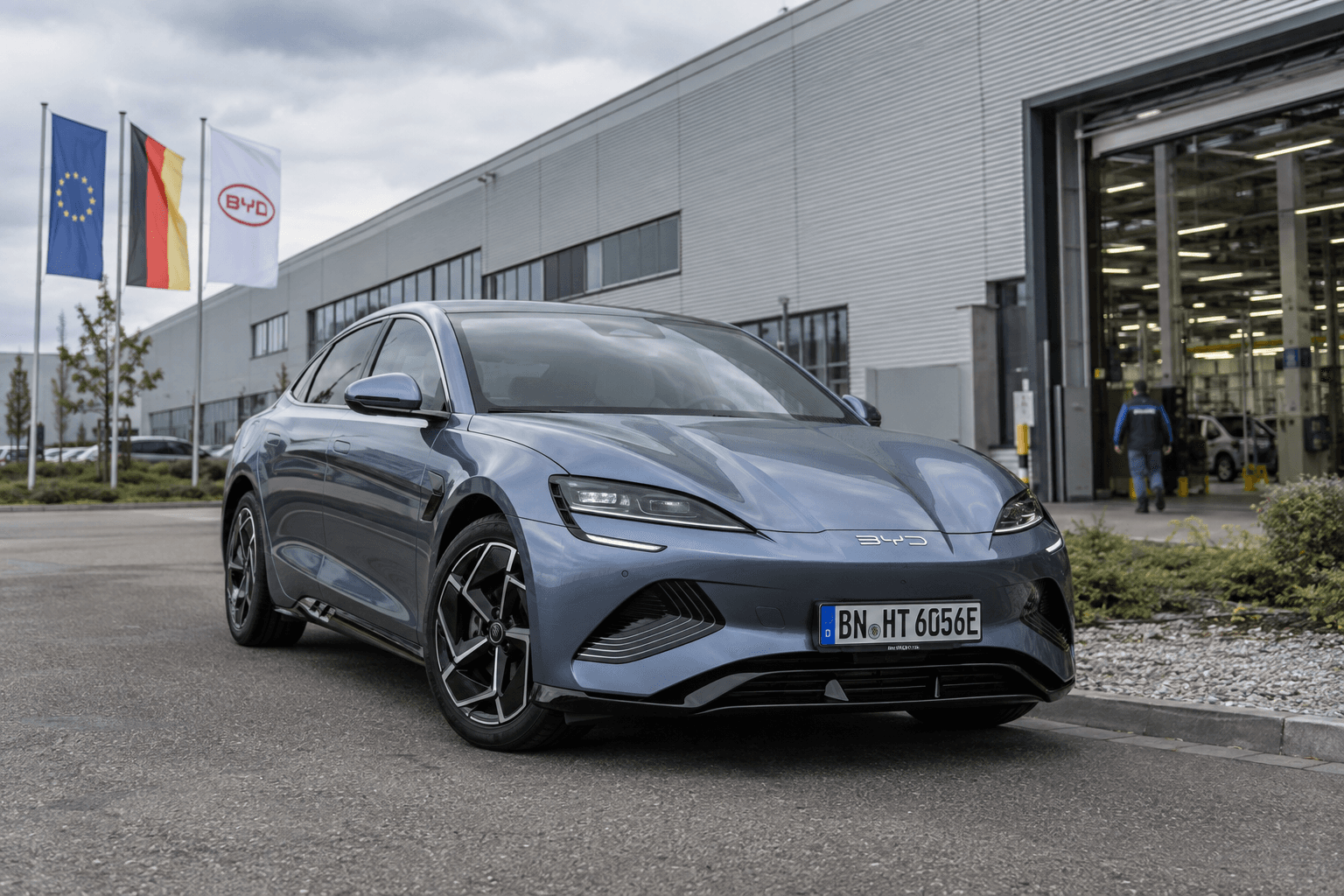
BYD aims to accelerate European production
According to reports, BYD is intensively searching for existing car plants in Europe that it could acquire outright and modernize with a manageable level of investment. Teams from the Chinese manufacturer are reportedly already assessing potential sites for their technical suitability, refurbishment costs and how quickly they could begin operations.
This apparently does not involve renting individual production lines or sharing manufacturing facilities. BYD reportedly prefers to acquire an entire plant, giving it sole control over production, investment and capacity utilization.
Taking over an existing plant could save BYD several years of planning, permitting and construction.
Why buying a plant can be faster
Ideally, an existing car factory already has production halls, logistics space, energy connections and skilled workers. An established supplier network can also make it significantly easier to ramp up production.
However, this strategy is not without risk. Older plants often require extensive conversion for new vehicle platforms, battery integration and more highly automated manufacturing processes. A low purchase price offers little benefit if it is followed by high refurbishment and energy costs.
Spain and France reportedly lead the way
Spain and France are currently said to have particularly strong prospects in the search for a site. Italy is mentioned as another option, while Germany is more difficult to assess because of its high cost base.
| Country | Assessment | Key factor |
|---|---|---|
| Spain | Considered a favorite | Industrial sites and comparatively attractive production costs |
| France | Considered a favorite | Large automotive market and established industry |
| Italy | Another option | Available capacity could prove attractive |
| Germany | Possible, but not confirmed | Strong infrastructure coupled with high operating costs |
Could German VW sites benefit?
For German locations such as Zwickau, the search initially sounds like a potential opportunity. If the Volkswagen Group were to sell production facilities or seek partners for underused capacity in the future, a financially strong buyer from China would be conceivable in principle.
However, there have so far been no concrete indications of negotiations between BYD and Volkswagen. Any connection to German VW plants therefore remains speculation. The main arguments against a purchase are high labor, energy and conversion costs, while the advantages include an experienced workforce, efficient logistics and existing permits.
The broader context is an increasingly dynamic market. The growing share of electric cars in Europe is making local capacity more attractive to manufacturers that have so far imported a large proportion of their vehicles from China.
BYD is likely to need several European factories
In the long term, BYD could need two or three vehicle plants in Europe. It is also considering its own battery production. That would amount to significantly more than a single assembly site and would integrate the group more deeply into the European supply chain.
At the same time, BYD is expanding its transport fleet so that it can deliver more Chinese-made vehicles worldwide. However, having its own ships does not solve every challenge. Local production shortens transport routes, reduces exchange-rate risks and can ease the burden of import tariffs, provided the relevant rules of origin are met.
BYD is not alone in pursuing this strategy. Geely, Xpeng, Chery and Leapmotor are also pushing ahead with their expansion. The trend in global electric car sales in 2026 also shows how rapidly Chinese manufacturers are now growing.
What the expansion means for Europe’s automotive market
For European regions where car plants are at risk, takeovers could safeguard jobs and industrial expertise. At the same time, competitive pressure on established manufacturers is increasing because local production could allow BYD to respond more quickly to demand and maintain better control over its costs.
For buyers in the DACH region—Germany, Austria and Switzerland—a European plant would not automatically mean lower prices right away. However, shorter delivery times, a more reliable supply of spare parts and models tailored more closely to European requirements would be realistic benefits.
Whether a German plant is ultimately selected therefore depends less on the availability of empty production halls than on the overall package. The purchase price, conversion requirements, energy costs and political framework all need to align. Spain and France currently appear to offer BYD a more attractive balance of speed and cost.