Tesla Supercharger Voting: 36 New Locations Selected
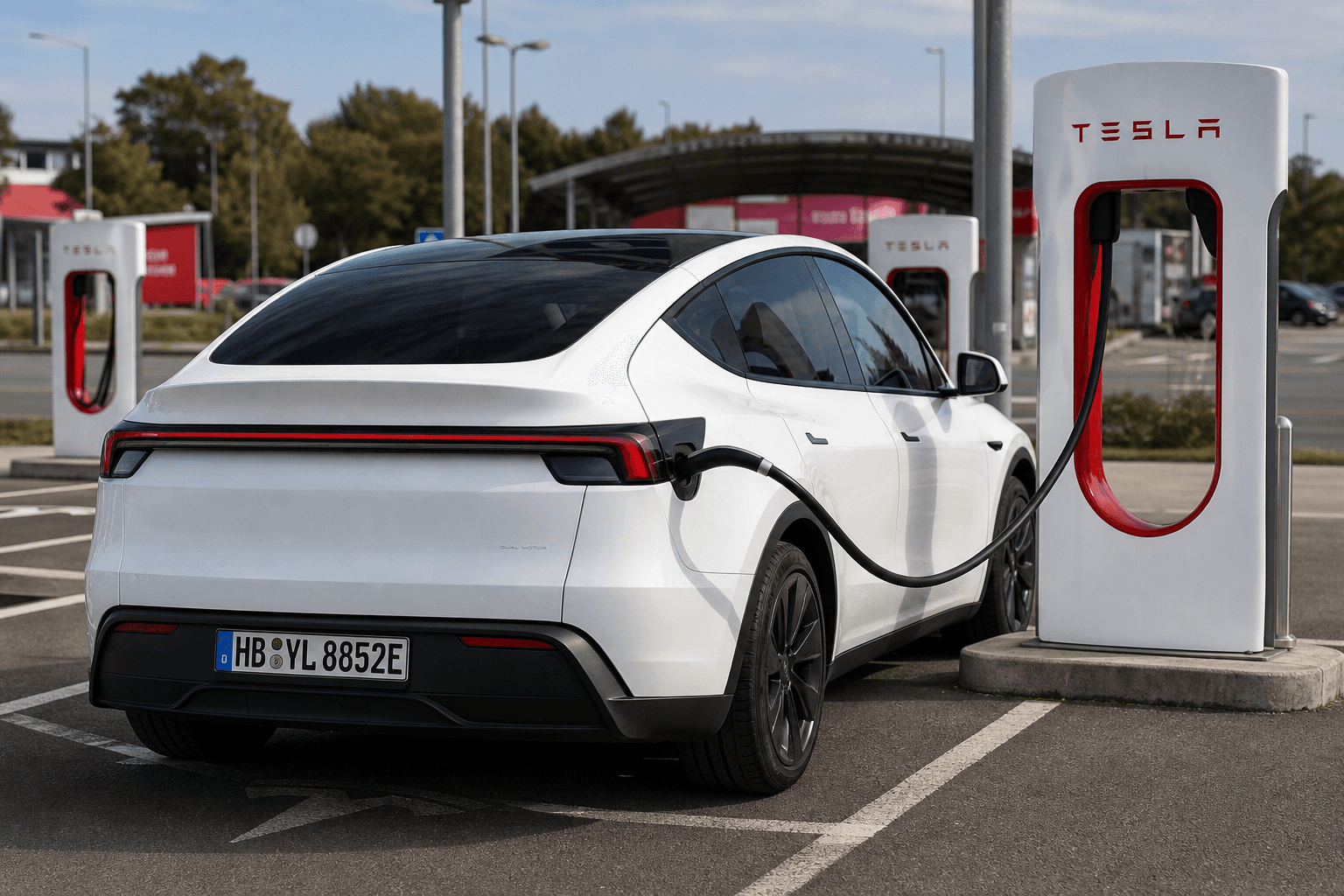
Tesla has published the results of its latest Supercharger voting round. A total of 36 new locations were selected for future development as Supercharger stations. The program runs quarterly and gives Tesla direct feedback on where drivers would like additional charging points.
An important point to keep in mind: Winning the vote does not guarantee that construction will begin. At this stage, Tesla generally provides neither exact addresses nor firm timelines, and implementation depends on factors including permits, grid connections and site availability.
Europe: These Locations Have Made It to the Next Expansion Stage
For the DACH region—Germany, Austria and Switzerland—the location of greatest interest is Obstalden in Switzerland. Several other destinations are situated along popular vacation and transit routes, including sites in Italy, Portugal and the UK.
| Region | Selected Locations (Excerpt) |
|---|---|
| Europe | Šibenik (Croatia), Hatvan (Hungary), Lamezia Terme (Italy), Jordanowo (Poland), Loures (Portugal), Pasi Poljana (Serbia), Obstalden (Switzerland), Bornova (Turkey), Cotswolds (UK), Ullapool (UK) |
| North America | Several locations in the US, as well as Crowsnest Pass (Alberta), Tobermory (Ontario), Mont-Laurier (Quebec) |
| Other Regions | Menashe Regional Council (Israel), Jurien Bay (Australia), Niseko (Japan), Bidor (Malaysia), Osong-eup (South Korea), Qiwei (Taiwan), Cali (Colombia) |
Why This Vote Matters to Tesla Drivers in Everyday Use
A new Supercharger is more than just another point on the map—it can make an entire journey less stressful. More locations often mean fewer detours, shorter waits at peak times and more route-planning options. This can make a real difference, particularly in tourist areas or along rural routes with limited charging coverage.
For many drivers, it is also crucial that a location is strategically positioned—for example, near motorways, ferry terminals or vacation destinations, or to fill a gap between existing stations. This is precisely where the vote helps, as it highlights demand that cannot always be identified from traffic data alone.
Next Round Now Open: How Voting Works
Tesla has already opened voting for the next round. During each voting cycle, account holders can cast five votes, with no more than one vote per proposed location. They can also submit new locations for consideration in later rounds.
Superchargers Are Increasingly Becoming a Standalone Business
Tesla originally built the Supercharger network to make long-distance EV travel practical and boost demand for its own vehicles. The network has since taken on a second role: It is being opened to vehicles from other manufacturers in a growing number of markets, turning it into a charging backbone for far more than just Teslas.
There is another element as well: Companies can operate Supercharger locations under their own branding, while Tesla supplies the hardware, software, monitoring and support. For Tesla, this is a scalable infrastructure business; for site operators, it offers a way to generate charging revenue.
What This Means for the DACH Region: What to Expect Now
The selected location in Switzerland is a clear sign that Tesla is continuing to fill gaps even in established markets. At the same time, it is important to remember that some time may pass between a site being “selected” and becoming operational. If you regularly travel in regions with limited coverage, it is worth taking an active role in the next voting round.
If you are particularly interested in what it is like to use a Tesla day to day, you can also find our overviews of the Tesla Model Y and the Tesla Model 3. And if you are wondering how much charging planning is really necessary, our guide to EV range anxiety provides facts and strategies.