Tesla Announces Semi Rollout at New Sparks Factory
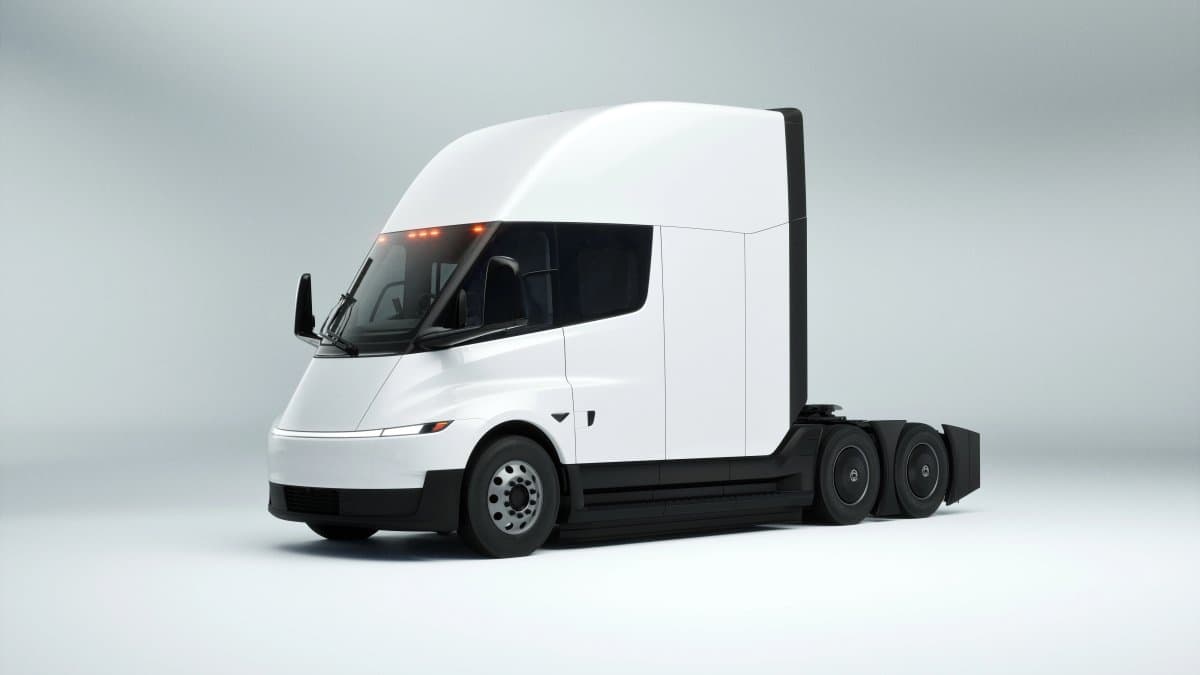
Tesla has officially announced a Tesla Semi rollout event for September 24, 2026. It will take place at the new dedicated Semi factory in Sparks, Nevada. The invitation-only event is intended to celebrate the opening of the site.
According to the invitation, guests will be offered factory tours and ride-alongs in the updated Tesla Semi. Each invitee may bring one additional guest, and RSVPs must be submitted by September 2. As with other Tesla events, attendees must also be at least 21 years old, and identities will be verified on site.
New Semi Factory: Size and Capacity
The new site is designed for high-volume production. The Semi factory covers around 158,000 m² and is intended to eventually produce up to 50,000 Tesla Semis per year.
For context from a DACH perspective—the German-speaking markets of Germany, Austria and Switzerland—this is a US production site that will initially serve primarily the North American market. For Europe, however, the key question will be whether Tesla can quickly follow through with the announced specifications, type approval and service infrastructure so that the Semi can arrive in meaningful numbers in the region.
From Pilot Project to Production: How the Tesla Semi Has Changed Technically
At the end of April, Tesla showed the first Semi from a new high-volume production line. At the same time, one thing is clear: The production Semi is not simply the concept unveiled in 2017, but has been revised in several key areas.
Known changes include electric power steering instead of a hydraulic system, revised actuators and a 48-volt architecture. It also uses 4680 battery cells that are intended to meet the demands and service-life requirements of commercial vehicle operation. Visually, a new front-end design featuring a light bar also stands out.
European Details at IAA Transportation in Hanover
Tesla also plans to present European specifications and launch details at IAA Transportation, the international commercial vehicle trade show in Hanover, which runs from September 15 to 20. This will be the key date for fleet operators in Germany, Austria and Switzerland, as it should provide the first concrete indication of which variants, weights, charging options and use cases Tesla is actually planning for Europe.
Cameras, Driver Assistance and FSD: What Is Realistic for the Semi
The Tesla Semi uses a camera setup with 10 cameras, similar to the approach used in the company’s passenger cars. Tesla has also confirmed that the Semi is expected to receive Full Self-Driving (FSD) in a future update.
In real-world operation, however, the benefits for commercial vehicles will depend heavily on legal frameworks, regulatory approvals and the specific area of use. The more relevant question will therefore be not simply which features are promised, but when and to what extent they will become available to fleets in North America and, eventually, Europe.
Megachargers Are Key: Charging for Electric Trucks Does Not Scale Automatically
As Semi production volumes increase, the corresponding charging network will also need to grow. Tesla has begun building its own charging infrastructure for trucks and opened its first publicly accessible Semi Megacharger site in the summer. Additional sites are under development.
This is the bottleneck for electric trucks in particular: Without reliable, high-power charging points along strategic corridors and at depots, the electrification of long-haul transport will remain fragmented. The event in Sparks is therefore likely to focus not only on the truck itself, but also on the strategy for scaling the ecosystem around it.
Analysis: Why This Event Is a Milestone
The Tesla Semi was unveiled in 2017, and the first customer vehicles were delivered in small numbers beginning in 2022. The rollout event at the new factory now clearly signals the transition from a years-long pilot phase to industrial production that will have to prove itself in the market.
If Tesla actually ramps up the announced capacity and infrastructure, the Semi could increase pressure on the industry to treat electric trucks not merely as showcase projects, but as commercially viable mass-production vehicles.