Tesla Semi is coming to Europe, with Hanover set to be a pivotal moment
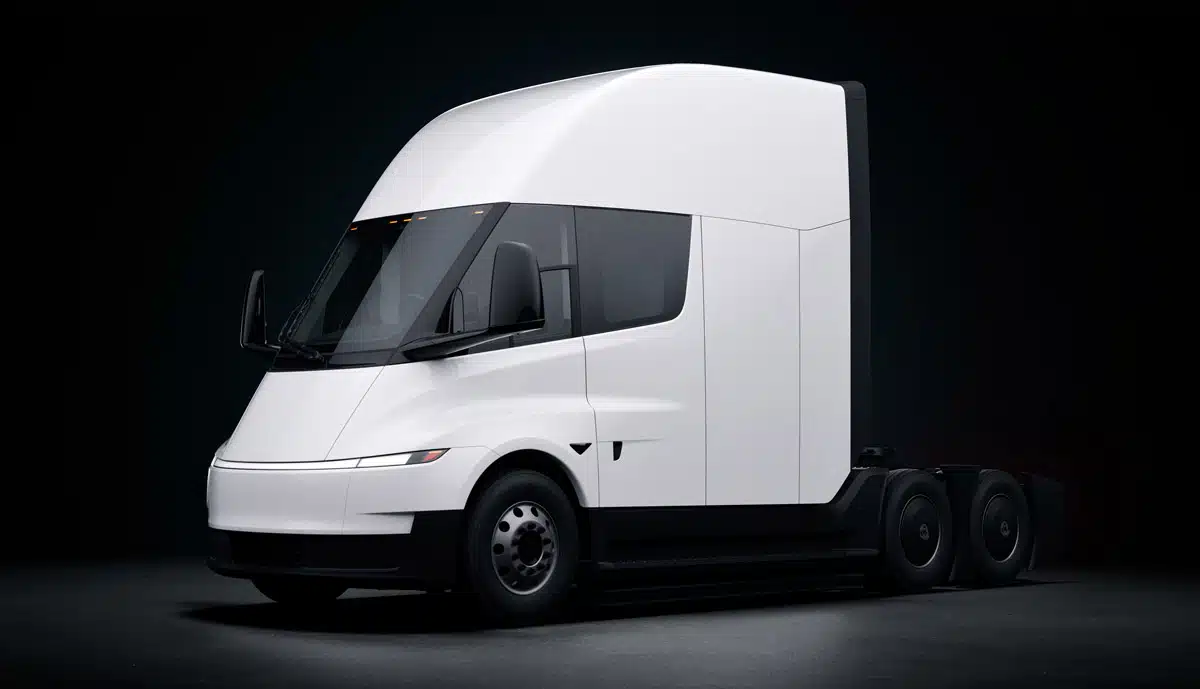
Tesla has reaffirmed that it will present the Tesla Semi at IAA Transportation 2026 in Hanover in September. According to the company, it will publish specifications for the European version and further details about the planned market launch there. The trade show runs from September 15 to 20, 2026.
This is more than just another trade-show appearance: Tesla already showcased the Semi in Hanover in 2024, but this time the focus is explicitly on the European version. These figures are crucial for fleet operators and logistics companies because EU regulations and realistic operating profiles create different priorities than those in North America.
Why the European version will not be identical to the US Semi
Operating conditions for heavy-duty commercial vehicles in Europe differ significantly from those in the US in some respects. These include vehicle approval, dimensions, weight limits, axle loads and the configurations in which a manufacturer actually offers its variants.
In practical terms, US marketing claims cannot automatically be applied to Europe. The key questions will be which range variants Tesla offers in the EU, how this affects payload and curb weight, and what charging power the Semi can realistically rely on here.
The Semi specifications Tesla already lists in Europe—and what remains unclear
Tesla’s regional websites already list key figures for a Semi version described as Standard Range. These figures offer a useful indication of the likely direction, but Tesla explicitly states that they depend on configuration, and they have not yet been confirmed as the final EU production specifications.
| Metric | Figure on European Tesla websites (Standard Range) |
|---|---|
| Gross combination weight | 40 metric tons |
| Range | around 550 km |
| Powertrain | 3 motors on the rear axles |
| Maximum power output | up to 800 kW |
| Curb weight | 9,100 kg |
| Energy consumption | 1.0 kWh per km |
| Charging standard | Megawatt Charging System (MCS 3.2) |
| Fast charging | up to 60% of range in 30 minutes (depending on configuration) |
At the same time, Tesla advertises different key figures in the US, including an estimated range of 500 miles (around 805 km) and charging capability of up to 1.2 MW. This is not necessarily a contradiction, but it could indicate different variants, designs or test cycles. That is precisely why the IAA presentation is so important: it should clarify which specifications Tesla will actually finalize for Europe.
What EU fleets really need to know
For the transition to electric long-haul transport, range is not the only factor that ultimately matters. In practice, total cost of ownership and operational suitability depend on details such as payload, downtime, charging windows and the charging power that can actually be achieved along routes.
- Payload and curb weight: How much capacity remains in everyday use with a gross combination weight of 40 metric tons?
- Variants: Will there be just one range option or several battery sizes?
- Charging: What MCS power level is realistic in Europe, and which infrastructure will it be compatible with?
- Price and delivery dates: When will the Semi actually be available to order and deliver?
Market context: Electric trucks are gaining ground but remain a niche
The European market for heavy-duty battery-electric trucks is growing, but remains small overall. According to figures from the European Automobile Manufacturers’ Association (ACEA), externally chargeable vehicles accounted for 4.8% of new truck registrations in the EU in the first half of 2026, with sales rising by 47.7% compared with the same period of the previous year. Diesel continued to dominate with 92.1%.
Notably, Germany, the Netherlands and France together accounted for around 74% of registrations of externally chargeable trucks. Tesla is likely to pay particularly close attention to these markets when launching in Europe, partly because of their concentration of logistics operations and infrastructure projects.
No long-haul transport without charging infrastructure—and AFIR is intended to accelerate deployment
For heavy-duty electric commercial vehicles, charging infrastructure determines whether a vehicle remains confined to pilot projects or can be deployed at scale. In the EU, the Alternative Fuels Infrastructure Regulation (AFIR) provides the framework for the gradual rollout of publicly accessible charging stations for heavy-duty electric commercial vehicles along the core Trans-European Transport Network (TEN-T).
By the end of 2027, suitable charging sites are expected to cover at least 50% of the TEN-T road network. This provides important momentum for Tesla because an MCS-equipped Semi can only capitalize on its strengths if megawatt charging stations are available along the main transport corridors.
Assessment: What IAA 2026 means for Tesla and European freight transport
Tesla is positioning the Semi as a more efficient and powerful truck with potentially lower operating costs and better driving characteristics than conventional diesel tractor units. Whether that promise produces the same economic benefits in Europe will depend on the details Tesla intends to provide in Hanover. The timing is significant for the industry: electric trucks are growing in popularity, while AFIR is finally bringing a structured expansion of charging infrastructure along long-distance routes.