Tesla Reviews FSD Safety After One Year
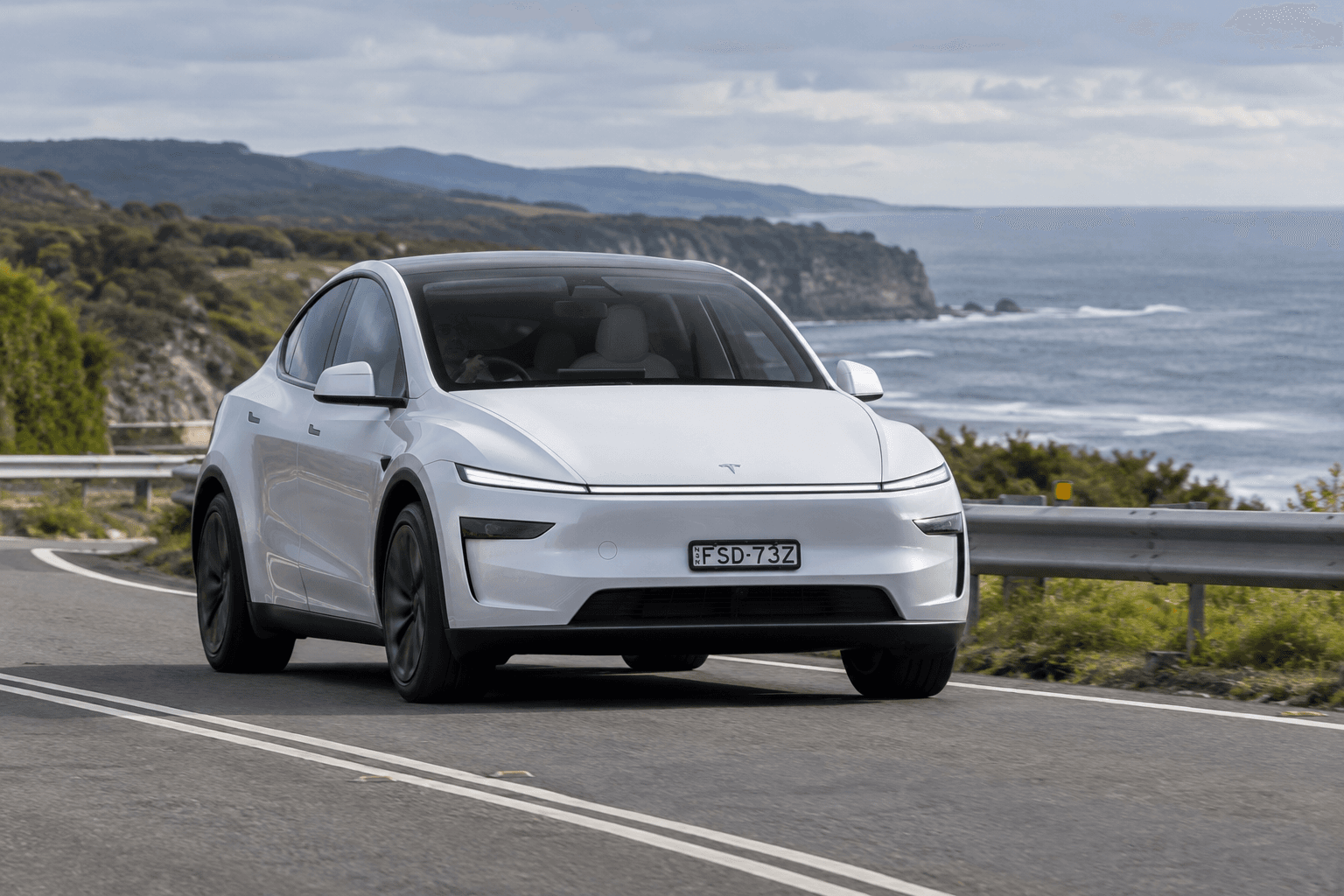
Tesla has published extensive safety data on FSD (Supervised) in Australia and New Zealand for the first time. According to the company, vehicles recorded 40% fewer collisions with the driver-assistance system activated than when driven manually.
The analysis covers the period from September 17, 2025, to September 16, 2026. The dataset includes around 160 million km driven with FSD and approximately 2.4 billion km driven manually with the vehicles’ active safety systems switched on.
The figures indicate a clear safety advantage when driving a Tesla, but because they have not been independently verified, they must be regarded as manufacturer-provided data.
Comparing the Safety Data
With FSD, Tesla recorded an average of one collision every 1.78 million km. According to the fleet analysis, a collision occurred every 1.07 million km during manual driving. Both major and minor incidents were included.
| Metric | FSD (Supervised) | Manual driving | Change |
|---|---|---|---|
| Collisions | One per 1.78 million km | One per 1.07 million km | 40% fewer |
| Automatic emergency braking events | One per 17,432 km | One per 5,989 km | 66% fewer |
| Hard braking events | One per 1,823 km | One per 180 km | 90% fewer |
| Horn use | One per 3,233 km | One per 643 km | 80% fewer |
According to Tesla, hard acceleration events also fell by 86%. Abrupt lateral movements and sharp cornering maneuvers were recorded 76% less often. Overall, this points to a smoother and more defensive driving style by the software.
Not every one of these metrics is automatically direct evidence of improved safety. Fewer emergency braking events, for example, could mean that FSD detects critical situations earlier and responds more smoothly. However, route characteristics, traffic density, and usage conditions also affect how often such interventions occur.
Why the 40% Figure Is Not Definitive Proof
The analysis is based on real-world fleet data and covers a substantial distance. However, it is not a randomized study in which identical routes are driven under the same conditions, once with FSD and once without it.
Drivers may prefer to activate the system on suitable roads, in good weather, or in less complex situations. Detailed information is also lacking on how collisions were recorded, how they were weighted by severity, and how potential differences among vehicles, regions, or driving profiles were taken into account.
One positive aspect is that the active safety systems remained switched on during the manual-driving comparison. FSD was therefore not compared with vehicles lacking automatic emergency braking and other basic safety features. Even so, an independent review of the methodology would be important to robustly confirm the reported advantage.
FSD Remains a Supervised Driver-Assistance System
The name Full Self-Driving should not obscure the fact that FSD (Supervised) still requires constant driver supervision. The person behind the wheel remains responsible and must be ready to intervene at any time. It is therefore not fully autonomous driving.
Australia and New Zealand initially received FSD in September 2025 for vehicles equipped with Hardware 4, also known as AI4. FSD v14 is now operating there with an advanced end-to-end architecture in which neural networks handle a larger portion of the driving task.
Tesla is developing an adapted Lite version for older Hardware 3 vehicles. At the same time, the company is preparing its next major software generation. Our overview of Tesla FSD v15 and Hardware 4 explains the technical advances Tesla has announced for it.
What the Data Means for Europe and the DACH Region (Germany, Austria, and Switzerland)
Tesla now counts FSD as available in 14 international markets, although it has been approved in Slovenia and the actual rollout is still pending. However, legal conditions differ significantly, meaning availability in individual European countries does not automatically imply approval in Germany, Austria, or Switzerland.
The results from Australia and New Zealand also cannot be directly applied to traffic conditions in the DACH region. Road design, traffic rules, weather, and driving culture differ. Nevertheless, the data provides regulators with a relevant signal because it shows how the software performs across a large distance on public roads.
Overall, Tesla’s first annual assessment is clearly positive. A 40% lower collision rate would represent substantial progress in everyday use, provided independent analyses confirm the effect and adequately account for possible differences between the comparison groups.