Tesla Semi Becomes First Choice for Major Electric Truck Order
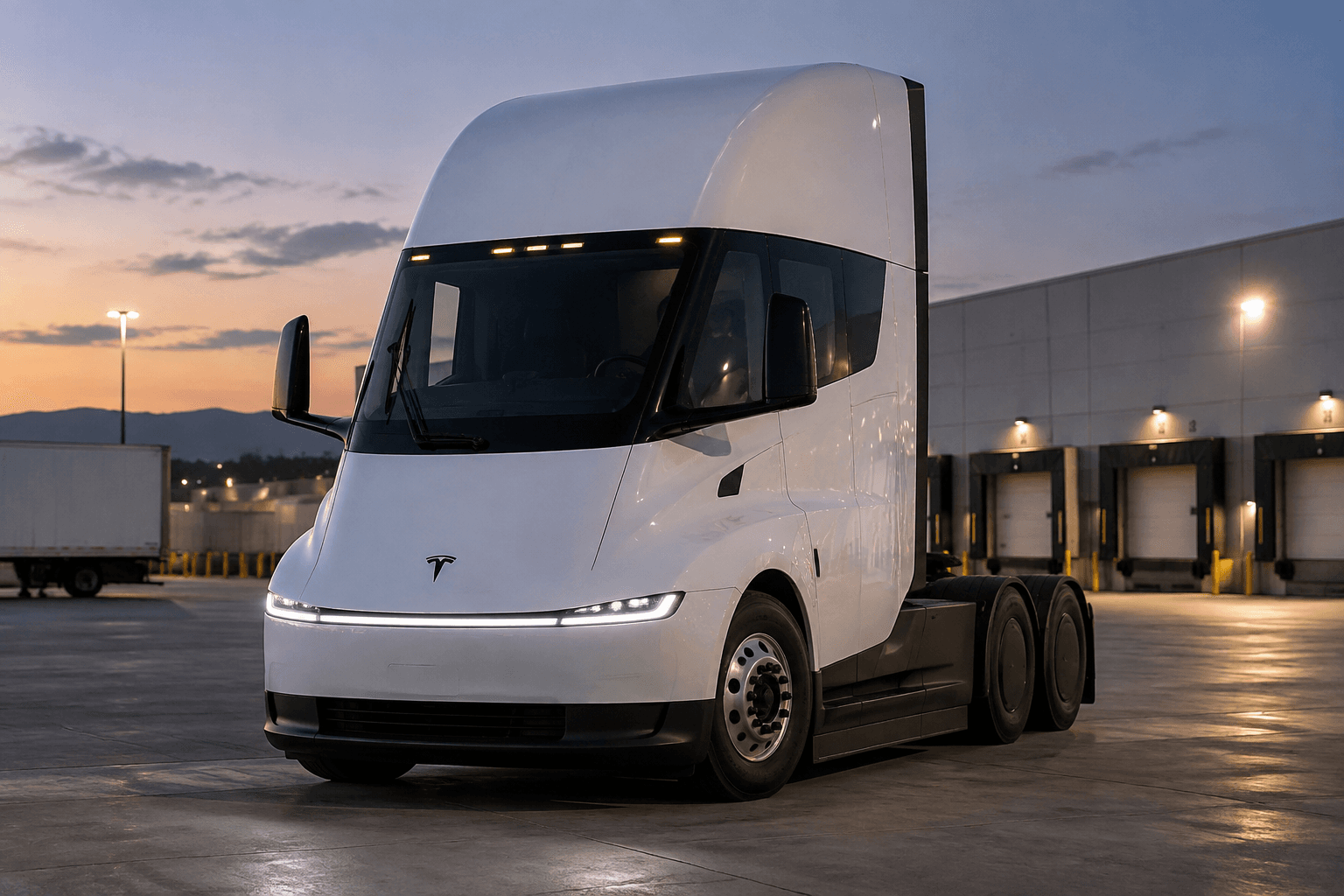
The Tesla Semi is receiving a major boost in the key US commercial vehicle market. The ZET SCALE logistics alliance initially plans to procure 2,500 heavy-duty electric trucks and has named Tesla’s tractor unit as its preferred choice.
It remains unclear how many vehicles in the first batch will actually come from Tesla. Alongside the Semi, electric trucks from Kenworth, Ride and Volvo are also set to be used. Nevertheless, the selection is an important signal for Tesla, as the Semi has so far remained a relatively rare sight on public roads despite several high-profile pilot customers.
According to the initiative, the initial order alone could roughly double the number of heavy-duty electric trucks in the United States.
Joint Order Aims to Reduce Costs
ZET SCALE pools the transportation requirements of major companies, allowing it to tender for significantly larger volumes than individual fleet operators. Companies whose goods are transported through the network include Microsoft and PepsiCo.
The joint approach is intended to secure better purchasing terms while also increasing vehicle utilization. Tesla emphasizes more predictable energy expenses and potentially lower operating costs per kilometer compared with a diesel truck.
In practice, whether the figures add up depends heavily on the route, payload, electricity price and charging plan. However, electric trucks can demonstrate their advantages particularly well on regularly recurring routes between fixed logistics hubs.
Leasing Removes Residual-Value Risk for Fleet Operators
The first 2,500 vehicles will be financed through ZET Financial. They will then be provided to freight carriers and shippers under a leasing model at market-based rates.
The key factor is the transfer of residual-value risk. For new electric commercial vehicles, there is still a lack of long-term data on resale values, battery performance and maintenance costs. Leasing can shift this uncertainty from the operator to the financing provider → lowering the barrier to entry for fleets.
Tesla Semi Technical Specifications
According to the latest information, Tesla offers the Semi in two range variants. The stated energy consumption is a manufacturer average and may differ in real-world freight operations depending on the load and operating profile.
| Variant | Range | Energy consumption | Unladen weight |
|---|---|---|---|
| Standard Range | around 523 km | around 106 kWh/100 km | under 9.1 t |
| Long Range | up to around 805 km | not stated | around 10.4 t |
The gross combination weight is stated at around 37.2 t. This places the Semi in a weight class that is also relevant to European long-haul transport. However, widespread adoption in Germany, Austria and Switzerland would still require appropriate type approval, competitive payload figures and a high-capacity truck charging network.
Ten Logistics Regions to Lead the Rollout
The vehicles will initially be deployed in locations combining high freight volumes, predictable routes and suitable charging infrastructure. Ten regions are planned, including Los Angeles, Stockton, Bakersfield, Seattle and Tacoma, Houston, Dallas, San Antonio, Chicago, Atlanta, and the metropolitan corridor between Newark and New York City.
This concentration makes sense because a single electric truck does not transform a supply chain. Only when enough vehicles use the same freight hubs can high-power charging points be operated economically and charging stops be systematically integrated into route planning.
More Than 10,000 Electric Trucks Planned in the Longer Term
The initial order is intended to be only the beginning. In the longer term, the alliance is targeting a fleet of more than 10,000 electric trucks, although it has not yet provided a binding timetable.
According to Tesla, its new Semi factory in Nevada is designed for a potential annual capacity of up to 50,000 vehicles. The major order could now demonstrate how quickly this theoretical capacity can be converted into reliable deliveries.
For the European market, the order does not yet signal an immediate sales launch. However, it will provide Tesla with valuable fleet data and strengthen the Semi’s commercial foundations. If deployment proves successful along major US freight corridors, it will also improve the prospects for a later expansion into the German-speaking DACH region of Germany, Austria and Switzerland.