4680 Cells in the Cybertruck: Tesla’s Next Step in Battery Supply
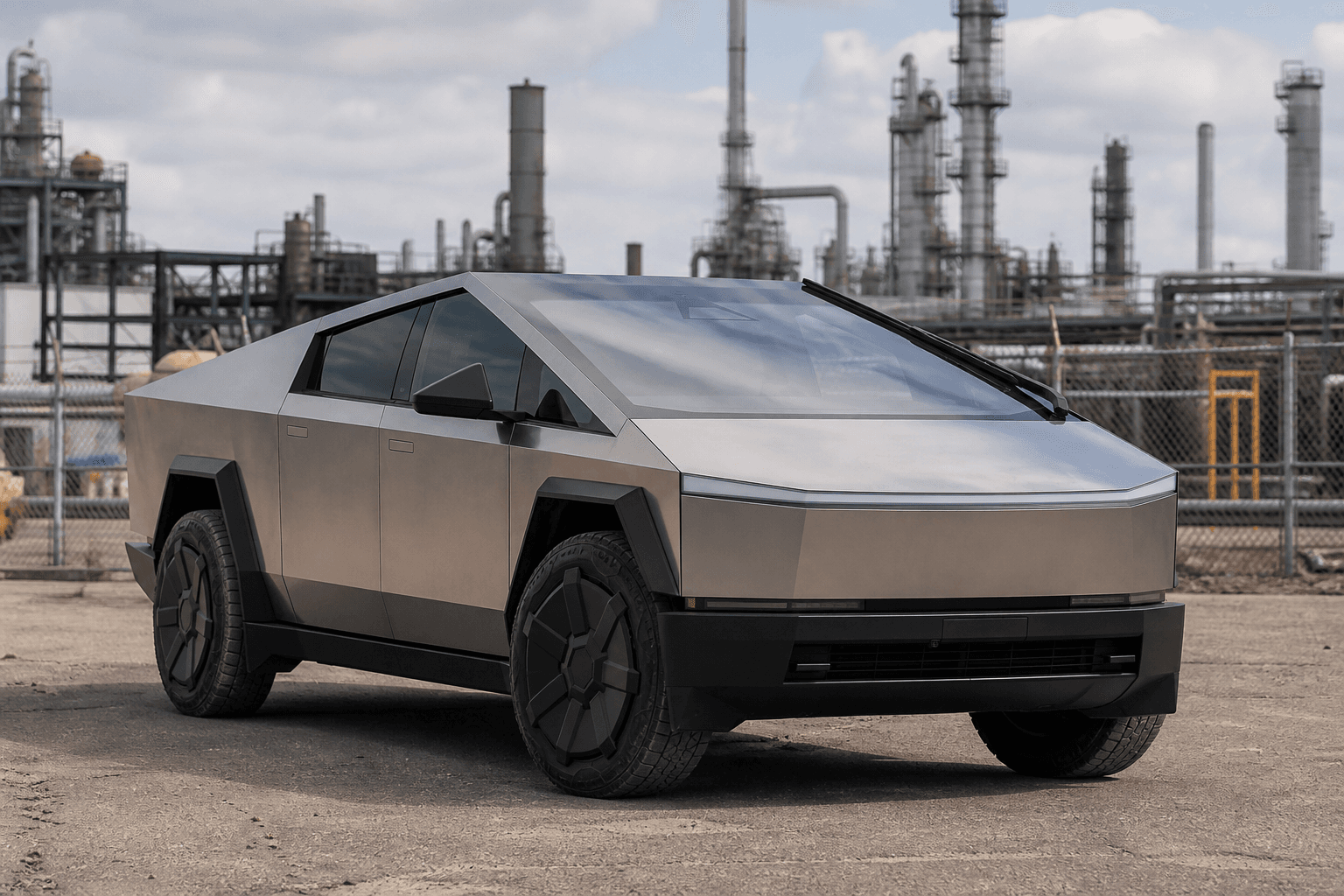
Tesla builds the Cybertruck with 4680 cylindrical cells and, according to the available information, uses lithium refined in Texas. That may sound like a minor detail in the US supply chain, but it is strategically significant: Batteries depend not only on cell chemistry and pack design, but also on access to raw materials and their processing.
Important for the DACH region—Germany, Austria, and Switzerland—the Cybertruck remains primarily a US-market product. Nevertheless, it offers an indication of how Tesla is shaping its overall battery and raw-material strategy, which also has an indirect impact on other model lines and markets.
Why “Lithium Refined in Texas” Is More Than a PR Message
Lithium is a key component of almost all traction batteries in common use today. What matters is not only extraction, but also refining—processing the material into battery-grade precursors. This particular step is a global bottleneck because it is technologically demanding and has historically been heavily concentrated in Asia.
If Tesla is using lithium refined in Texas for the Cybertruck’s cells, it points to greater regionalization of the supply chain. This could reduce risks associated with transportation routes, geopolitical dependencies, and volatile availability.
What the 4680 Cell Means for the Cybertruck from a Technical Perspective
The 4680 is Tesla’s larger cylindrical cell format, measuring 46 mm in diameter and 80 mm in height. It is based on the idea of combining more energy per cell while simplifying manufacturing and pack integration. In practice, the key factors are scalability, cost per kWh, thermal management, and performance under load.
This is particularly relevant for the Cybertruck because a heavy vehicle with a large frontal area often faces high power demands in everyday use, such as when towing or driving on the highway. A robust cell and pack design directly contributes to more consistent performance and more predictable charging and temperature ranges.
Real-World Impact: How Drivers Benefit Indirectly
For customers, the origin of the lithium is not directly noticeable in the way that range or charging performance is. The effect is more systemic: A more stable raw-material base can help make production more predictable over the long term and cushion price spikes.
This is especially relevant with Tesla: If a component is secured at scale, it may later appear in other vehicle programs as well. The Cybertruck is a visible example of Tesla’s approach to exerting greater control not only over its vehicles, but also over key parts of the value chain.
Context for Europe and the DACH Market
Although the Cybertruck is unlikely to become a mass-market vehicle in the DACH region, the news indicates how Tesla is continuing to develop its battery roadmap. For Europe, the crucial point is less about Texas itself and more about the direction of travel: more local processing and less dependence on individual regions.
Many of the principles that make such supply-chain decisions possible are already evident in Tesla’s current vehicles in everyday use, including its consistent platform and software integration. In this context, the Tesla Model Y and the Tesla Model 3 remain Tesla’s most important high-volume models in Europe.