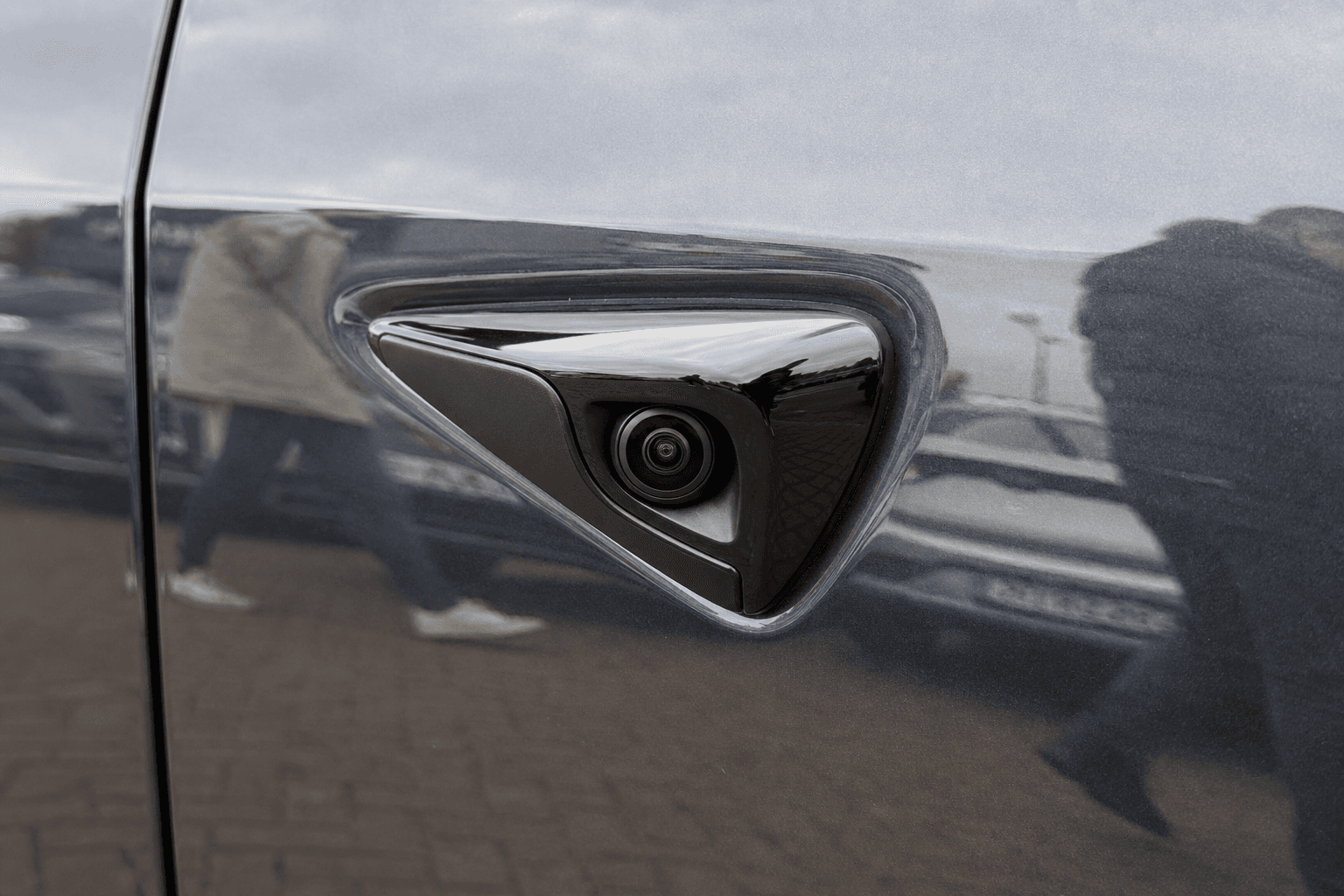
Tesla vehicles can use their exterior cameras both as a dashcam while driving and through Sentry Mode while parked. This is technically useful, but strict legal limits apply in Germany. Key factors include the purpose of the recording, how long it is stored, the area captured, and whether people or license plates are identifiable.
A recording may be admitted as evidence in court even if it was obtained in breach of data protection law.
Dashcam and Sentry Mode compared
| Function | Typical purpose | Legal assessment |
|---|---|---|
| Dashcam while driving | Documenting an accident or dangerous situation | More likely to be acceptable with short, incident-triggered storage |
| Sentry Mode while parked | Capturing vandalism, parking damage, or attempted theft | More problematic if public areas are continuously monitored |
| Remote camera access | Checking the vehicle’s surroundings | Simply viewing footage can also constitute data processing |
Why the GDPR matters
As soon as the cameras capture public roads, sidewalks, neighboring properties, or other people, the purely personal or household exemption under the EU General Data Protection Regulation (GDPR) generally no longer applies. Images of identifiable people, and often vehicle license plates, are personal data. The vehicle owner or user of the camera function may therefore be responsible under data protection law.
The usual legal basis is the legitimate interest under Article 6(1)(f) of the GDPR. The interest in investigating an accident or documenting a specific act of vandalism may be legitimate. However, it must be balanced against the rights of the people being filmed. Blanket recording kept in reserve on the premise that “something might happen someday” is harder to justify.
There are also transparency obligations. In principle, affected individuals should be able to identify who is recording, for what purpose, and how long the data will be stored. A notice sticker can improve transparency, but it does not automatically make disproportionate recording lawful.
When dashcam recordings are more likely to be acceptable
A more privacy-friendly technical setup keeps ongoing footage only in a short temporary buffer and continuously overwrites it. Only a specific event, such as hard braking, a collision, or a manual save command, should permanently save the relevant sequence. A short rolling buffer → less personal data stored without cause.
By contrast, fully recording long journeys is problematic, as is systematically recording specific people, vehicles, or locations. Manually saving arbitrary traffic scenes out of curiosity is also inconsistent with the purpose of preserving evidence.
Why Sentry Mode is more sensitive
When a Tesla is parked, Sentry Mode can detect movement around the vehicle and save clips. In a publicly accessible parking area, this may capture numerous uninvolved people. The longer the car remains there and the larger the monitored area, the more serious the intrusion becomes.
A specific risk may affect the balancing of interests, such as repeated damage to the vehicle. Even then, monitoring should remain limited in space and time to what is necessary. Anyone who regularly records the same sidewalk, building entrance, or neighboring property risks complaints, enforcement action under data protection law, and potentially claims for damages.
More likely to be acceptable
- Incident-triggered storage relating to an accident or damage
- Short retention periods and prompt review of relevant clips
- A limited camera area without targeted monitoring of third parties
More likely to be problematic
- Continuous storage of footage from public spaces
- Regular monitoring of neighbors, employees, or passersby
- Publishing unredacted footage online
Can Tesla videos be used as evidence?
Germany’s Federal Court of Justice has ruled that dashcam footage obtained in breach of data protection law may still be admitted as evidence in civil proceedings after the interests involved have been weighed. However, this does not amount to general permission to film continuously. The admissibility of evidence and a data protection violation are separate issues.
After an accident or criminal offense, the relevant original clip should be saved and preserved without alteration. A copy can be provided to the police, an insurer, or legal counsel. Recordings that are not needed should be deleted promptly.
Five practical steps for Tesla drivers
- Check in the vehicle menu when clips are saved and which camera functions are active.
- Whenever possible, use incident-triggered storage instead of long, indiscriminate recordings.
- Activate Sentry Mode selectively and avoid unnecessary monitoring of public spaces.
- After an incident, save only the relevant period and delete irrelevant clips.
- Publish recordings only after careful review, and obscure faces and license plates.
Audio recordings and publication
If a camera or additional accessory records conversations, this creates further risks. Unauthorized recording of privately spoken words may be a criminal offense under Section 201 of the German Criminal Code. Audio recording should therefore remain disabled unless it is necessary for the intended purpose.
Recording footage to preserve evidence is also not the same as publishing it. Uploading it to social media may violate privacy and data protection rights. In a specific dispute, legal advice is recommended because permissibility always depends on the circumstances of the individual case.