Tesla Collects Feedback on the Cybercab Cabin
Following the first public Cybercab rides in Austin, Tesla wants to hear directly from passengers about where the driverless vehicle could improve. A digital survey not only asks them to rate the ride itself but also requests specific feedback on desired cabin features.
This is particularly relevant for a robotaxi. With no driver on board, entry, controls, comfort, and luggage storage must be tailored entirely to passengers. Early feedback could help Tesla identify weaknesses before production reaches higher volumes.
The survey suggests that Tesla does not yet consider the Cybercab’s features to be finalized.
Passengers Can Choose from These Features
Participants can select up to three additional features. The options range from conventional seating comforts to features that could make the Cybercab more appealing as a mobile workspace.
| Proposed Feature | Everyday Benefit |
|---|---|
| Heated seats | Greater comfort in cold weather |
| Ventilated seats | More comfortable on longer journeys and in summer |
| Fully reclining seats | A more relaxed seating position during the ride |
| Folding table | Surface for a laptop, tablet, or refreshments |
| Wireless smartphone charger | Cable-free charging during the ride |
| Improved sound system | Better media quality in the cabin |
| More storage space | Additional room for personal belongings |
Passengers can also submit their own suggestions or indicate that they do not need any of these additions. The latter option is certainly relevant from a business perspective, as every additional component increases costs, weight, and potentially maintenance requirements.
Minimalism Meets Demands for Comfort
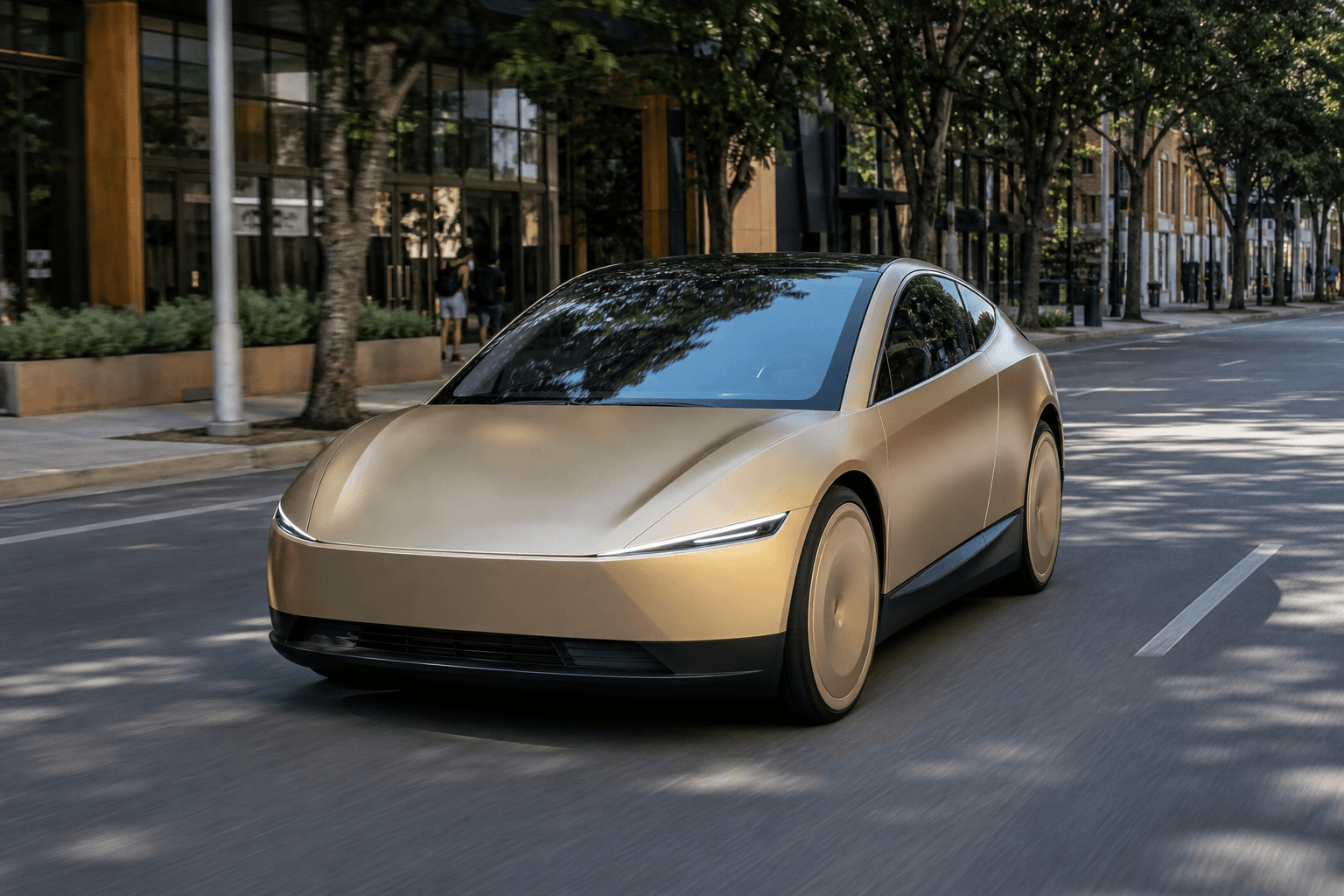
The current Cybercab is designed as an efficient two-seater for autonomous ride services. Tesla has therefore omitted some comfort features familiar from vehicles such as the Tesla Model Y. At present, these include heated and ventilated seats as well as wireless smartphone charging.
Instead of heated or ventilated seats, the cabin is intended to be brought to a comfortable temperature automatically before pickup. Smartphones can be charged via USB-C. This works, but for a rotating stream of passengers it is less convenient than a clearly visible wireless charging pad.
A folding table would be particularly interesting in combination with the large 22-inch display. It could make the vehicle more useful to commuters as a quiet workspace. However, Tesla would need to ensure that such fixtures do not pose an additional risk of injury during sudden braking.
Doors, App, and Wait Times Are Also Being Rated
The survey is not limited to new hardware. Passengers are asked to state their overall satisfaction and rate individual aspects of the service on a five-star scale.
- Vehicle availability and wait times
- Operation of the upward-opening doors
- Responsiveness of the central display
- Ease of use of the mobile app
- Seat comfort, interior space, and ride comfort
- Cleanliness and luggage capacity
Doors and the app are especially important points of contact in a driverless service. If a door does not open reliably or the controls are unclear, there is no driver available to provide immediate assistance. Availability, simple processes, and a robust cabin are therefore likely to be at least as important as luxury extras.
What the Survey Reveals About Tesla’s Robotaxi Strategy
Asking about physical features suggests that Tesla is exploring room for future revisions. However, inclusion in the survey does not mean a feature has been confirmed for production. Tesla may first analyze which options are frequently requested and whether their benefits justify the additional costs.
At the same time, the company is collecting real-world operating data for its autonomous platform. The continued development of Tesla FSD and the associated hardware remains crucial, because a comfortable interior alone is not enough to create a scalable robotaxi service.
Cybercab Remains a Distant Prospect for Germany, Austria, and Switzerland
The survey concerns operations in Austin. It does not yet indicate a specific launch date for Germany, Austria, and Switzerland, a region commonly referred to as DACH. Approval, liability, and regulatory requirements for driverless vehicles differ significantly from those in the US market.
Nevertheless, the trial offers an interesting glimpse of what may lie ahead. Tesla is apparently optimizing not only its autonomous driving technology but increasingly the entire user experience as well. The key question will be which comfort features can be reconciled with low operating costs, easy cleaning, and high reliability.