Tesla Optimus Is Getting Its Own Factory in Texas
Tesla’s new production facility for the Optimus humanoid robot is visibly taking shape on the north campus of Gigafactory Texas. Recent aerial footage shows that the steel structure is only a few structural bays away from the building’s northern end.
Concrete work is proceeding in parallel. Three upper floors are reportedly already poured, while workers are preparing additional reinforcement, foundations and load-bearing ground beams. The progress indicates a rapid pace, although the building is not yet a completed production facility.
The Optimus Building Will Be More Than One Kilometer Long
Ground was broken on the dedicated robot factory in late March, and assembly of the steel structure began in May. The building is part of an expansion of Tesla’s site by more than 483,000 m².
The Optimus factory is expected to extend approximately 1.2 km alongside the existing vehicle production facilities. It will be narrower than the current buildings, but its length still makes it a massive industrial project.
| Metric | Current Status and Plans |
|---|---|
| Location | North campus of Gigafactory Texas |
| Total site expansion | More than 483,000 m² |
| Length of the Optimus factory | Approximately 1.2 km |
| Current construction progress | Steel structure well advanced, concrete work underway |
| Target for large-scale production | Summer 2027 |
2027 Production Launch Remains Ambitious
Tesla has not yet confirmed when production will begin at the new factory. Under the timeline communicated so far, large-scale production of Optimus is expected to start in summer 2027, once the building, production lines and other infrastructure are ready.
A separate pilot facility in Fremont is reportedly already set to produce third-generation Optimus robots. This small production run is primarily intended to collect data from real-world use and further develop the hardware and software before scaling up to industrial production.
The rapid construction of the factory building is an important signal, but the robot’s reliability and the ability to automate mass production will be the decisive factors.
Elon Musk has suggested a potential long-term capacity of up to 10 million robots per year. This figure represents a vision for the site at full scale and should not be equated with the production target for 2027. Reaching such volumes would require several stages of expansion and a correspondingly large market.
Why Tesla Is Bringing Production and AI Closer Together
In addition to Optimus production, further technology projects are planned for the expanded campus. These include a chip manufacturing facility that Tesla intends to develop jointly with SpaceX. The close proximity could accelerate development, supply and coordination across the future AI and robotics supply chain.
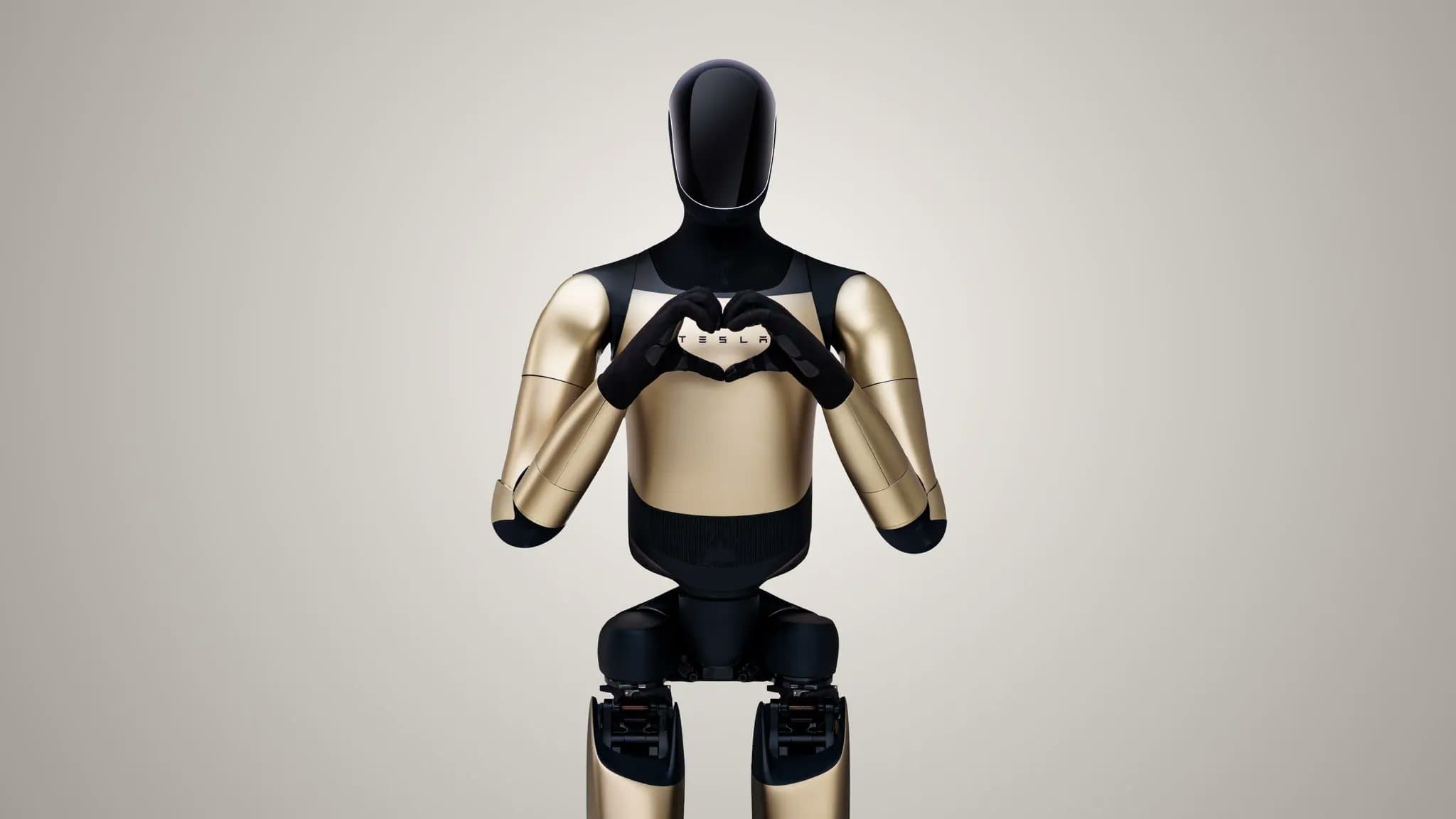
Optimus is closely linked to Tesla’s work on artificial intelligence, camera systems and neural networks. Our article on Tesla FSD v15, HW4 and Optimus provides an overview of the company’s other plans.
For Tesla, the potential advantage initially lies in its own factory operations. If Optimus can reliably perform repetitive or physically demanding tasks, the robots can be tested directly under real-world production conditions. Strong results in Tesla’s own factories could later open the door to external industrial customers.
Construction Progress Is Not Yet Proof of Production Readiness
The new building shows that Tesla is committing significant resources to Optimus. However, it does not yet prove that the hardware, software and manufacturing processes are ready for high production volumes. Humanoid robots must operate safely in changing environments, use tools precisely and be more cost-effective than specialized machines.
The timeline through summer 2027 therefore remains challenging. Tesla does, however, have extensive experience in rapidly building large production facilities and can combine insights from vehicle manufacturing, battery technology and AI. The progress in Texas is creating the industrial foundation, but the real test will come when production begins to ramp up.