Suzuki Plans to Export Kei Cars to Europe, With a Focus on Urban EVs
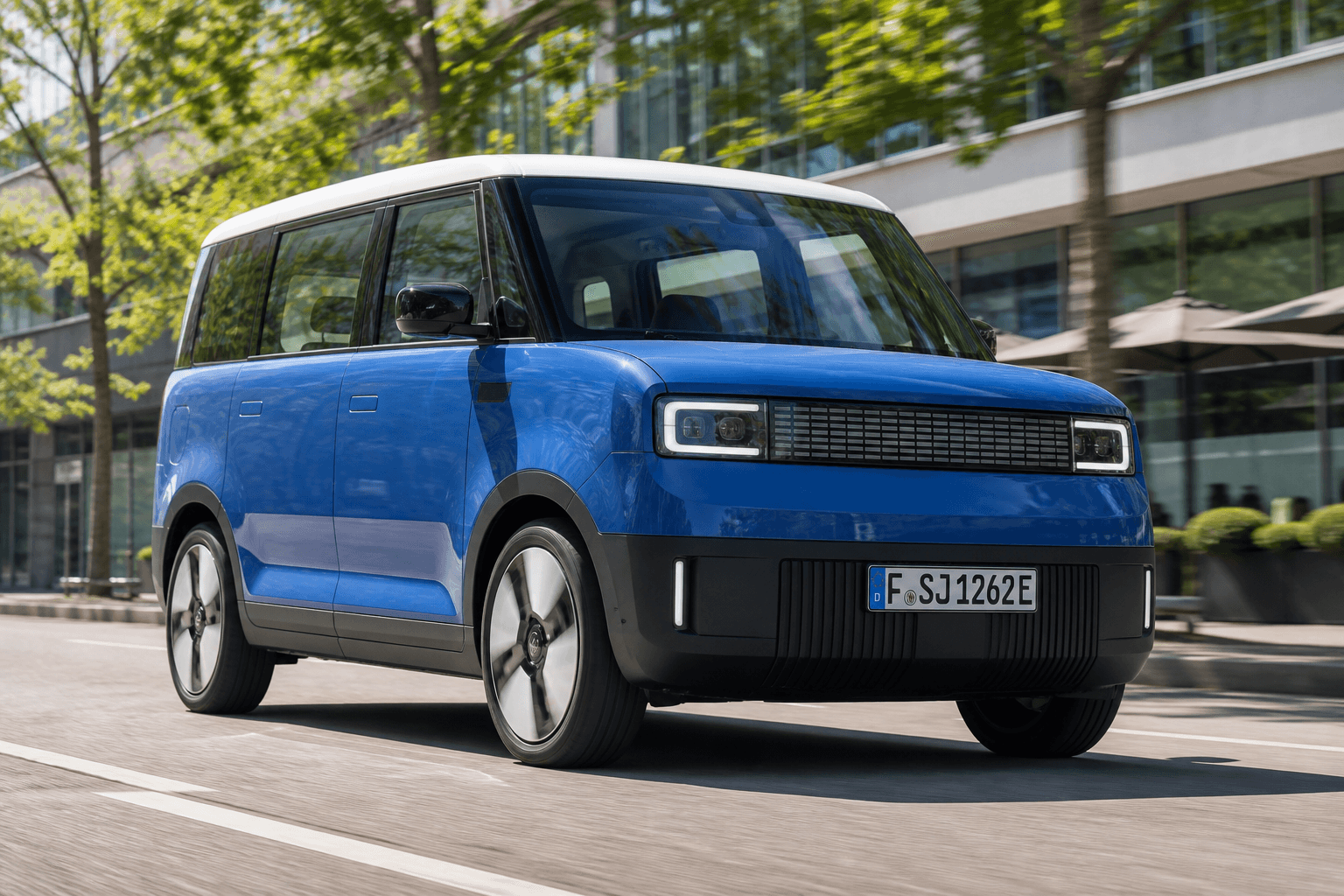
Suzuki is working to bring electric minicars to Europe from 2027. In Japan, these vehicles form a distinct category known as kei cars. Markets under consideration include the UK and Italy, where compact exterior dimensions offer a tangible advantage in everyday use. For Suzuki, this would be a clear step toward regaining sales volume in Europe's entry-level segment.
An important point for the DACH region—Germany, Austria and Switzerland—is that although Germany has traditionally favored compact and midsize cars, demand for affordable, efficient urban EVs is growing. In metropolitan areas in particular, maximum vacation-driving range matters less than low energy consumption, ease of use and a price that genuinely makes switching from a combustion-engine car easier.
What Defines Kei Cars and Why They Are Suddenly Relevant in Europe
Kei cars are deliberately conceived in Japan as an alternative to large vehicles: small, light and cost-efficient, making them ideal for short to medium distances. This approach is particularly appealing for electric cars because less weight and smaller batteries generally translate directly into lower energy consumption, lower costs and fewer resources.
Europe has seen this only sporadically in recent years, as many manufacturers have preferred to prioritize larger EVs with large batteries. However, the market is changing, partly because EVs have now entered the mainstream and buyers are paying closer attention to total cost of ownership and everyday practicality.
The Potential Export Model: Based on the Vision e-Sky and Built in Japan
The Vision e-Sky concept, unveiled in 2025, is considered the likely basis for the European model. The production vehicle is expected to launch in Japan as early as November, where it will be positioned as Suzuki's first fully electric kei car. According to reports, it will be manufactured in Shizuoka Prefecture, southwest of Tokyo.
One detail is particularly noteworthy: Suzuki may export the car to Europe relatively unchanged, something that has historically been quite rare for the company. An earlier niche model that reached Europe in small numbers has been cited as a comparison, although today's market conditions are entirely different, with significantly greater demand for affordable electric cars.
Range and Battery Supply Chain: 310 km Is a Strong Figure for an Urban Car
The new electric minicar is said to offer a maximum range of around 310 km. Without details on battery capacity, charging power and energy consumption, that figure remains theoretical for now, but it fits the vehicle's intended role as an urban and commuter car.
The batteries are expected to come from a company associated with BYD. BYD is significant not only as an automaker but also as a major battery producer. For Suzuki, this type of supply chain could mean a faster production ramp-up, more stable costs and access to proven cell technologies—factors that are crucial in the price-sensitive entry-level segment.
Price and Competition: Targeting the Segment Below Compact Cars
Neither launch dates nor prices have been officially confirmed. Unofficial estimates for the UK are equivalent to approximately 23,400 euros. This would put Suzuki into a rapidly evolving European segment: affordable urban EVs that are not perceived as second-car toys, but as fully viable alternatives for everyday use.
An electric Renault Twingo has been cited as a comparison. Even without directly comparing specifications, the direction is clear: Suzuki does not intend to compete on premium-level range, but to tackle price barriers and the real cost of urban mobility. Anyone looking for a general overview of the electric compact SUVs and everyday EVs available in Germany in 2026 can find relevant context in our guide to electric compact SUVs in 2026, although Suzuki's kei car would be considerably smaller still.
EU Minicar Category: Incentives Available, but Not for Imported Vehicles
The political timing is also interesting: in 2025, the EU approved a new vehicle classification modeled on Japan's kei system. The maximum length for this new category is 4.2 m, making it larger than traditional Japanese kei cars. This provides Europe with a clearer definition of a “small” vehicle category, which should generally help manufacturers develop suitable products more precisely.
The catch is that regulatory concessions and potential subsidies are intended to apply only if vehicles are built within the EU. Because Suzuki currently plans to manufacture the model in Japan, it will probably not qualify for this advantage. That matters because, in the entry-level segment, a difference of just a few thousand euros can determine the final price's competitiveness.
Why Suzuki Is Refocusing on Europe
With this move, Suzuki also appears to be aiming to stabilize its European business. Sales in the last fiscal year, which ended in March, reportedly fell by 15% to 187,000 vehicles. An appealing urban EV could help bring more customers back into showrooms without requiring Suzuki to compete at the price points of larger electric SUVs.
At the same time, demand for EVs in Europe continues to rise—not only because of higher energy prices, but also because the selection of vehicles is improving and charging infrastructure and everyday EV use are becoming more commonplace. Anyone considering the switch but still wondering, “Is the range really enough?” can find practical guidance in our guide to EV range anxiety.
Real-World Impact: Who Could Find It Appealing?
If Suzuki adapts the concept effectively for Europe, the model could be particularly attractive to three groups: city residents with limited parking space, commuters with predictable journeys and households looking for an affordable EV as a primary or secondary car. Ultimately, the WLTP figure will not be the only deciding factor. Charging power, winter efficiency and how well the car is adapted to European safety and driver-assistance requirements will also matter.
In the Tesla world, meanwhile, everyday energy features are developing rapidly—for example, when a car can not only drive but also supply electricity. Anyone interested in the subject can explore what lies behind V2L on the Tesla Model Y. Such functions could become particularly attractive in smaller, efficient vehicles because they can increase their usefulness in everyday life.
What Remains Unclear
Until Suzuki provides specific information, key points remain unclear: EU type approval, exact dimensions, battery capacity, charging power and a reliable price announcement for the eurozone. It will be equally important to know whether Suzuki will merely make technical modifications for Europe or also upgrade the equipment and driver-assistance systems.
Overall, however, the plan makes sense: a light, efficient EV can excel precisely where large batteries are often oversized. If Suzuki gets the price right, the kei-car concept could quickly become more than just an exotic import in Europe.