Is the solar car finally here? Not quite, but solar glass is still exciting
The idea is as old as the electric car itself: Why not simply collect solar energy directly on the car and use it to make the battery smaller—or even eliminate charging altogether? The problem comes down to physics and surface area. There simply is not enough space on the roof of a normal passenger car to generate sufficient power for driving.
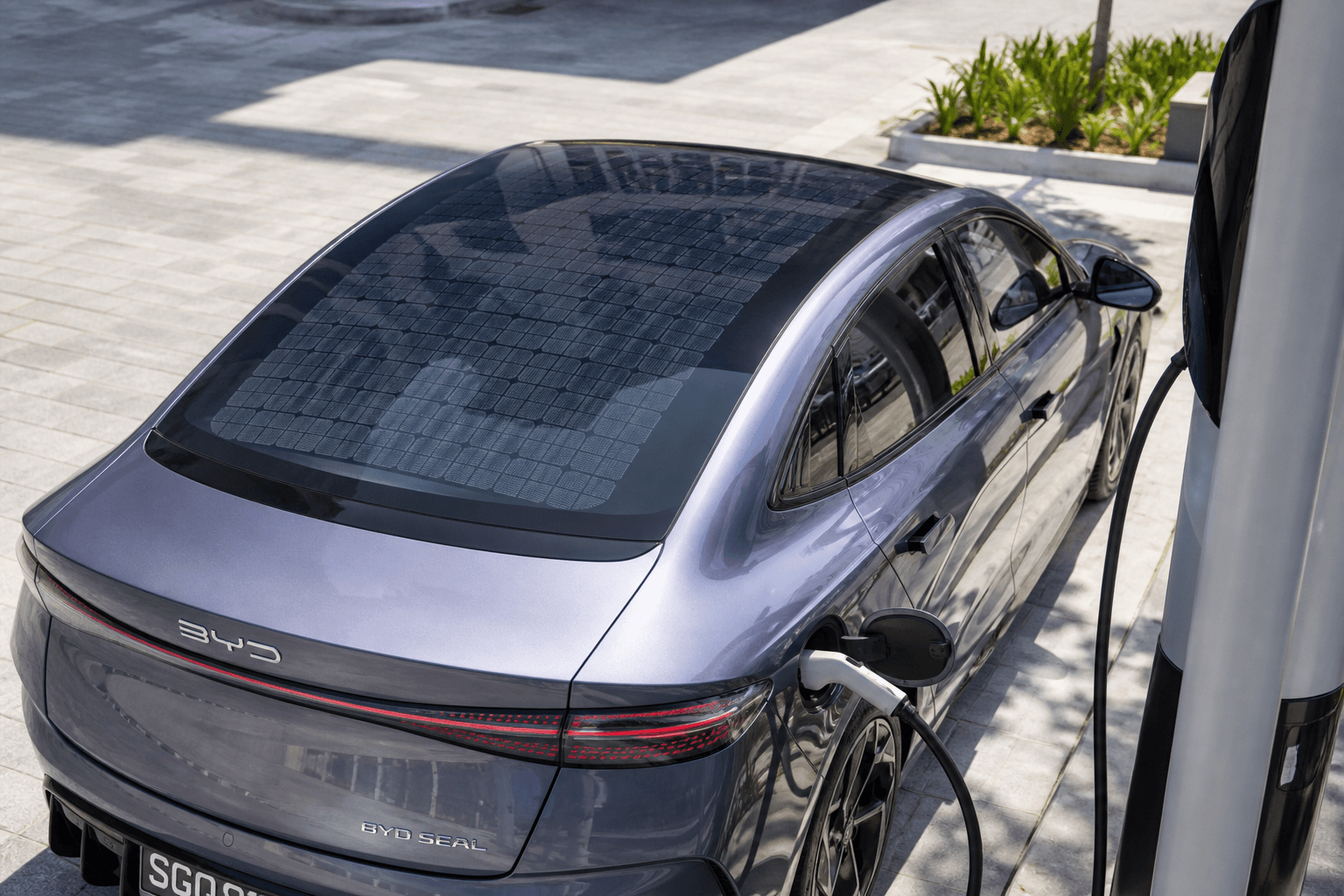
Nevertheless, progress is being made: A major glass manufacturer from China has listed automotive solar glass designed to serve as a glass roof while also generating electricity. This is not a DIY project for solar races, but a supplier component intended for mass-produced vehicles.
How much power can roof-mounted solar glass generate?
The manufacturer cites an output of around 150 W per m². For comparison, conventional opaque solar panels often deliver about 200 W per m². The difference makes sense because the roof glass of a car is supposed to remain at least partially transparent. Semi-transparent means that it looks stylish and can function as a panoramic roof, but it does not capture “all” the available light.
Media reports also mention a possible total system output of up to around 720 W peak if enough roof area is covered. Importantly, these are currently unconfirmed claims concerning a potential application at BYD. Neither the glass manufacturer nor BYD has officially approved it as a specific production option.
Why that is not enough to power the car
Even highly efficient electric cars require orders of magnitude more power during acceleration and at highway speeds than a solar roof can provide. A few hundred watts are quickly consumed while driving as soon as the road climbs, conditions become windy or you accelerate briskly. Solar panels on the roof therefore replace neither the battery nor charging stops.
Solar glass on a car is more of a power source for auxiliary systems than a genuine “solar drive” solution.
The real-world impact: Standby consumption, comfort and less recharging
This is precisely where it gets interesting: Modern cars have many systems that consume energy even while parked. The manufacturer lists connectivity, climate control and a data recorder as examples. In the Tesla world, the obvious comparison is Sentry Mode, which can consume a noticeable amount of energy over time when the car remains parked for long periods.
A solar roof could partially offset these standby losses. Not to the point where you would never have to charge again, but enough that the car has “lost” less range after a day in the sun or the next charging session can be postponed.
EV vs. combustion engine: Which benefits more?
Interestingly, the technology is not aimed exclusively at electric cars. One demonstration even used a combustion-engine vehicle. In EVs, storing the energy is straightforward because a large battery is already installed. Depending on the system design, combustion-engine vehicles or plug-in hybrids would need additional storage and suitable onboard electronics to make effective use of the solar power.
What about BYD, and when will we see this in the DACH region?
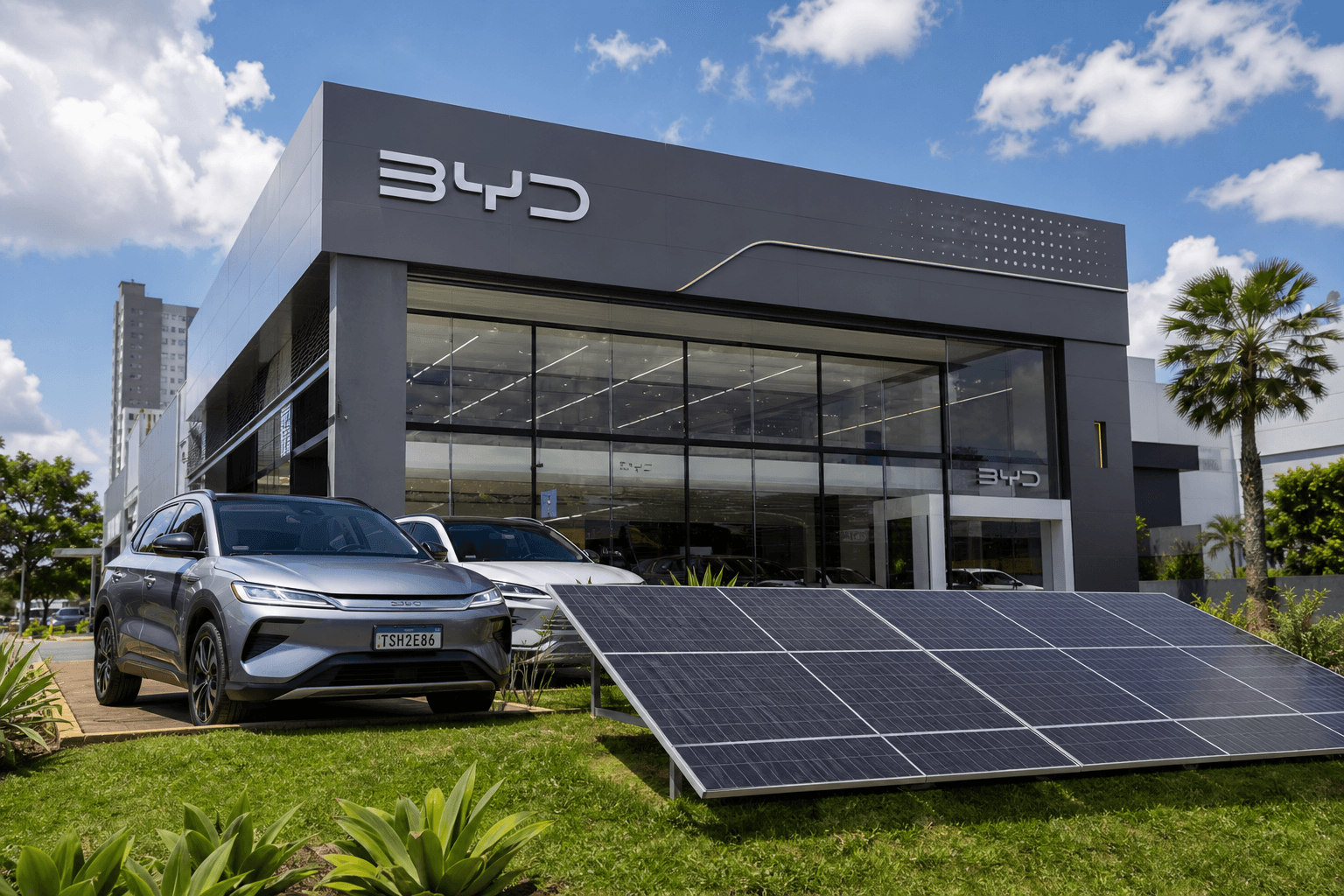
It makes sense that BYD is being named as a possible first high-volume candidate: The company regularly brings new battery and charging technologies to market and tests options that promise tangible everyday benefits. But as things stand today, there are only reports and no confirmed production announcement for a specific BYD model or final pricing.
Because this is a supplier component, exporting it to Europe is conceivable in principle. Whether and when it appears in vehicles in Germany, Austria and Switzerland—the DACH region—will ultimately depend on whether manufacturers believe the added value is sufficient to justify the cost, weight, complexity and type-approval requirements.
Assessment: In-car solar is an addition, not a revolution
Solar glass is a clever step because it makes use of vehicle surface area that already exists. It does not turn the vehicle into a “solar car,” but it can provide real benefits in suitable scenarios: cars parked in the sun for long periods, commuters with outdoor parking spaces, vehicles with high standby consumption or drivers who want gentle climate control before getting in.
For anyone who fundamentally wants greater peace of mind about range, however, the decisive factors remain efficiency, battery size and charging infrastructure. If this is a general concern for you, our guide to EV range anxiety can also help.
Why this topic is gaining momentum now
The market is moving toward more comfort features, more sensors and more “always-on” functionality in vehicles. At the same time, many manufacturers want to optimize range and consumption without simply making the battery larger. Solar glass is one element that primarily addresses periods when the vehicle is parked—in other words, precisely the times when it could potentially remain in the sun for extended periods.
If BYD or other brands offer it as an option, it is likely to be perceived in practice primarily as a “small range buffer,” not as a substitute for charging. How well it works will ultimately depend heavily on parking habits: garage or underground parking, shade or direct sunlight, summer or winter.
Related perspective on BYD and efficiency
BYD is currently showing a strong drive for innovation in efficiency and fast charging in general, including through new battery technologies. To see where the pursuit of record-breaking figures is heading, also read the article about the BYD Da Han with 1,008 km of range and nine-minute charging, or take a look at the Chinese battery market and the LFP trend.