Modernization, not just expansion: Shell Recharge replaces fast-charger hardware
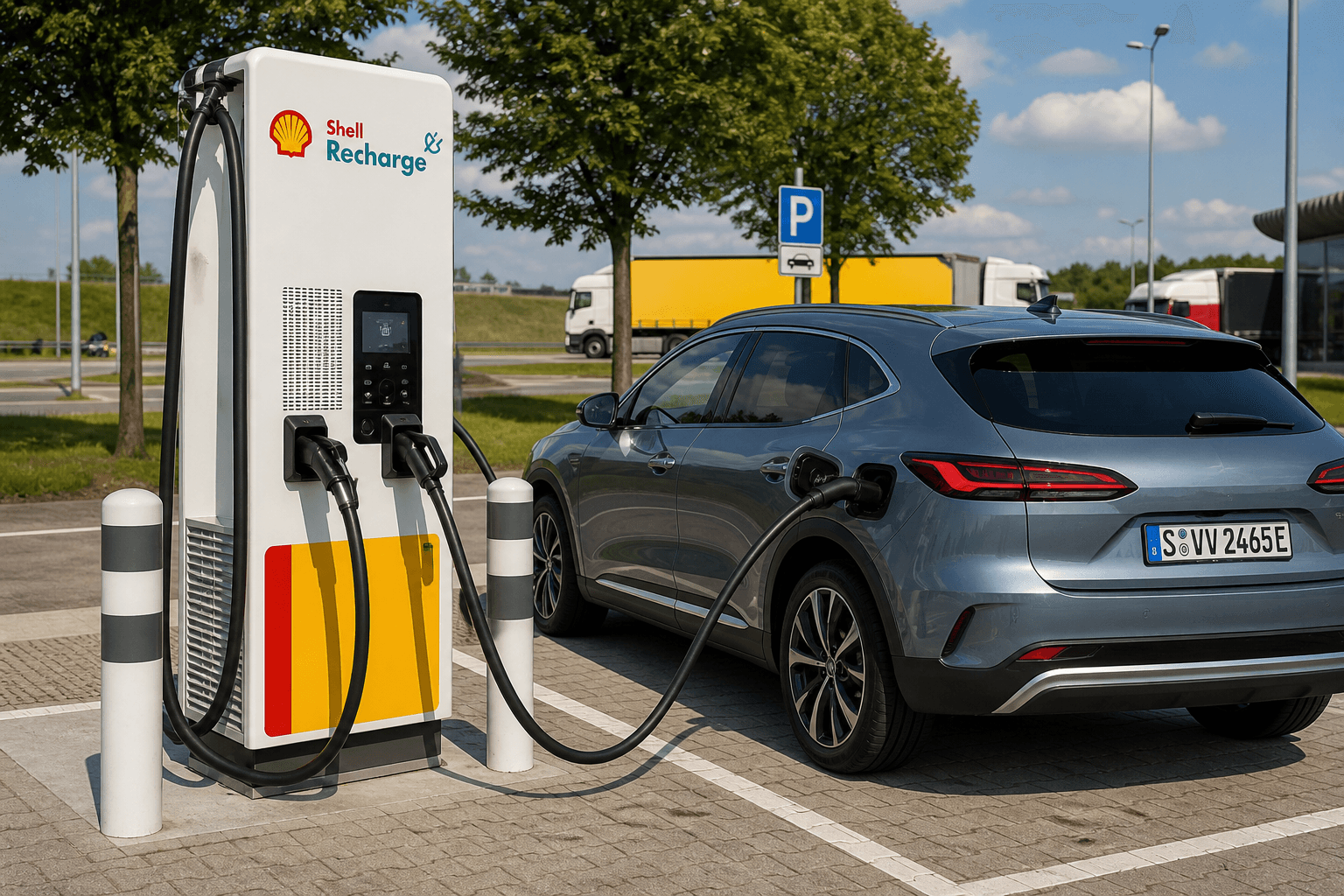
When it comes to public fast charging, it is not only about how many charging points there are, but above all how often they actually work in everyday use. This is exactly what Shell Recharge is addressing in Germany: By the end of August 2026, 150 fast-charging points at more than 40 locations had been upgraded. By the end of the year, at least 50 more charging points are set to receive new hardware.
According to the company, the aim is to increase availability and improve the technical stability of charging sessions. At selected locations, the upgrade will also increase the available charging power.
What difference does new hardware really make in everyday use?
For drivers, modernizing the hardware is particularly relevant if it reduces common frustrations: a charging point is occupied, offline, stops charging unexpectedly, or only starts on the third attempt. New charging systems are generally more robust in operation and better designed for continuous loads, temperature management, and stable communication between the vehicle, backend systems, and payment services.
The next phase of electric mobility will be determined by everyday reliability, not just the sheer number of charging points.
In practical terms, that means fewer failed starts, fewer interruptions, and a better chance of arriving and being able to charge immediately. Higher charging power at individual locations can also help reduce waiting times, either through shorter stops per vehicle or better utilization management.
Availability depends on more than the plug
Alongside the hardware, Shell Recharge also emphasizes user-friendly processes, various payment options, digital services, and close monitoring of its locations. This combination is crucial: Modern charging hardware alone is of little benefit if the software, backend systems, and service processes cannot keep pace. Conversely, effective monitoring can identify problems more quickly and shorten downtime.
Anyone interested in the general state of public charging infrastructure and common efficiency pitfalls when charging can also read our analysis of EV charging losses and why the ADAC, Germany’s largest motoring association, advises against using Schuko household outlets.
Context: How large is Shell’s fast-charging network in Germany?
According to the company, Shell currently operates more than 2,400 fast-charging points in Germany and is continuously expanding the network, both at its own locations and together with partners. The modernization program is therefore a quality upgrade within an already extensive network, rather than simply a “more chargers” project.
For EV drivers in Germany, this is fundamentally good news because reliability directly improves everyday usability: charging point online → more relaxed route planning, less buffer time, and fewer detours to alternative stops.
Why this matters equally for Tesla and other EVs
Although many Tesla drivers often prefer to charge at Superchargers, everyday mobility rarely relies on a single network. On long journeys, when taking detours, or in regions with limited coverage, a reliable third-party HPC stop can make all the difference. Anyone looking for general strategies to reduce charging stress can find them in EV range anxiety: causes, facts, and strategies.
The bottom line: Modernization may not sound spectacular, but it is extremely effective because it addresses precisely the areas where electric mobility succeeds or fails in everyday use.