€116.7 million for Rome’s next step in public transit
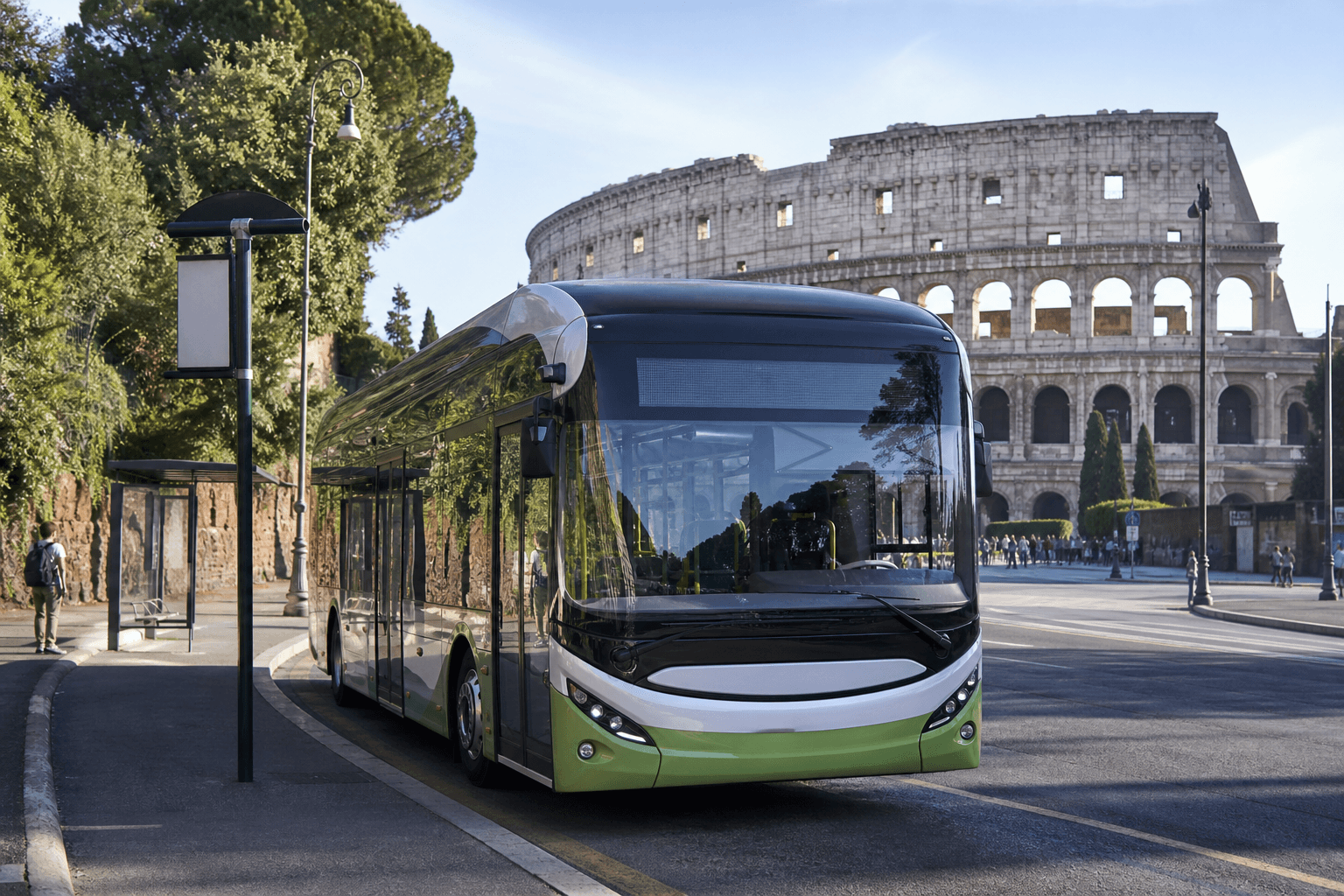
Rome wants to significantly reduce emissions from public transit and is investing €116.7 million in new buses and the associated energy infrastructure. The focus is on two technologies: battery-electric buses and hydrogen fuel-cell buses. The project is being supported financially by Italy’s Ministry of Infrastructure and Transport, with municipal operator ATAC overseeing operations.
The plan deliberately goes beyond simply ordering vehicles. The city is simultaneously building infrastructure to ensure that charging or refueling does not become an obstacle in day-to-day operation. With hydrogen in particular, the supply chain will ultimately determine whether a project can be scaled reliably.
How the budget is allocated
Most of the funding will go toward hydrogen buses, with another portion allocated to battery-electric buses. A separate budget has also been set aside for the local production of green hydrogen.
| Component | Budget | Objective |
|---|---|---|
| New hydrogen buses | €83.6 million | Zero-emission operation on routes with more demanding requirements for operating time and flexibility |
| New electric buses | €27.1 million | Electrification of routes well suited to depot or opportunity charging |
| Electrolyzer in Acilia | €6.0 million | Local production of green hydrogen for the bus fleet |
Acilia as a hydrogen hub: local production instead of relying solely on purchases
The strategic centerpiece of the hydrogen initiative is a hub in Acilia, south of Rome. An electrolyzer there will produce green hydrogen locally, which will then be used directly by the new bus fleet. The rationale is straightforward: successful on-site production would shorten transportation distances and reduce the risk of supply shortages.
Another notable aspect is that the locally produced hydrogen is not intended exclusively for public transit. Plans call for making it available to private customers as well, helping to launch a broader hydrogen ecosystem in the city. Whether this proves economically sustainable will depend heavily on how effectively capacity utilization and electricity procurement for electrolysis are managed.
Why Rome is not relying on batteries alone
Rome primarily justifies its use of hydrogen on routes where battery-electric buses could reach their practical limits. Depending on the topography, route scheduling, depot situation and required daily mileage, this may become an issue. Put simply: too little time to charge or routes that are too long → fuel cells may be easier to schedule in operation, provided that refueling works reliably.
Similar strategies can be seen in the DACH region—Germany, Austria and Switzerland: many cities are electrifying the “easy” routes first while remaining open to different technologies for special cases. At the same time, growing efforts are being made to deploy electric buses on more demanding routes through better charging strategies and infrastructure.
What passengers should notice
Beyond the powertrain, the new vehicles are also intended to improve the everyday passenger experience. Planned features include improvements in comfort and accessibility, such as facilities for people with reduced mobility, air conditioning, USB charging ports, video surveillance and passenger-counting systems. For a major city like Rome, these are not merely “nice-to-haves,” but essential elements in making public transit more attractive and safer.
A trend gaining momentum worldwide
Rome’s decision reflects a broader trend: global sales of electric trucks and buses have recently risen significantly, along with their market share. Alongside new vehicle purchases, retrofitting is also under discussion—in other words, converting existing diesel buses to electric power in an economically viable way. This is of interest to municipalities because fleet modernization does not always have to depend solely on new vehicles.
Assessment: What is smart about Rome’s package and where the risks lie
Arguments in its favor
- Infrastructure plus vehicles rather than procurement alone, increasing the likelihood of reliable operation.
- A mix of technologies to better address different route profiles.
- Local hydrogen production could stabilize supply if electricity procurement and capacity utilization are managed effectively.
What matters
- Availability of hydrogen infrastructure, because outages directly affect operations.
- The cost of green hydrogen, which determines day-to-day operating expenditure, not just capital expenditure.
- Scaling: electric buses benefit greatly from effective charging strategies, while hydrogen buses benefit from high utilization of refueling stations.