Red E Go Simplifies Starting a Charging Session
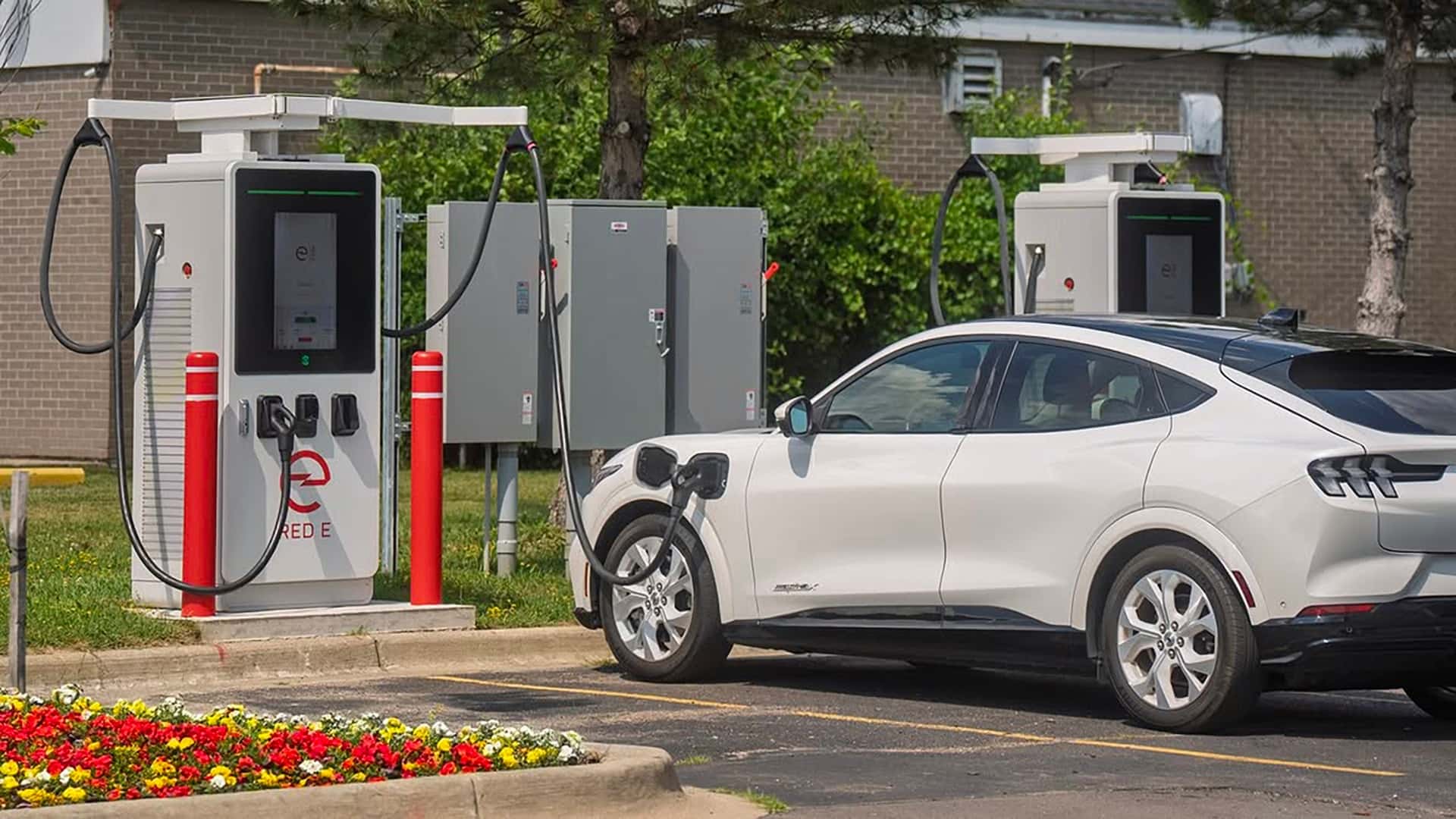
The rapidly growing US charging network Red E Charge is introducing a Plug & Charge-like feature at selected stations. The service, called Red E Go, is designed to eliminate common obstacles such as QR codes, app approvals and card payments.
Before using it for the first time, drivers must add their EV and a payment method in the app. A compatible station will then recognize the connected vehicle and automatically handle the charging session, including payment.
Set it up once, plug in the cable, and charge and pay automatically: that is exactly how public fast charging should work in everyday use.
Compatibility Remains a Requirement
Red E Go is not automatically available at every charging point or for every vehicle. The station’s technical equipment, the available connector and support from the specific EV are the deciding factors.
Even after activation, the app remains relevant for account management, billing and finding suitable stations. At supported charging points, however, drivers can leave their smartphone in their pocket when starting a charging session.
The Red E Charge Network in Numbers
| Metric | Status of the US network |
|---|---|
| Locations | more than 1,000 across 46 US states |
| Total charging connectors | around 4,600 |
| DC fast-charging connectors | 2,159 at 579 stations |
| AC charging connectors | nearly 2,500 at around 600 locations |
| Maximum stated output | up to 640 kW, depending on the location and connector |
| Connector types | J1772, CCS1, NACS and CHAdeMO |
Another 315 DC charging points were added in the second quarter. This made Red E Charge one of the four fastest-growing fast-charging networks in the US, ranking behind Tesla, Walmart and ChargePoint in network expansion.
Not Every Car Can Use Up to 640 kW
Charging output across the network ranges from 10 to 640 kW, depending on the station. However, the peak figure does not mean that every vehicle can actually charge at 640 kW. Vehicle architecture, battery temperature, state of charge and power sharing at the station all limit real-world charging speeds.
High-powered chargers can only deliver their full benefits with vehicles designed to support them. Our comparison of 800-volt and 400-volt architectures explains the role played by onboard voltage.
What Does Red E Go Mean for Germany, Austria and Switzerland?
Red E Charge focuses on the US. Its connectors therefore differ significantly from those used in the European market, where CCS2 and Type 2 dominate. NACS has now become the main North American charging standard, while CCS1 and CHAdeMO remain available at numerous locations there.
For Germany, Austria and Switzerland—the DACH region—the operating concept is the most relevant aspect. Automatic authentication reduces potential sources of error and makes a charging network more attractive to occasional users. At the same time, European providers are trying to simplify access through roaming, including solutions offering access to hundreds of thousands of charging points in Germany.
Strong Growth, but Room for Improvement in Customer Satisfaction
In a recent US customer satisfaction study, Red E Charge scored 628 out of 1,000 points and ranked fifth among the networks assessed. Providers ahead of it included the Tesla Supercharger network, Rivian and the charging networks operated by Mercedes-Benz and Ionna.
The score was also below the segment average of 666 points. This shows that rapid expansion and the new automatic billing system are important steps, but they are no substitute for reliable hardware, transparent pricing and consistently operational charging points.