Project Nightingale Begins Intensive Testing
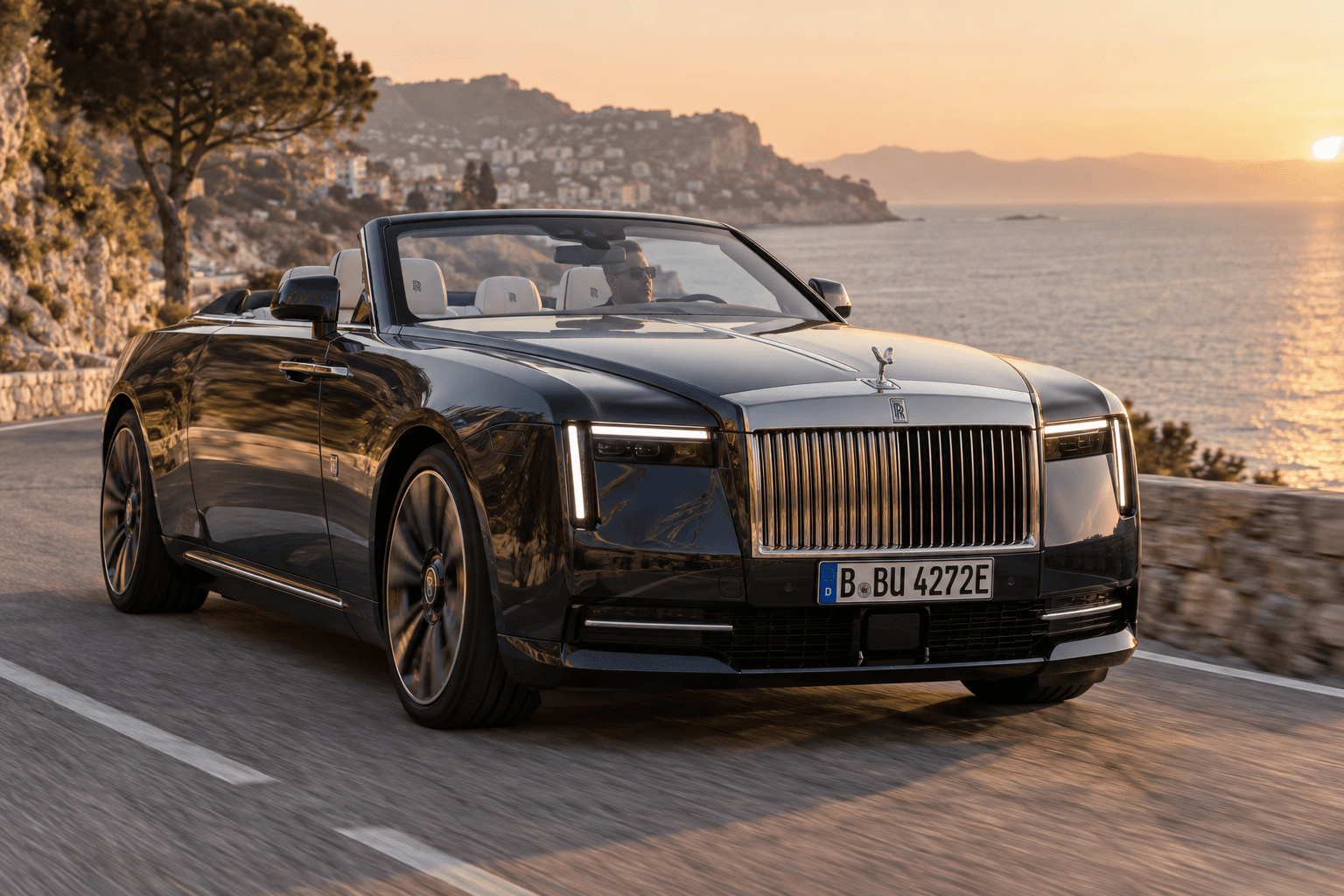
Rolls-Royce is taking the first drivable Project Nightingale prototypes onto public roads. The all-electric luxury convertible will initially be tested in Southern Europe, followed by further trials in the Arctic Circle and on the Arabian Peninsula.
Limited to just 100 units, the model is based on the same aluminum architecture as the electric Rolls-Royce Spectre. With the Nightingale, however, the manufacturer is going considerably further by combining the electric powertrain with an exceptionally elaborate coachbuilt body.
Cashmere-Lined Roof Must Withstand 80°C
One of the most unusual challenges concerns the fabric roof lined with cashmere. Its materials, mechanism, and seals must withstand temperatures of up to 80°C without compromising their appearance, feel, or functionality.
Rolls-Royce is planning ten different test procedures for this purpose. In a convertible in particular, intense sunlight and frequent temperature fluctuations can place considerable strain on adhesives, textile surfaces, and moving components.
| Test area | Scope | Objective |
|---|---|---|
| Cashmere-lined roof | Up to 80°C and ten test procedures | Ensure the long-term durability of materials and mechanisms |
| Piano Boot | 15,000 opening cycles | Reliable and consistent movement |
| Aerodynamics | 1,430 hours | Reduce wind noise and turbulence |
| High speed | Up to around 250 km/h | Test driving stability and the wind deflector |
| High-altitude testing | Up to 2,750 meters | Ensure functionality under changing environmental conditions |
Side-Opening Trunk Undergoes Endurance Testing
Another distinctive feature is the trunk known as the Piano Boot, whose lid opens sideways. Rolls-Royce is using this concept for the first time and therefore plans to open and close the mechanism 15,000 times.
The test is not only intended to assess durability. The movement must remain quiet, consistent, and free of noticeable vibrations for years, because details like these are also part of the quality promise in a vehicle at this price level.
Quiet Electric Powertrain Raises the Bar
Collectively, the prototypes will complete around 350 weeks of testing on a wide variety of roads and in extreme climate zones. This will be supplemented by 1,430 hours of aerodynamic simulations and wind-tunnel testing.
The nearly silent electric powertrain makes unwanted wind noise particularly noticeable. Less powertrain noise → creaks, roof noise, and air turbulence become more acoustically prominent. A specially developed electric wind deflector is therefore intended to keep the open cabin quiet even at high speeds.
With Project Nightingale, comfort is not merely a matter of suspension, but also of acoustics, material durability, and mechanical precision.
Powertrain and Deliveries Remain Partly Undisclosed
Project Nightingale is expected to feature a dual-motor powertrain producing more than 440 kW and around 1,080 Nm. However, Rolls-Royce has not yet fully confirmed the final performance figures.
There is also no official price yet. Speculation puts it at several million euros per vehicle and should be treated with appropriate caution until confirmed. The first deliveries are scheduled for 2028.
From a technical perspective, the Nightingale is less a volume-production model than a development project with no apparent cost constraints. Nevertheless, the findings from its material testing, acoustic development, and roof mechanism could eventually influence other electric luxury models from Rolls-Royce.