Home charging makes the biggest difference to costs
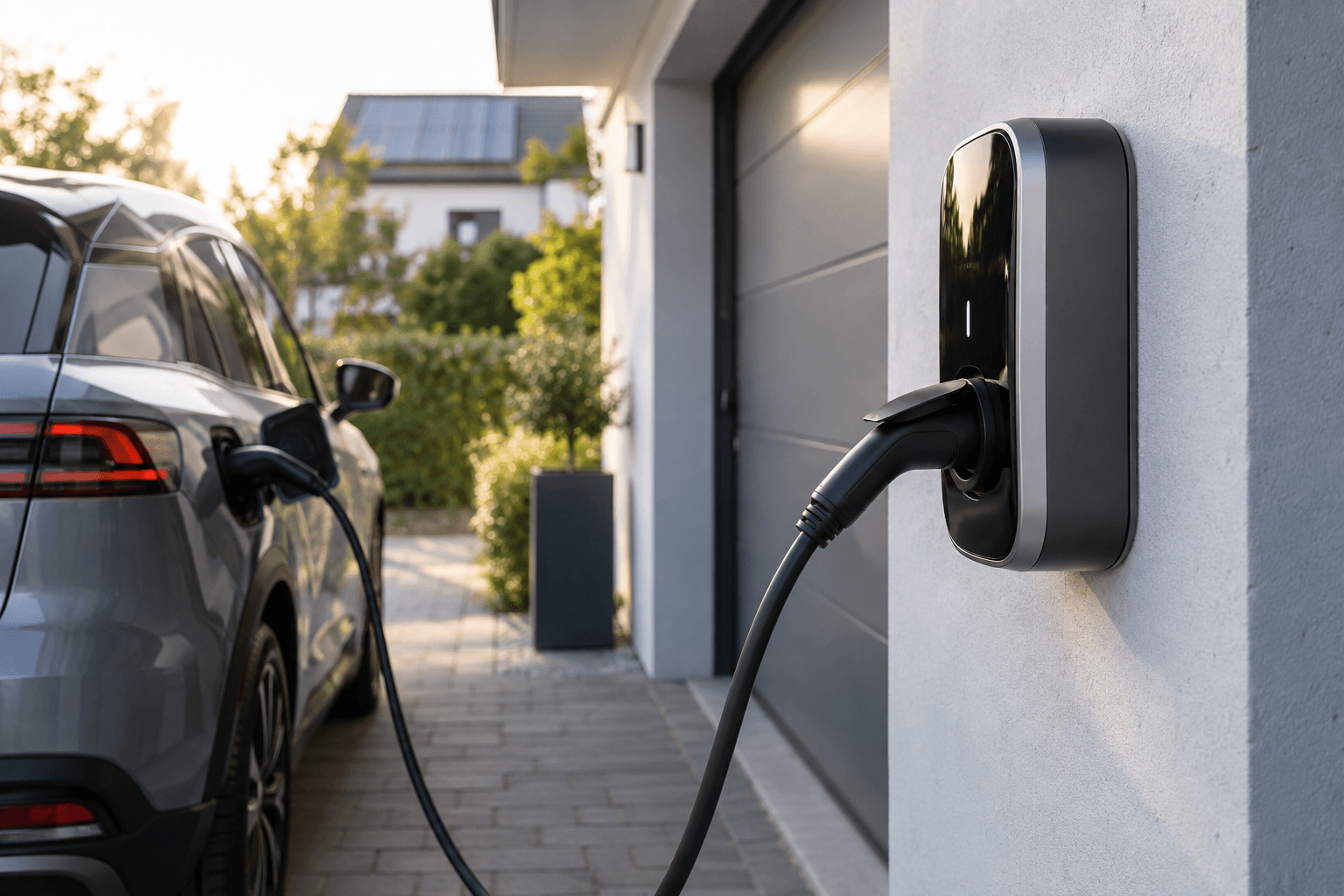
High fuel prices significantly increase the cost advantage of electric cars. A recent analysis for Germany shows that drivers who charge their EV using household electricity now pay less in energy costs than they have in a long time.
The calculation is based on an average electricity price of 32.29 cents per kWh in September 2026. Assuming consumption of 16.9 kWh per 100 km, this results in costs of around €5.44 per 100 km.
Low-cost household electricity combined with an efficient electric powertrain delivers a cost advantage of around 70% over gasoline.
Cost comparison: EV, gasoline and diesel
For midsize and executive cars, the calculation assumes consumption of 7.9 liters per 100 km for a gasoline car and 5.2 liters per 100 km for a diesel. It is based on average fuel prices of €2.28 per liter for E10 gasoline and €2.40 per liter for diesel.
| Powertrain | Consumption per 100 km | Energy price | Cost per 100 km |
|---|---|---|---|
| Electric car, home charging | 16.9 kWh | 32.29 cents per kWh | €5.44 |
| Gasoline | 7.9 liters | €2.28 per liter | €18.02 |
| Diesel | 5.2 liters | €2.40 per liter | €12.47 |
This puts the EV’s energy costs around 70% below those of the gasoline car. Compared with the diesel, the savings are about 56%.
At an annual mileage of 15,000 km, the calculated electricity cost is around €816. In the same scenario, the gasoline car costs about €2,703 and the diesel around €1,871. That represents an annual difference of approximately €1,887 and €1,055, respectively.
Public charging remains significantly more expensive
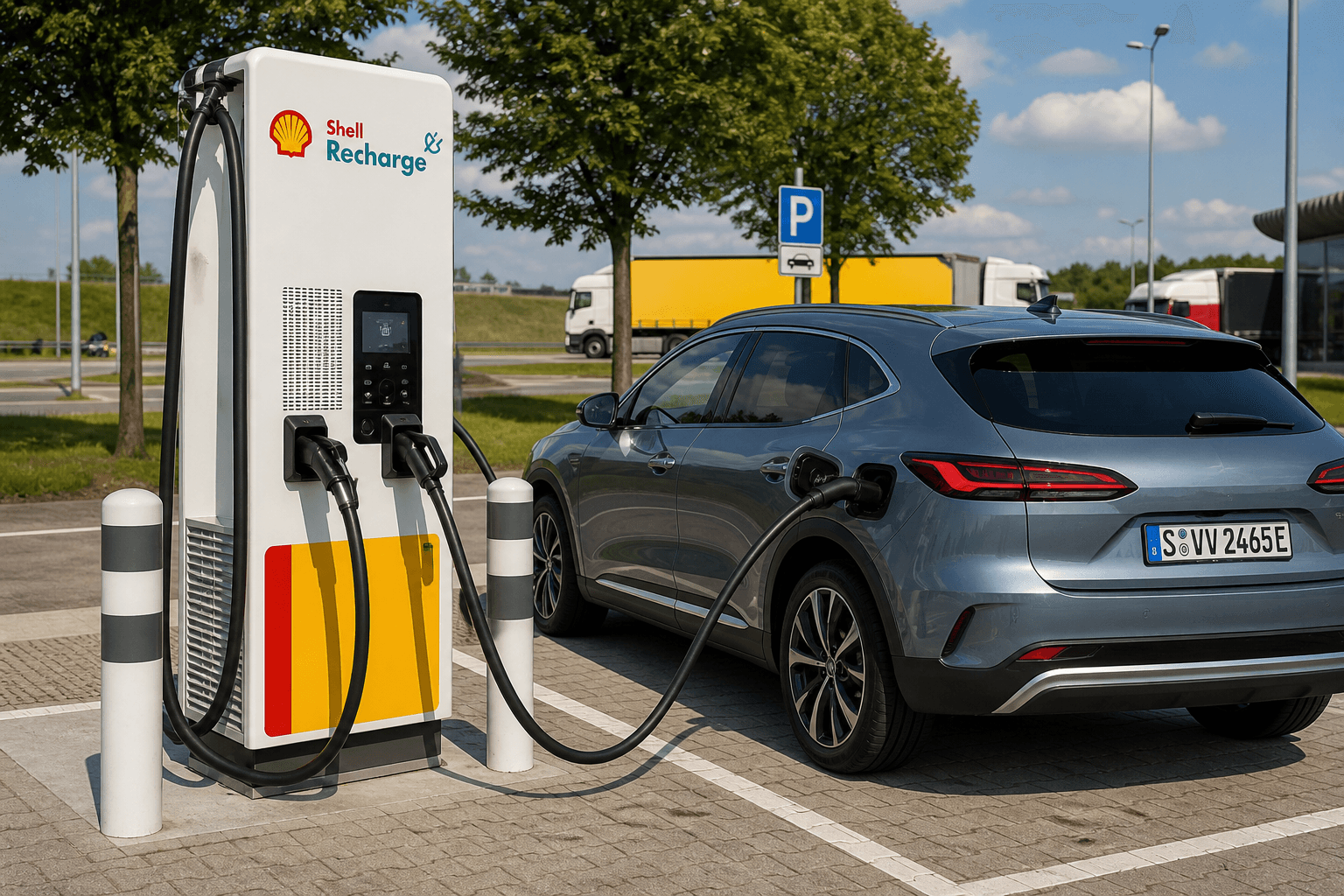
Without a private parking space and wallbox, the advantage is smaller. The comparison uses rates of 52 cents per kWh for public AC charging and 60 cents per kWh for DC fast charging.
| Charging location | Price per kWh | Cost per 100 km | Premium over home charging |
|---|---|---|---|
| At home | 32.29 cents | €5.44 | 0% |
| Public AC charging station | 52 cents | €8.77 | 61% |
| Public fast charger | 60 cents | €10.12 | 86% |
Even at the assumed fast-charging rate, the EV is still calculated to be around 44% cheaper than the gasoline car and about 18% cheaper than the diesel. In practice, however, costs depend heavily on the charging card, operator, roaming fees, subscription fees and possible overstay charges.
An important caveat: The public charging rates date from March 2025, while household electricity and fuel prices reflect September 2026. The comparison therefore primarily indicates the general scale of the difference and is not a fully synchronized snapshot of the market.
A wallbox and solar power reduce costs even further
Households with their own charging point have the greatest financial leverage. A low-cost electricity plan, scheduled charging and a solar power system can further reduce the average cost per kilometer.
An energy management system can shift charging to periods with high solar generation or low electricity prices. Looking ahead, bidirectional charging with smart charging will also expand the options for integrating the vehicle with home energy systems.
Drivers who frequently charge on the road, however, should not focus solely on the price per kWh. Charging power, the charging curve and charging time also determine how practical a rate is for everyday use. Our comparison of 800-volt and 400-volt architectures explains how vehicle technology affects this.
The calculation covers energy costs only
The comparison includes electricity and fuel, but not the purchase price, depreciation, insurance, maintenance or financing. These items must be added individually for a complete cost calculation.
Real-world consumption can also vary significantly depending on the vehicle, temperature, speed and route. Nevertheless, drivers who mainly charge at home are still likely to see a clear overall cost advantage. The general trend is also relevant to Austria and Switzerland, although the specific figures cannot be transferred directly because electricity, fuel and charging rates differ.