Porsche adjusts its EV course, putting the Taycan at center stage
Porsche has revised its powertrain strategy several times in recent years: first making a clear commitment to EVs, then placing greater emphasis on combustion engines and plug-in hybrids again. Since the beginning of 2026, CEO Michael Leiters has had to turn this into a coherent strategy once more. From the outside, it may look like constant back-and-forth, but in practice it is primarily an attempt to align product planning with market realities.
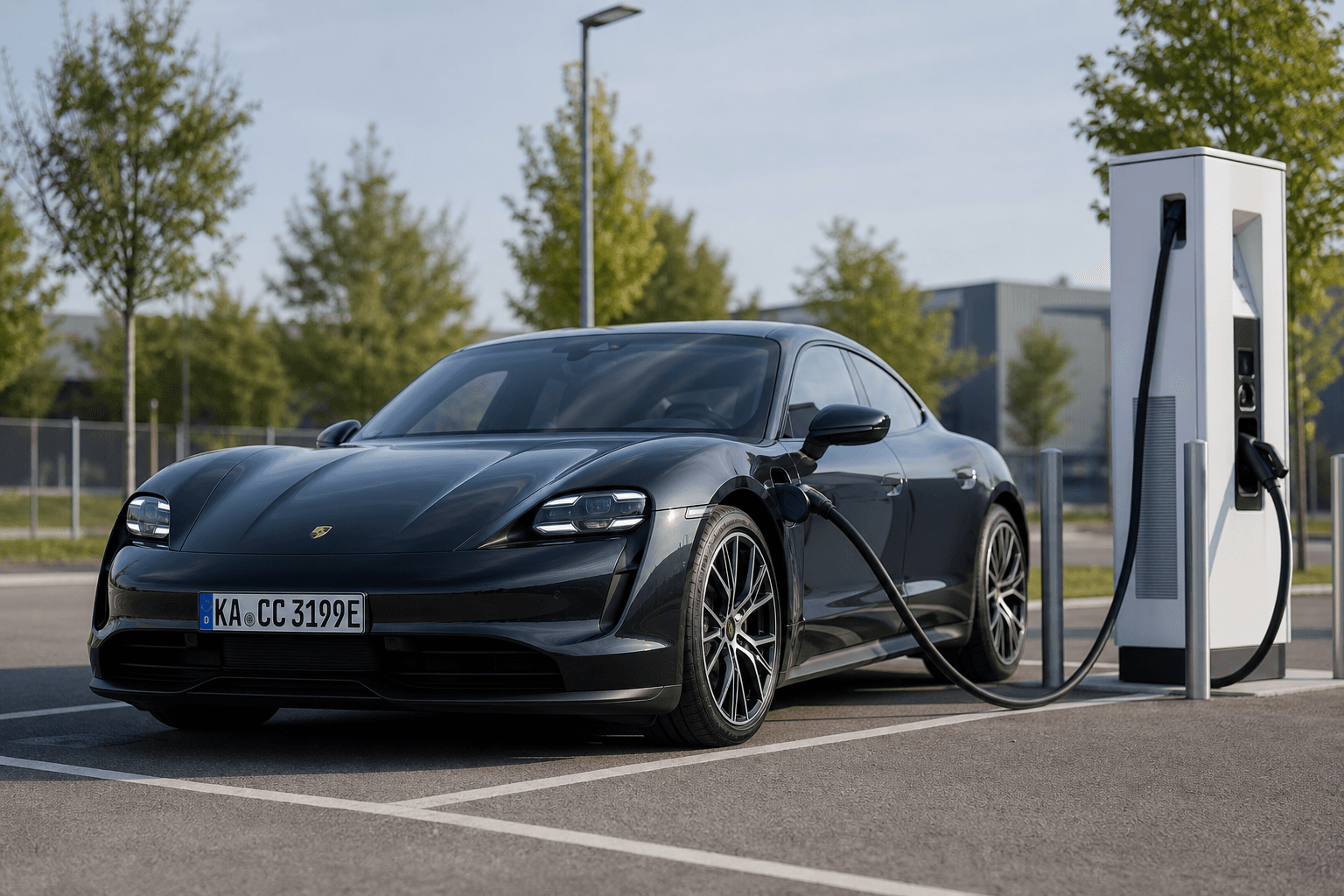
This is particularly evident with the Taycan, Porsche’s first electric car. There is no official discontinuation date, but the company is reportedly considering phasing it out by 2030 at the latest. Leiters himself recently emphasized that there were no plans to discontinue it in the near term and that the company wanted to wait and see how demand developed.
Figures: Taycan loses momentum, while Macan Electric is not yet enough to replace it
Delivery figures show why Porsche is taking a closer look at the Taycan: In the first half of 2026, 6,219 Taycans were delivered worldwide, around 25% fewer than in the same period of the previous year. That puts the model far below its 2023 peak of nearly 41,000 units.
The Porsche Macan remains a strong model line, but the electric version cannot currently close the gap completely. Of the 35,315 Macans delivered in the first half of the year, 15,620 were Macan Electric models. That is a respectable share, but it also shows that Porsche is still in the middle of a transition rather than at its destination.
EVs remain part of the plan, but Porsche wants to simplify its portfolio
The context is important: Even if the Taycan is eventually phased out, that would not represent a retreat from electric mobility. Porsche remains explicitly committed to electric cars alongside combustion-engine and hybrid models. The strategy looks more like a reorganization: fewer variants, clearer priorities, and more concentrated development resources.
From a technical perspective, this makes sense. In premium EVs, range and charging performance are not the only deciding factors. Software quality, efficiency at high speeds, thermal management, and the overall combination of driving dynamics and comfort are equally important. If a model range becomes too fragmented, the development budget can quickly be spread across too many areas.
Cayenne Electric becomes the new cornerstone because SUVs are easier to electrify
The Cayenne Electric is expected to play a key role, with the first vehicles being delivered since late June. Porsche sees it as an opportunity to establish a distinct electric tradition. The reasoning is that the Cayenne has become Porsche’s best-selling model line, while its SUV format has particularly broad appeal in many markets.
In the first half of 2026, total Cayenne deliveries reached 38,141. That provides a strong foundation for an EV strategy: SUVs offer more space for batteries and cooling systems, and customers are more accepting of additional weight than they are in low-slung sports cars. This could help Porsche position electric models so that they remain unmistakably “Porsche” without feeling like a compromise.
Electric sports cars, but not at any price
An electric successor to the Boxster and Cayman in the 718 segment remains on the agenda in principle, even though projects were already pushed back in 2025. At the same time, Porsche appears to be drawing a clearer distinction between the areas where electric powertrains make the most technical and financial sense.
The 911 is explicitly not intended to become electric. This is not an anti-EV statement, but a brand and product decision: Porsche wants to use electric powertrains where they add value and protect margins, rather than forcing every icon to become electric.
China is the toughest reality check: Focusing on combustion engines will not solve the problem
The strategic pressure also has a geographic dimension: Porsche’s deliveries in China fell by 32% to 14,501 vehicles in the first half of 2026. At the same time, the Chinese market is moving particularly quickly toward battery-electric vehicles and digitally focused vehicle concepts.
For Porsche, this means that simply offering “more combustion-engine models” is unlikely to solve its China problem. The brand needs EVs that can hold their own against extremely fast-moving competitors—not only in terms of specifications, but across the entire user experience. That is precisely the lesson other premium manufacturers are currently learning as well.
Costs, structures, and focus are also part of the EV strategy
Alongside its product decisions, Porsche needs to stabilize its financial position. This includes ending peripheral activities and deciding not to continue its Cellforce battery-cell subsidiary. A socially responsible reduction of 5,000 jobs by 2035 has also been agreed, while €2.1 billion is set to be invested in the Zuffenhausen and Weissach sites.
Ultimately, Porsche’s current challenge is not simply a question of “Taycan: yes or no.” It is about reducing complexity, lowering costs, getting China back under control, and structuring the EV portfolio to suit both the brand and the market.
What this means for EV enthusiasts in the DACH region—Germany, Austria, and Switzerland
- Greater focus on high-margin EVs: The Cayenne Electric and Macan Electric are likely to become more important as pillars of sales volume and profitability.
- The Taycan remains relevant, but under scrutiny: No discontinuation has been announced in the short term, but a medium-term reorganization is plausible.
- Fewer variants, clearer product lines: This could accelerate development and make updates more targeted.
Assessment: The Taycan was not a misstep, but it bears the burden of an early launch
The Taycan enabled Porsche to enter the electric era and sparked considerable technological progress. At the same time, it emerged during a period when charging infrastructure, battery-cell prices, and software maturity looked very different from today. Porsche’s decision to refine its strategy is therefore more a sign of adaptation than retreat.
Whether the new EV strategy succeeds will depend on how convincingly the Cayenne Electric, Macan Electric, and forthcoming electric sports cars perform in everyday use and against premium competitors. It will also depend on whether Porsche can master what is currently the ultimate challenge: delivering top-tier electric efficiency and digital quality without diluting the brand’s DNA.