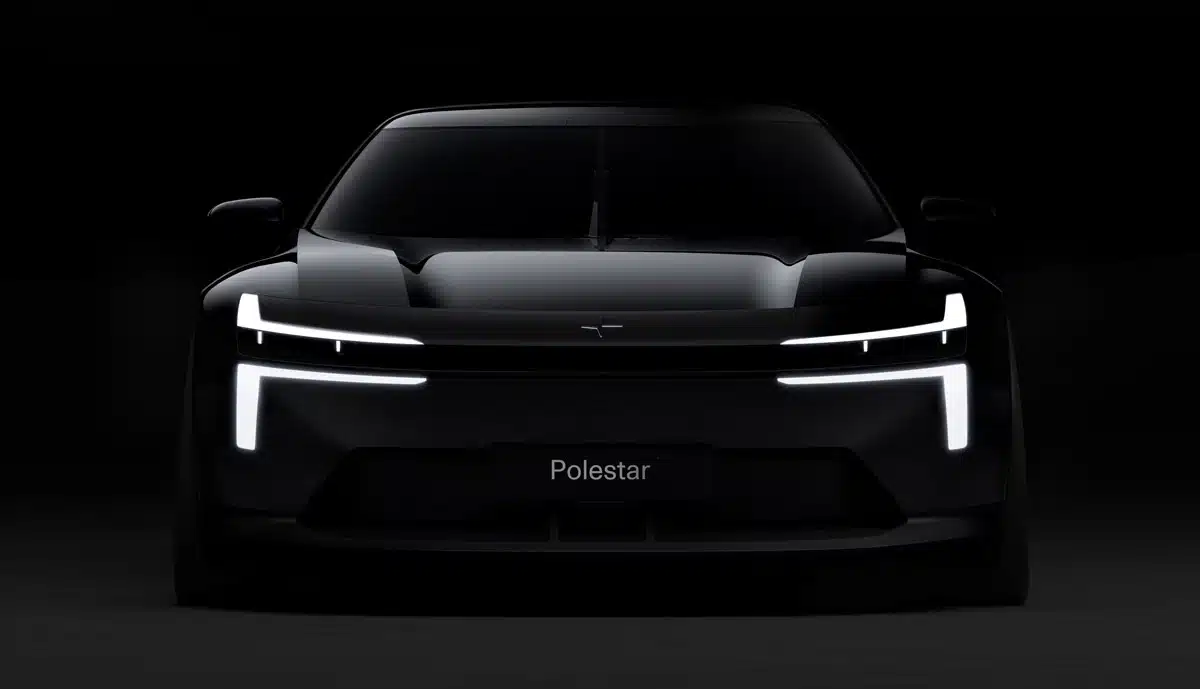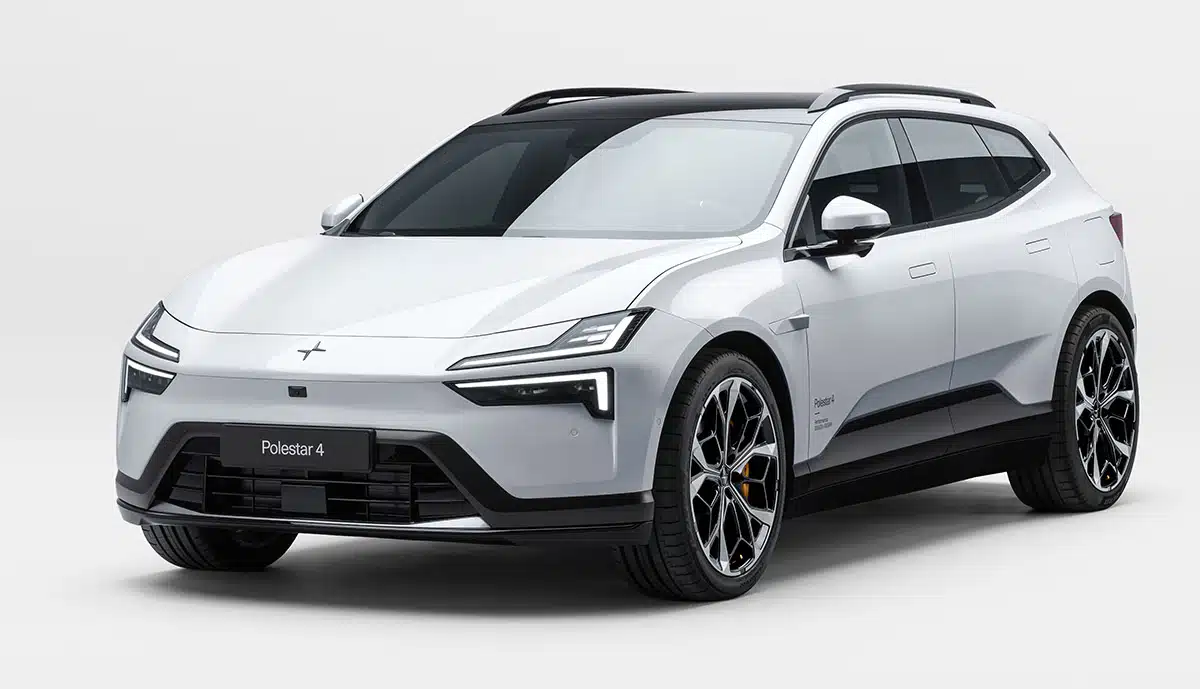
Polestar 4 SUV launches in Germany: What changes compared with the Coupé
Polestar is expanding the model family around the Polestar 4. Alongside the existing vehicle, now officially known as the Polestar 4 Coupé, a new body style is joining the lineup as the Polestar 4 SUV. The technology, design DNA and driving experience are intended to remain largely the same, but the SUV clearly focuses on practicality and everyday usability.
For its German market launch, Polestar lists three price points depending on the powertrain and equipment. Of particular interest to many buyers in the DACH region—Germany, Austria and Switzerland—is the combination of a large battery, solid range and a package of camping features including V2L.
Prices in Germany: Rear-wheel drive, all-wheel drive and Performance
| Variant | Powertrain | Starting price |
|---|---|---|
| Polestar 4 SUV | Rear motor | €57,900 |
| Polestar 4 SUV | Dual Motor (all-wheel drive) | €65,900 |
| Polestar 4 SUV | Dual Motor with Performance Pack | €76,300 |
More cargo and storage space: How the Polestar 4 SUV becomes more practical
At 4,840 mm long, the Polestar 4 SUV remains in the same class, but there is a clearly visible change at the rear: a straighter roofline and a more upright tailgate. This directly benefits two areas that matter in everyday use: rear-seat comfort and access to the cargo area.
Polestar claims 2.5 cm more headroom in the second row. Standard roof rails are also included and are designed to support a dynamic roof load of up to 100 kg, making them practical for a roof box, bicycles or outdoor gear.
Cargo area: 530 to 1,665 liters at the rear, plus a frunk
Polestar provides several cargo-capacity measurements depending on how high the space is loaded. The rear offers 530 liters up to the top of the rear seatbacks, or 655 liters up to the headliner. With the 60:40-split seatbacks folded down, rear cargo capacity increases to 1,665 liters.
Including the front storage compartment, Polestar claims 1,680 liters of total storage space across the front and rear cargo areas.
Powertrain, battery and range: 100 kWh as standard
The Polestar 4 SUV is offered with two powertrain variants and comes with a 100 kWh battery as standard. The rear-wheel-drive model produces 200 kW and is expected to achieve up to 630 km of WLTP range. Buyers opting for all-wheel drive get a Dual Motor version with 400 kW, acceleration from 0 to 100 km/h in 3.9 seconds and up to 600 km of WLTP range.
Official combined energy consumption for the Dual Motor starts at 19.0 to 21.6 kWh/100 km, while the rear-wheel-drive version starts at 17.8 kWh/100 km. As always, temperature, speed and tires make a difference in real-world driving, but these figures clearly indicate where this large, powerful SUV stands.
Charging: Up to 200 kW DC, plus 22 kW AC in Germany
At a DC fast charger, the vehicle supports up to 200 kW. Almost as important for many owners in everyday use, the Polestar 4 SUV also supports AC charging at up to 22 kW in Germany. With compatible wallboxes and public AC charging points, this can significantly reduce charging time while parked, such as during shopping or an appointment.
V2L and Camping Mode: Power from the car and an overnight setup
The Polestar 4 SUV features Vehicle-to-Load (V2L), allowing external devices to draw AC power from the high-voltage battery. Using a certified charging adapter, the system supplies up to 3.3 kW (16 A, 230 V, single-phase). The adapter is approved for use in Germany and sold separately.
A new Camping Mode is also included. It is designed for use while parked: entertainment, ambient lighting and selected vehicle functions remain available, with Polestar explicitly integrating V2L, USB-C ports and the 12-volt socket. In short, park the car, set up camp, and power and comfort remain available without the need for improvised solutions.
Infotainment: Google Gemini and more everyday shortcuts
On the software side, Polestar is upgrading voice control with Google Gemini. The aim is for the system to understand context more effectively, support multi-step conversations and handle more complex tasks using natural language. Gemini Live is also planned for hands-free activities such as brainstorming, trip planning and real-time translation, with the rollout taking place gradually across markets.
Another practical improvement for daily use is that the main display now offers nine widget shortcuts instead of six. Optional equipment includes a Harman Kardon sound system and an electrochromic glass roof.
Sustainability and production: Focus on carbon footprint and recycling
Polestar emphasizes the use of low-emission and recycled materials to keep the carbon footprint within its model lineup low. These include 23% recycled aluminum. According to the manufacturer, battery-cell production uses 100% renewable electricity.
Production of the Polestar 4 SUV is already underway in Busan, South Korea, and the first vehicles are reportedly already on their way to customers.
Assessment: Who will find the Polestar 4 SUV particularly appealing?
The Polestar 4 SUV is particularly appealing to those who like the design and technology-focused approach of the Polestar 4 but want greater practicality. In Germany, Austria and Switzerland in particular, improved cargo access, roof-load capacity and 22 kW AC charging address common needs, as many driving patterns combine commuting with weekend trips.
If you are already considering the Polestar as an alternative in the sporty electric SUV class, it is also worth looking at the Tesla Model Y and the Polestar 4 in its existing configuration. For anyone wanting to explore vehicle-supplied power in greater detail, the Tesla Model Y with V2L offers a good example of how the feature can evolve from a “nice to have” into a genuinely useful outdoor and emergency function.