Peugeot 308 Set for Major Design Change: Fastback Instead of a Classic Hatchback
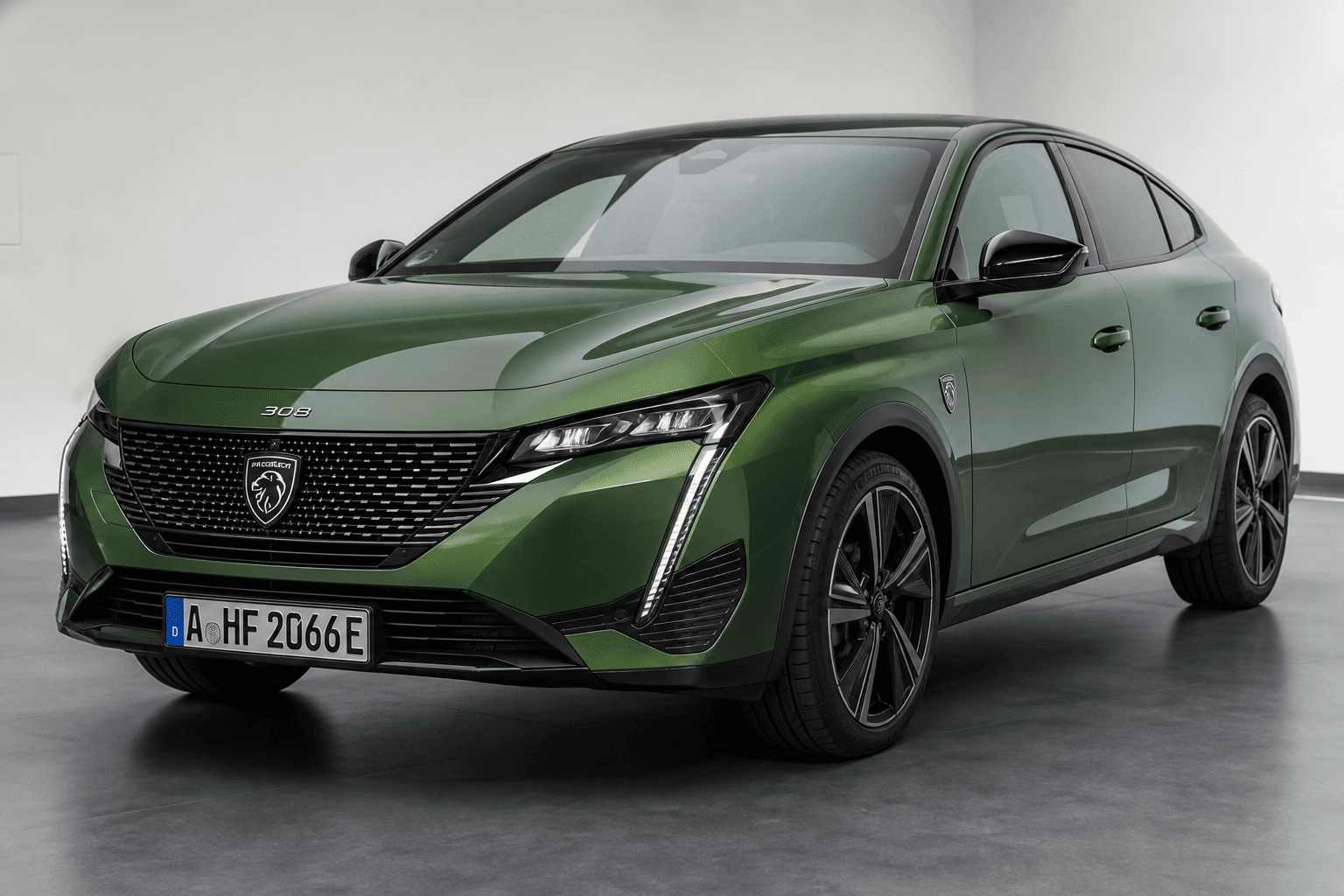
The next generation of the Peugeot 308 could undergo a major transformation. Instead of simply continuing today’s lineup of the 308, 308 SW, and 408, Peugeot is apparently exploring a new body style positioned between an SUV and a conventional five-door car. The idea is a fastback in the style of a coupé-SUV that is intended to be more efficient than a typical SUV while remaining more practical for everyday use than a pure hatchback.
The Peugeot 408, which already occupies precisely this niche, is reportedly serving as the internal blueprint. For the 308, this would mean greater road presence, a gently tapering roofline, and probably a slightly higher seating position than before. At the same time, the concept aims to keep aerodynamic drag under better control than more angular SUV formats.
Size and Positioning: Around 4.4 Meters Long Under Consideration
If Peugeot does indeed reinvent the 308 as a fastback, it is also likely to grow slightly. A length of around 4.4 m is being discussed, making it somewhat longer than the current hatchback version. That fits the basic idea: more interior space and presence without moving directly into the traditional SUV classes.
For buyers in the DACH region—Germany, Austria, and Switzerland—this would be particularly appealing if Peugeot strikes the right balance between space and efficiency. Fastbacks can offer advantages in energy consumption, while the rear packaging, depending on the design, may even prove more practical for everyday use than that of some conventional sedans.
“Feline Future”: Peugeot Wants to Be More Emotional and Distinctive
The next 308’s design is expected to place greater emphasis on emotional appeal. Peugeot also wants it to stand out more clearly from new competitors, particularly given the growing pressure from Chinese brands, which are increasingly gaining ground in Europe through value for money and rapid model updates.
The guiding principle is described as a design language known internally as “Feline Future,” reportedly inspired by the 2025 Polygon concept. Its typical features would include claw-shaped lights, a deliberately dynamic silhouette, and a distinctive front-end design. The key will be for Peugeot not to treat the styling merely as a show-car statement, but to translate it into a production vehicle in an aerodynamically and functionally sound way.
Technical Foundation: STLA One with a Focus on Electric Power and Cell-to-Body
Under the skin, the next 308 family is expected to be based on Stellantis’ new STLA One platform. This architecture is primarily designed for electric powertrains, but it also supports hybrid technology. For Peugeot, this means greater flexibility in its powertrain strategy, depending on how demand, regulations, and incentives develop in Europe.
One relevant technical term is “cell-to-body.” This approach integrates the battery pack more extensively into the vehicle’s structure, allowing it to function as part of the floor. The practical benefits could include lower weight, greater rigidity, and potentially more interior space for the same exterior length. Whether these advantages will be noticeable in the production model will ultimately depend on the specific implementation and battery configuration.
Also Relevant for Opel: The Astra May Not Have to Remain a Classic Five-Door Car
Because Peugeot and Opel are closely integrated within the Stellantis Group, a change in body style for the 308 would also be relevant to Opel. It has likewise been suggested that the next-generation Opel Astra may not necessarily remain a traditional hatchback. That would mark a significant change in direction, as the Astra has historically been strongly associated with precisely this body style, especially in Europe.
For anyone who wants to follow the discussion surrounding Stellantis and its platform strategies, our overview of the group’s brand also provides useful context, as STLA One is part of this broader development. Price and model offensives in the market are increasing the pressure to position new concepts more quickly and clearly.
Timeline: Still at a Very Early Stage, Launch No Earlier Than Late 2029
An important point for anyone already considering a new 308: the project is reportedly still at a very early stage. Production is currently expected to begin no earlier than late 2029. The design, powertrain mix, and model names could all still change significantly by then.
Overall, however, the approach makes sense. A fastback 308 could bridge the gap between a conventional compact car and an SUV, appealing precisely to customers who want greater everyday practicality without a tall body and the associated efficiency penalty. STLA One would also provide a solid foundation for the transition to electric mobility, provided Stellantis genuinely optimizes the platform for high efficiency and competitive charging performance.