Dacia Spring gets a complete overhaul
The Dacia Spring remains one of the most compelling options for an affordable entry into electric mobility. Although Dacia is retaining the familiar name for the second generation, in technical and structural terms it is a largely new electric car.
It is based on the Renault Group’s RG-EV-Small platform, which will also be used by the upcoming Renault Twingo. In future, the Spring will be built in Novo Mesto, Slovenia, rather than China. The first indications of this comprehensive reboot emerged with the announcement of the 2027 Dacia Spring.
The most important promise remains the price: according to Dacia, no version of the new Spring will cost more than €20,000 before incentives.
More space, but still clearly designed for the city
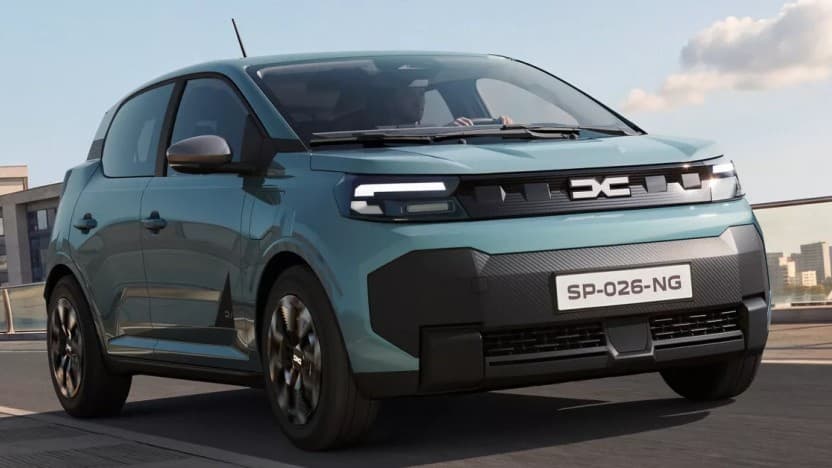
At 3.85 metres long, the Spring remains compact enough for crowded city centres. It is 15 centimetres longer than the current model. The increase in width is particularly noticeable, with the car now measuring 1.74 metres across without its exterior mirrors.
The design deliberately retains a rugged look, setting it apart from the more retro-styled Twingo. Black trim panels connect the lights at the front and rear, while plastic elements protect areas where paintwork is vulnerable. This could make minor parking knocks and scratches less frustrating, particularly in urban traffic.
Dacia is also using simple solutions to reduce the number of components and lower production costs. Parts of the lighting signature, for example, use reflective surfaces, while the lettering at the rear is integrated directly into the trim.
A much more practical interior
A digital 7-inch instrument cluster comes as standard in front of the driver. In the Expression trim, the driver’s own smartphone handles some of the infotainment functions and is mounted on the dashboard.
The better-equipped Spring Journey gets a 10.1-inch touchscreen. Apple CarPlay and Android Auto work wirelessly. It also includes connected navigation, real-time traffic information, charging-route planning, cabin preconditioning and vehicle location services.
Ergonomics are another area of significant improvement. The driver’s seat and steering wheel offer a wider range of adjustment, which should make it easier to find a suitable driving position. Heated seats are also available.
More storage space than expected
According to Dacia, there are 337 litres of luggage capacity behind the rear seats. Folding down the 50:50-split rear seats increases the available space to 1,283 litres.
An optional 18-litre frunk adds further storage space. It is particularly useful for the charging cable, which therefore does not have to be stored beneath luggage. The interior also offers up to three standard YouClip mounting points for bags, holders and other accessories.
27.5 kWh LFP battery and 250 km of range
Both trim levels use the same electric motor, producing 60 kW and 175 Nm of torque. Acceleration from 0 to 100 km/h takes 12.1 seconds, while the top speed is 130 km/h.
These figures make it clear that the Spring is not intended to be a long-distance car. However, its performance should be perfectly adequate for urban driving, short commutes and daily errands. Its low vehicle weight of 1,212 kg is also well suited to this purpose.
| Specification | Dacia Spring 2027 |
|---|---|
| Motor output | 60 kW |
| Torque | 175 Nm |
| Usable battery capacity | 27.5 kWh |
| WLTP range | up to 250 km |
| WLTP consumption | 12.7 kWh/100 km |
| Standard AC charging | 6.6 kW |
| Optional DC charging | up to 50 kW |
| Luggage capacity | 337 to 1,283 litres |
The usable capacity of the LFP battery is 27.5 kWh. Dacia quotes a WLTP range of up to 250 km and energy consumption of 12.7 kWh/100 km. The compact battery keeps weight and costs low, but naturally limits the car’s suitability for long-distance driving.
6.6 kW charging, or an optional 50 kW
As standard, the Spring has a 6.6 kW onboard AC charger. Charging from 15% to 80% at a 7 kW wallbox is expected to take around 2 hours and 55 minutes. Dacia estimates that the same charge will take approximately nine hours from a household socket.
For drivers who regularly charge at home, the high charging losses from a household socket are an argument in favour of installing a wallbox. Those who mainly charge overnight should nevertheless find the standard AC charging rate sufficient.
The optional Fast Charge package adds an 11 kW onboard charger and DC fast charging at up to 50 kW. Charging from 15% to 80% should then take around 28 minutes. The charging rate may sound modest compared with larger electric cars, but it is appropriately matched to the small battery in practical terms.
V2L makes the small Spring surprisingly versatile
With the Fast Charge package, the Spring also supports vehicle-to-load (V2L). This allows external electrical devices to draw energy from the high-voltage battery. A similar function is also coming to the Tesla Model Y via a V2L adapter.
In the Dacia, V2L could be useful while camping, in the garden or for powering tools. The feature is still unusual in this price segment and adds versatility to an otherwise deliberately simple technology package.
Expression and Journey offer different equipment
Dacia is limiting the range to two trim levels. The motor, battery and standard 6.6 kW charger are identical, with the main differences relating to infotainment, comfort features and wheels.
| Equipment | Expression | Journey |
|---|---|---|
| Wheels | 15-inch steel wheels | 16-inch wheels |
| Infotainment | Smartphone holder | 10.1-inch touchscreen |
| Parking assistance | Rear sensors | Sensors and reversing camera |
| Access | Conventional vehicle key | Keyless entry |
| USB-C ports | one | two |
A configurable safety button is designed to save frequently used driver-assistance settings. After starting the car, these preferences can be activated at the press of a button instead of opening several menus individually.
Price remains the strongest selling point
Dacia has not yet announced the final entry-level price for Germany. However, according to the manufacturer, even the most expensive version is set to remain below €20,000 before any potential government incentives.
The relevant price lists for Austria and Switzerland will have to be published before costs there are known, as taxes, equipment packages and currencies may affect pricing. However, the basic positioning remains clear: the Spring is intended to be an affordable electric car for short everyday journeys.
With more space, an improved seating position, modern infotainment and optional fast charging, Dacia addresses several weaknesses of the previous model. The small battery remains a deliberate limitation, but it enables low weight, respectable efficiency and a price that many larger electric cars cannot match.