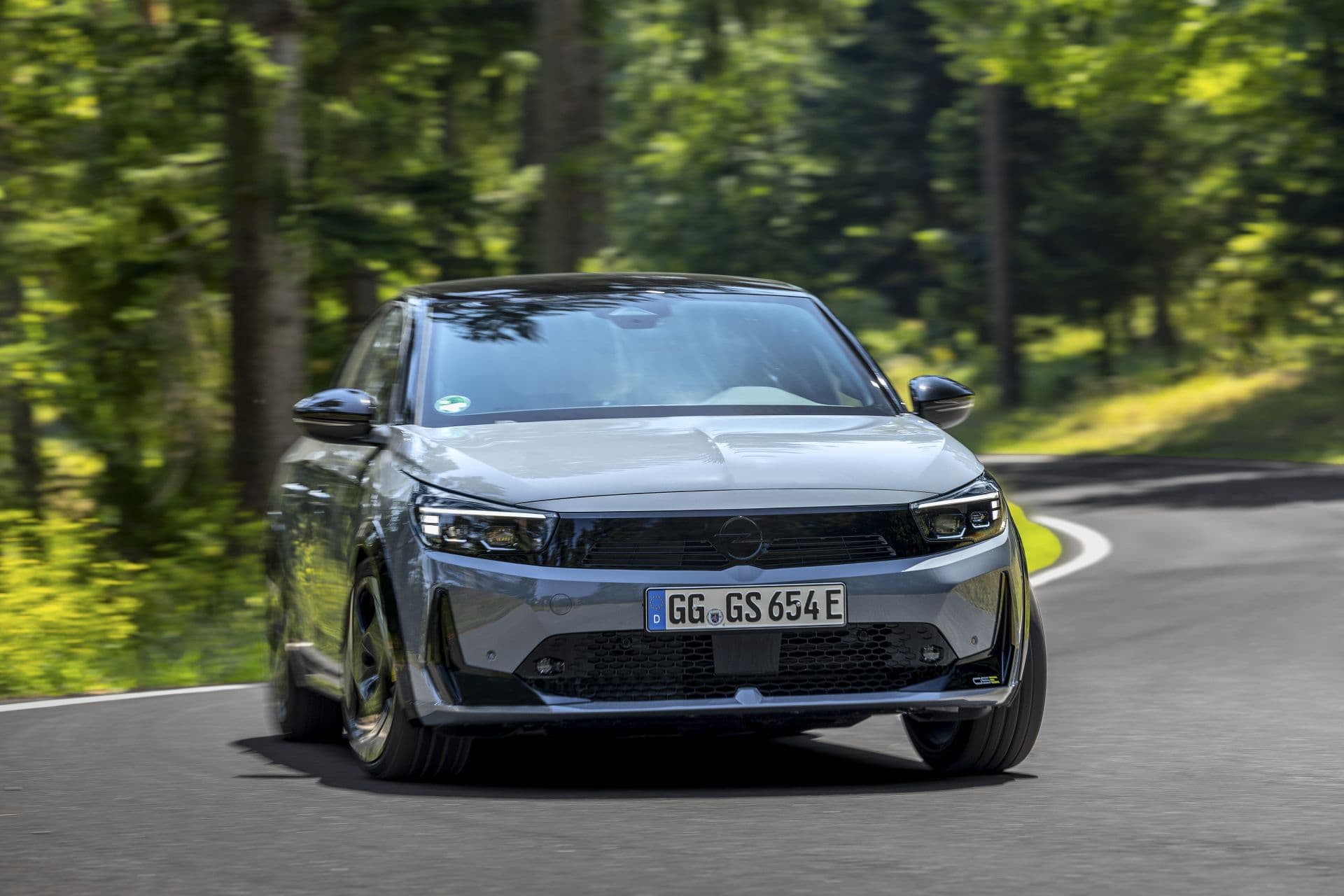
Opel Corsa GSE: GSi and OPC DNA in an Electric Hot Hatch
For many years, Opel’s sporty Corsa variants had clear performance badges: first GSi, then OPC. With the Opel Corsa GSE, this concept is now returning as an all-electric model—and not merely as a show car, but with a firm price: €39,900 in Germany.
What is exciting here is not so much the raw output as the overall package: Opel is positioning the Corsa GSE only a few thousand euros above a highly equipped regular Corsa. In the end, the question is not “cool or not?” but whether an electric everyday performance car can still be considered “sensible” by a broad audience.
Power, Acceleration and Top Speed: Where the Corsa GSE Fits In
Under the hood is a setup that Opel has drawn from the group’s parts portfolio. The motor, inverter, battery and wiring harness are said to be related to those in the Mokka GSE. The synchronous motor delivers 207 kW and 345 Nm, with 0 to 100 km/h quoted at 5.5 seconds and a top speed of 180 km/h. Importantly, these figures are still preliminary, as homologation had not yet been completed at the time of the announcement.
Driving Modes with Noticeably Different Output Limits
Opel uses three driving modes that alter the car’s character primarily by limiting the available power. Drivers who do not always want maximum performance therefore get a clearly toned-down Corsa GSE in Normal and Eco modes, including a lower top speed in Eco mode.
| Mode | Power | Torque | Top speed |
|---|---|---|---|
| Sport | 207 kW | 345 Nm | 180 km/h |
| Normal | 170 kW | not specified | not specified |
| Eco | 140 kW | 300 Nm | 150 km/h |
Battery, Range and the Surprisingly Large Effect of Tires
The battery has a gross capacity of 54 kWh, of which 51 kWh is usable. Opel’s WLTP range figures depend heavily on the tires: With the standard Michelin Pilot Sport 4S tires (215/40 R18), the manufacturer quotes a WLTP range of 354 km, while the optional Hankook Ventus S1 Evo 3 tires are expected to provide around 374 km.
This reflects the reality of sporty EVs: More grip and performance-oriented rubber compounds can have a noticeable effect on consumption and therefore range. In everyday use, this means anyone who primarily drives the Corsa GSE as a fast commuter should take the choice of tires as seriously as the motor’s output.
1,554 kg Curb Weight: Why the Suspension Is the Star
At 1,554 kg without a driver, it is clear why Opel has invested so much effort in the Corsa GSE’s suspension. Today, an electric hot hatch means plenty of torque, plenty of weight and therefore the need to put the power down in a way that makes the car not only fast but also consistently controllable.
To achieve this, Opel has carried out a comprehensive overhaul: The car sits 25 mm lower, has a significantly wider track (+54 mm at the front and +20 mm at the rear), features stiffer spring rates and, according to the manufacturer, offers 21% more roll stiffness than the regular model.
Mechanical Limited-Slip Differential and More Powerful Brakes
A mechanical limited-slip differential on the front axle is intended to stabilize traction when accelerating out of corners. Opel quotes a locking effect of up to 38% under acceleration and 28% under deceleration. It is joined by an Alcon four-piston braking system. For a front-wheel-drive car with 207 kW, this combination is often more important than even more peak power.
Regenerative Braking Off in Sport Mode: Unusual but Logical
One detail stands out: In Sport mode, Opel deactivates regenerative braking. This may initially seem counterintuitive, but it can make sense from a driving-dynamics perspective because weight transfers can then be controlled more precisely through the brake and accelerator pedals. The everyday effect: Switch on Sport → deceleration feels more “traditional,” while Eco and Normal remain closer to the regular Corsa.
Sport Sound and Cockpit: Plenty of Performance, but the UI Does Not Feel Entirely Up to Date
Another new feature is an active Sport Sound, which is intended to have a different level of presence depending on the mode and can be switched off. Such sound concepts have become a legitimate tool for providing feedback and emotion in EVs, but they will naturally remain a matter of personal taste.
The digital interface feels less like a “hot hatch,” however: Although Opel includes performance displays showing G-forces and battery data, among other information, the presentation is said to look relatively conservative. Especially in a segment where Tesla and many Chinese brands use software as a selling point, this is an area Opel is likely to refine in the medium term.
Equipment: Plenty as Standard, Including Vehicle-to-Load (V2L)
Opel is offering the Corsa GSE as a largely fixed package. Features mentioned include navigation, a 180-degree reversing camera, adaptive cruise control, keyless entry and heated seats. It also comes with a bidirectional onboard charger for V2L, which allows the car to power external devices, although an accessory adapter is required.
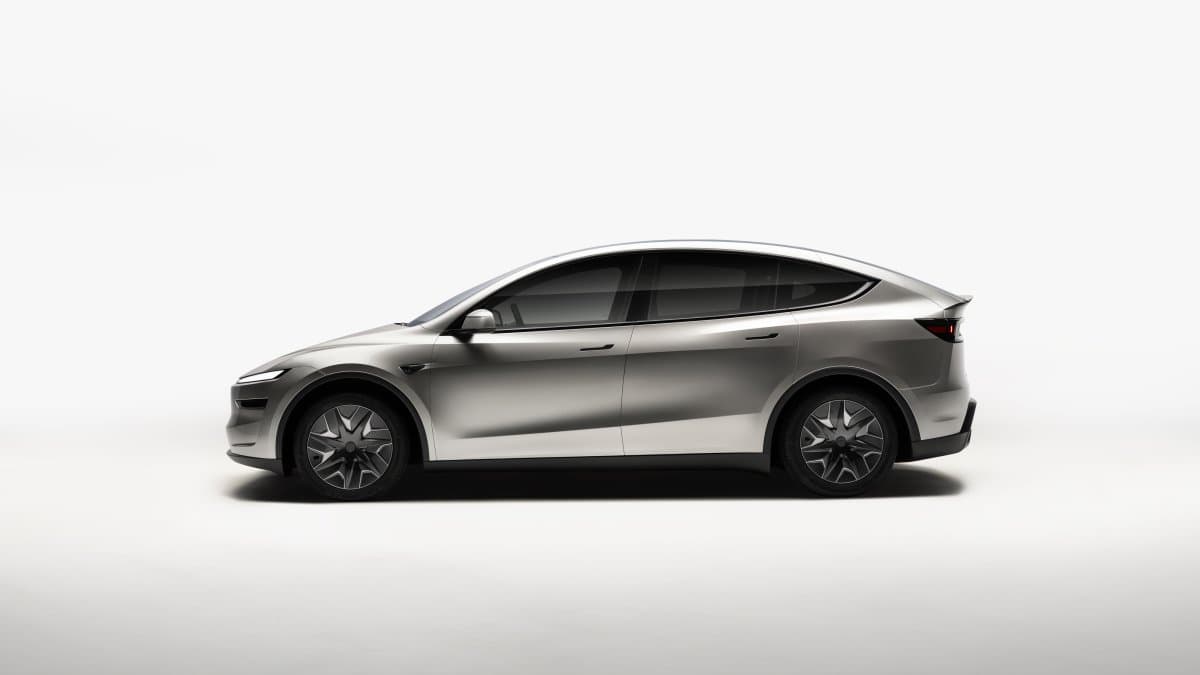
If this topic interests you: Vehicle-to-load is currently developing at Tesla as well, including for the Tesla Model Y with a V2L adapter, although availability and details vary considerably by market.
Assessment: Who Is the Corsa GSE For?
The Corsa GSE is aimed at drivers who want compact dimensions but are unwilling to compromise on suspension, braking and traction. The combination of a limited-slip differential, wider track and increased roll stiffness is exactly the kind of hardware that makes a difference in everyday driving when conditions are wet, cold or simply winding.
What Speaks in Its Favor
- 5.5 seconds to 100 km/h despite its subcompact dimensions
- Suspension and brake upgrades that amount to more than just cosmetic changes
- Plenty of equipment as standard, including V2L
What Speaks Against It
- Final homologated figures have not yet been confirmed
- Range depends heavily on the tires, and performance tires often reduce efficiency
- The infotainment design does not feel entirely up to 2026 standards
Market Context: Performance Is Expanding Across the Compact Segment
Electric performance is no longer limited to premium cars. Anyone assessing the market in 2026 will inevitably have to ask how much “sportiness” they really use in everyday driving and how important real-world charging and range are. On that note, our overview of electric compact SUVs in 2026 clearly shows how widely prices, range and charging setups vary depending on the concept.
And if you generally want to know how much of a difference the move to 800-volt technology makes today, the 800V vs. 400V comparison provides useful context, even though the Corsa GSE is clearly positioned here as an uncompromising subcompact performance car.
Launch: Orders Open in September, Motor Show Premiere in October
Opel plans to open orders for the Corsa GSE in September, with its motor show premiere scheduled for October. Until final homologation, the key questions for many prospective buyers remain the certified consumption figures, final WLTP data and how the package’s real-world pricing will compare with other sporty EVs in the subcompact and compact segments.