BMW i1 Set to Launch in 2028, Bringing the 1 Series into the Electric Age
BMW plans to offer the 1 Series as a fully electric car for the first time from 2028. The model is expected to be called the BMW i1 and, as an entry-level EV, primarily target younger buyers who may later move up to larger model ranges. This would be an important step for the DACH market—the German-speaking region comprising Germany, Austria, and Switzerland—as electric alternatives are increasingly becoming essential rather than merely nice to have in the compact premium segment.
The strategy is particularly interesting: BMW plans to continue offering the 1 Series with combustion engines and add a plug-in hybrid, while launching the i1 as a separate electric car alongside them. Despite their different technical foundations, both versions are expected to be closely related visually, similar to BMW’s future approach with the 3 Series and i3.
Two Platforms, One Look: Why BMW Is Taking This Approach
The combustion-engine versions of the 1 Series are expected to remain on the familiar UKL architecture. The i1, by contrast, could use a dedicated electric platform designed exclusively for EVs. This separation offers clear everyday benefits: true EV packaging enables better proportions, more flexibility in integrating the battery, and potentially more efficient powertrain and thermal systems.
At the same time, BMW does not want the i1 to look like an “oddball,” but to remain instantly recognizable as a 1 Series. That matters because many buyers in the compact segment appreciate precisely this kind of restraint: electric technology, but without a radical design departure.
Design: Neue Klasse Elements, but a Character of Its Own
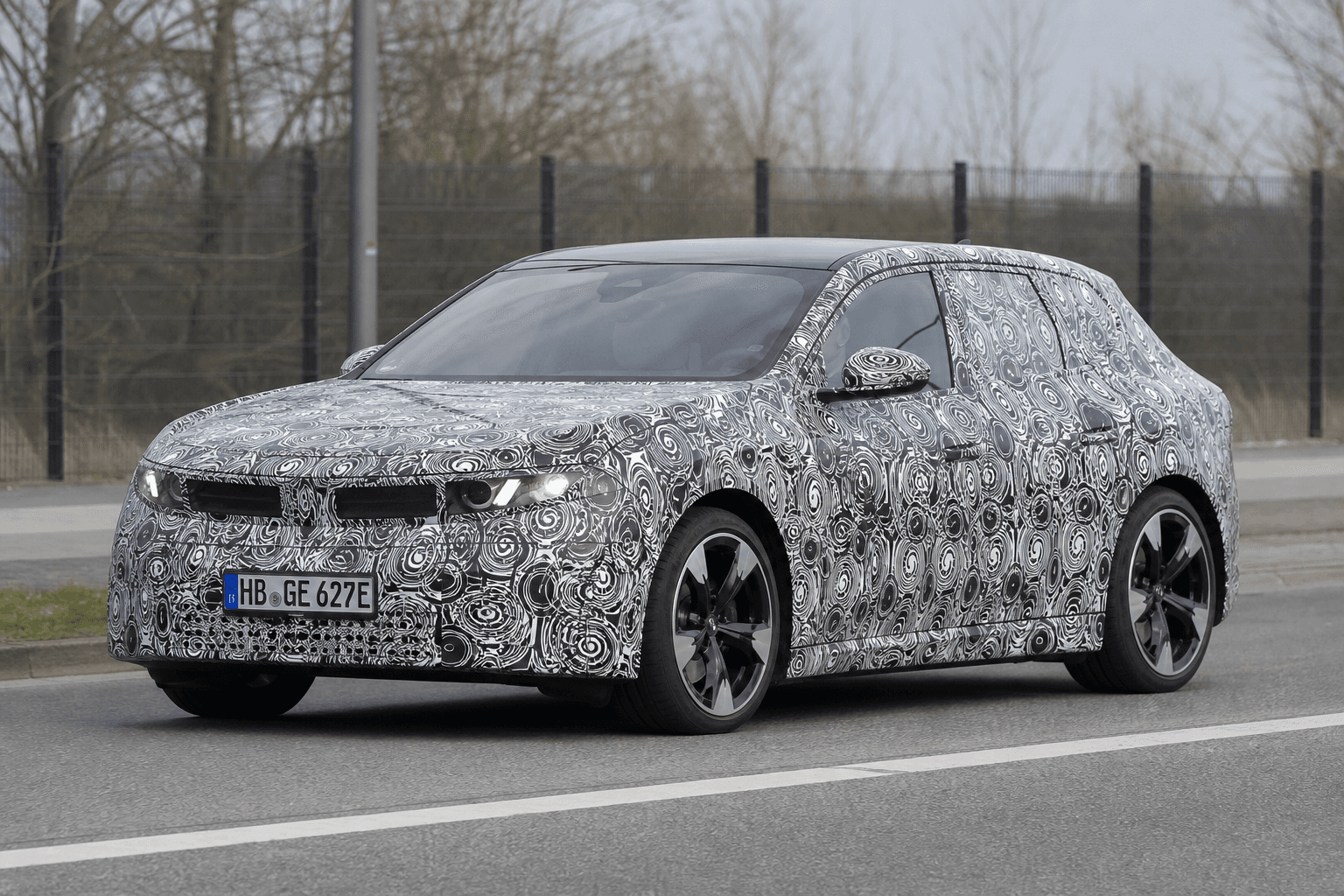
Visually, the BMW i1 is expected to adopt elements of the Neue Klasse, BMW’s next-generation EV technology and design family, including a new interpretation of the front end with a more modern grille design and a cleaner headlight signature. The objective sounds plausible: BMW wants to create a new design family without making every model look identical.
For context, the Neue Klasse is not just about styling; it represents BMW’s major technological and platform reset. Anyone who wants to explore the “Neue Klasse” direction in the compact segment in more detail can also find information on the 2027 BMW iX1 with a Neue Klasse boost.
Powertrain: Rear-Wheel Drive as a Statement in the Compact Segment
The most intriguing aspect concerns driving dynamics. The BMW i1 is expected to feature rear-wheel drive, while the combustion-engine 1 Series will remain front-wheel drive. That would be a clear statement, as rear-wheel drive is rare in this class and fits BMW’s DNA.
A rear motor producing up to 240 kW is being considered. An all-wheel-drive version is also under discussion and could offer significantly more power. Specific figures for battery capacity and range have not yet been finalized, although the i1 is likely to avoid the very large batteries used in higher-end vehicle classes.
800 Volts, Gen6, and What This Could Mean for Charging
Technically, the i1 is being linked to BMW’s upcoming generation of electric powertrains and batteries, often referred to as Gen6. This includes new motors, new battery cells, and, in many Neue Klasse applications, an 800-volt architecture. However, whether the i1 will actually receive an 800-volt system remains uncertain.
Even so, this represents an important direction for everyday use: when appropriately engineered, 800-volt technology can enable faster DC charging and more consistent charging performance, particularly at a higher state of charge or on long-distance journeys. Anyone wanting to understand the real-world difference between 400 and 800 volts can consult our comparison, 800V vs. 400V: Which EV Architecture Do You Need in 2026?
Interior: Panoramic Vision and a New Display Layout Likely
Inside, the i1 is expected to take its cues from current and upcoming BMW electric models. Features under discussion include the Panoramic Vision display running along the windshield and a large central touchscreen in a distinctive format. The idea behind this approach is to have fewer conventional instruments, more head-up-display-like information in the driver’s field of vision, and a cleaner center section.
This could be especially useful for urban driving and commuting: navigation instructions, speed limits, and driver-assistance information would be positioned closer to the driver’s line of sight, reducing the need to keep looking down.
Positioning in the DACH Market: Which Models Will the i1 Compete Against?
In Europe, the BMW i1 is likely to enter one of the most competitive volume segments: compact premium electric cars used either as a primary vehicle or as a high-end second car. Potential natural rivals include an electric Audi A2 e-tron and an upcoming electric Mercedes compact model.
If the rumors about the platform and rear-wheel drive prove accurate, BMW’s advantage could be that the i1 distinguishes itself through its driving experience and its charging and efficiency technology, rather than merely through equipment packages. Before production begins, however, the crucial questions will be how large the battery actually is, how much DC charging power it offers, and whether BMW can keep the price reasonably typical of an entry-level 1 Series.
What Appears Certain So Far and What Remains Unresolved
The overall direction appears set: an electric BMW i1 is expected to arrive in 2028, alongside combustion-engine and plug-in hybrid versions of the 1 Series. The concept of two platforms with similar styling also appears plausible. Details such as the final EV architecture, battery capacities, charging power, ranges, and the specific model lineup remain unresolved.
Once BMW confirms more data, it will be interesting to see how closely the i1 aligns technically with the Neue Klasse. In any case, the move is overdue: an electric 1 Series closes a gap in the lineup and makes BMW’s entry point into the EV world much more accessible to many buyers.