MG Hector Tomahawk: New SUV for India, available as an EV and PHEV
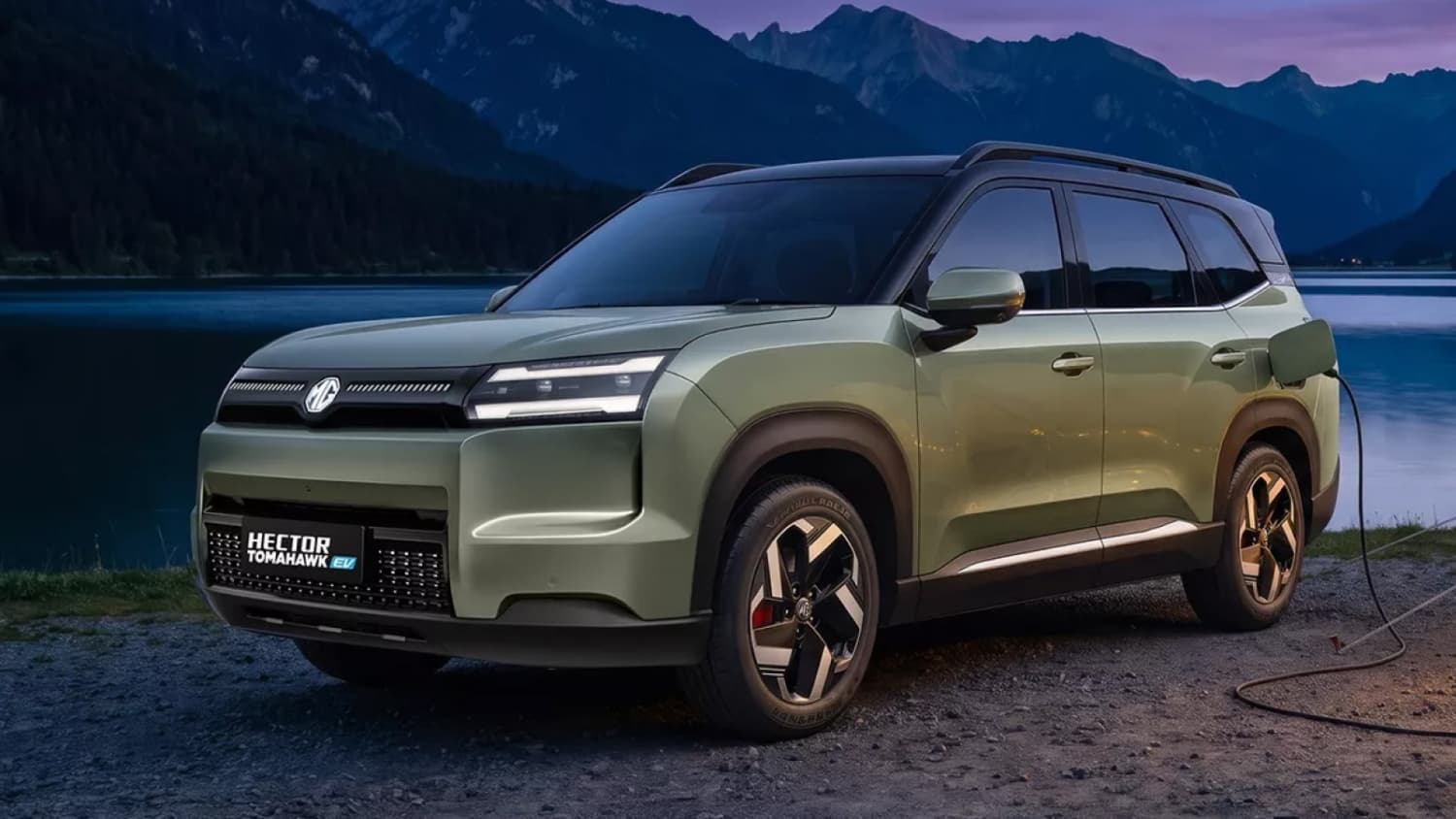
MG is expanding its Indian portfolio with the Hector Tomahawk, a new midsize SUV offered in both battery-electric (EV) and plug-in hybrid (PHEV) versions. The model is a global variant of a SAIC/Wuling SUV, with MG positioning it in India as a fresher alternative to the existing Hector.
Important for readers in the DACH region—Germany, Austria and Switzerland: This is clearly an India launch, not a European debut. The Tomahawk is nevertheless interesting from a technical perspective because it shows how rapidly equipment levels and battery pricing strategies are scaling in major growth markets.
Dimensions and practicality: Five or seven seats, large trunk
The MG Hector Tomahawk belongs to the full-size SUV class: It measures 4,745 mm long, 1,850 mm wide and 1,770 mm tall. Its wheelbase is 2,810 mm, which should provide a solid basis for generous rear-seat space.
MG offers the model with a choice of five or seven seats. MG quotes a trunk capacity of 610 liters for the two-row version. The seven-seater provides 528 liters with the third row folded down.
MG Hector Tomahawk EV: 150 kW, 69.2 kWh and up to 90 kW DC
The electric version uses a single electric motor producing 150 kW and 310 Nm. Battery capacity is listed as 69.2 kWh, while range is rated at up to 517 km under the local test cycle. That figure cannot be directly translated to European conditions, but it does indicate that the vehicle is clearly designed for long-distance travel by local standards.
For charging, MG quotes DC rates of up to 90 kW and a charging time of 35 minutes from 30 to 80%. One aspect of AC charging that matters in everyday use is that the on-board charger operates on a single phase, limiting home charging to up to 7 kW. In practical terms, overnight charging is fine, but a quick top-up at home could become a test of patience for frequent commuters.
Assessment: 90 kW DC sounds like 2020, but it is not necessarily a dealbreaker
In Europe, many new models now offer peak charging rates of 150 to 250 kW and often use 800-volt architectures. Nevertheless, 90 kW can be sufficient in practice if the charging curve remains stable and the vehicle is efficient. Anyone interested in fast charging, charging times and voltage architectures can find an overview in our comparison of 800V vs. 400V in EVs.
Pricing strategy in India: EV with battery rental
For the electric version, MG quotes an entry price of 1,399,000 rupees in India with a battery rental model. An additional usage-based battery rental fee of 4.9 rupees per km applies. Such models lower the initial purchase price but make the overall cost heavily dependent on driving patterns: High-mileage drivers ultimately pay considerably more, while low-mileage drivers are more likely to benefit.
MG Hector Tomahawk PHEV: 20.5 kWh battery and substantial electric range
The plug-in hybrid combines a 1.5-liter gasoline engine (78 kW) with an electric motor (148 kW). Battery capacity is listed as 20.5 kWh, with an electric range of up to 115 km. Together with a 52-liter fuel tank, MG quotes a combined range of up to 1,100 km under the local test cycle.
The PHEV starts at 2,179,000 rupees in India, and MG also quotes a usage-based fee of 3.2 rupees per km. Such per-kilometer models would currently be relatively unusual in Europe’s private-car market, but they align with fleet and financing models in some markets.
Equipment: Large screen, CarPlay/Android Auto and L2 driver assistance
Both versions are expected to come standard with a 15.35-inch central display featuring Apple CarPlay and Android Auto, as well as a digital instrument cluster. MG also lists an Infinity sound system, ambient lighting, wireless smartphone charging, and gesture and voice control.
Also on board are a surround-view camera system and an L2 driver-assistance package. Importantly, L2 means driver assistance, not autonomous driving, and its capabilities depend heavily on the software, sensors and regulatory approvals in each market. If you are interested in the topic more broadly, visit our autonomous driving coverage with a focus on Tesla, where we regularly assess systems and roadmaps.
Why this is also relevant to Europe
The Hector Tomahawk highlights two trends that are also becoming increasingly visible in Europe: first, large, well-equipped vehicles with aggressive entry-level pricing strategies; and second, a clear distinction between EVs and PHEVs depending on how quickly charging infrastructure and electricity prices develop in a given market. MG has long been established in Europe, most recently through bonus campaigns and pricing pressure in the volume segment, including the MG EV bonus in Europe.
For the DACH region, the crucial question remains whether and when such a platform might appear as a European model. If MG brings similar technology to these markets, AC charging power and fast-charging performance would be the key areas in which the vehicle would have to compete with established 400-volt and 800-volt rivals in everyday use.