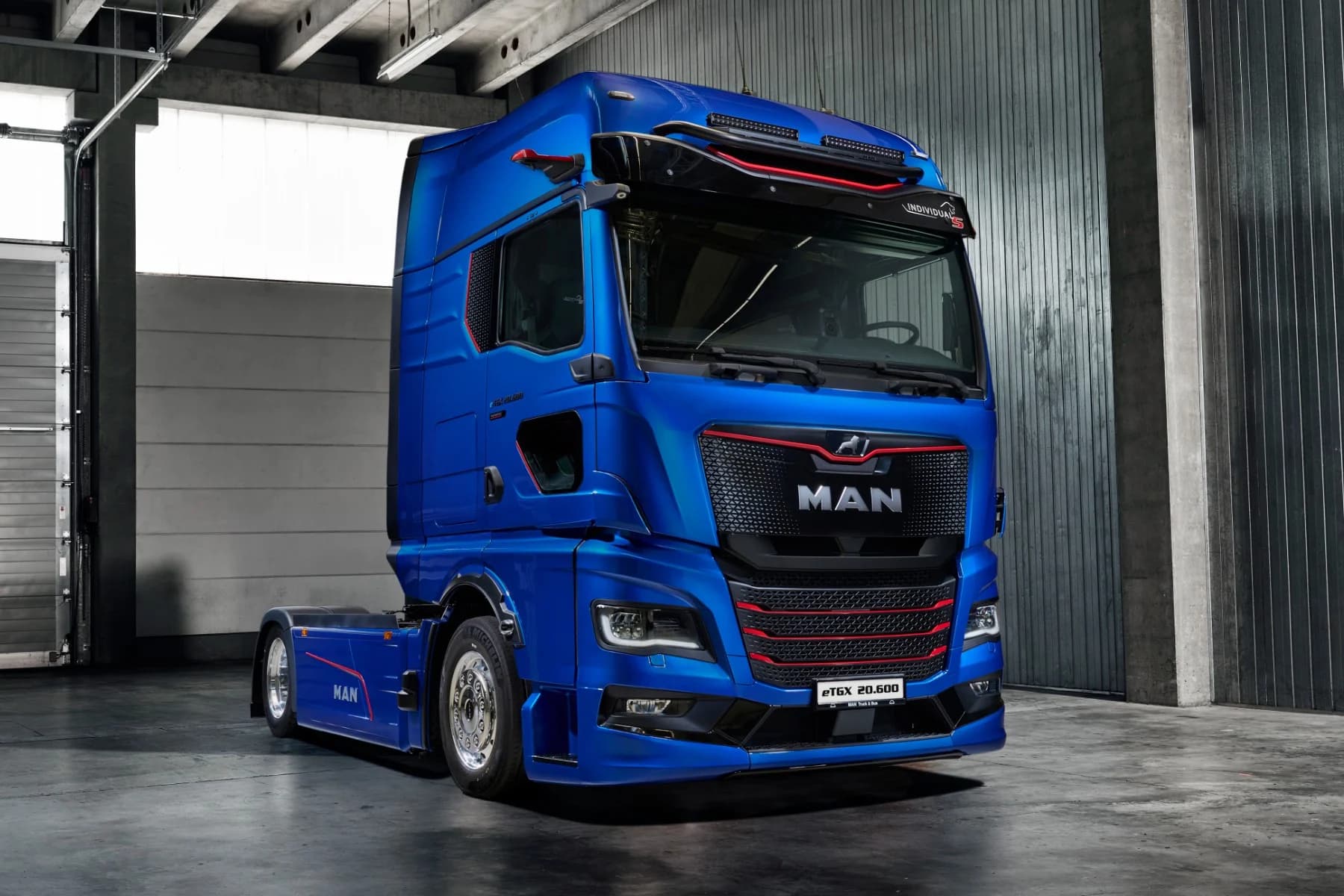
MAN eTGX travels up to 720 km with seven battery packs
MAN is making significant advances with its electric truck for long-haul transport. According to the manufacturer, the new eTGX achieves up to 720 km of range in its largest configuration. More than 600 km should still be possible under typical long-haul conditions.
A new generation of batteries is the main reason for this increase. One battery pack now stores 92 kWh gross and provides 88 kWh net. Previously, the figures were 89 kWh gross and 80 kWh net, meaning MAN now makes a significantly larger proportion of the installed capacity usable.
With more usable battery capacity, better aerodynamics and MCS charging, the eTGX is approaching an operating profile capable of covering many European long-haul routes without recharging en route.
Comparing the main eTGX configurations
For the first time, MAN can accommodate seven battery packs in the three-axle 6×2 tractor unit. The standard 4×2 version remains limited to six packs. The main reasons are axle loads, payload and the distribution of the additional battery weight.
| Configuration | Gross battery capacity | Net battery capacity | Range according to MAN |
|---|---|---|---|
| eTGX 4×2 with six packs | 552 kWh | 528 kWh | up to 660 km |
| eTGX 6×2 with seven packs | 644 kWh | 616 kWh | up to 720 km |
MAN continues to use NMC cells and assembles the battery systems at its own plant in Nuremberg. With around 95% usable capacity, the buffer between gross and net capacity is comparatively small. The key question will therefore be how effectively the battery and thermal management systems protect the cells under high mileage and frequent fast charging.
Aerodynamics and regenerative braking reduce energy consumption
The larger battery alone does not explain the increase in range. MAN has improved regenerative braking performance by up to 20%, allowing the truck to recover more kinetic energy when slowing down. This can noticeably reduce energy consumption, particularly on routes with downhill sections, roadworks and changing traffic conditions.
The front has also been extended by 12 cm. European vehicle-length rules adapted for zero-emission commercial vehicles provide the necessary scope. The new shape is intended to reduce aerodynamic drag while also improving direct visibility from the cab.
Every percentage point of efficiency matters in long-haul transport because a heavy tractor-trailer travels at relatively high speeds for many hours. Better aerodynamics → less continuous power required on the highway and therefore more range from the same battery capacity.
MCS enables charging at up to 750 kW
Suitably powerful charging infrastructure is crucial for the largest battery configurations. MAN offers the eTGX with a Megawatt Charging System connector, or MCS, as standard. It currently supports up to 750 kW of charging power.
With a conventional CCS connector, the electric truck charges at up to 375 kW. MCS can be particularly valuable during legally mandated driver breaks, but it requires high-capacity grid connections at logistics centers, depots and highway locations. Unlike passenger cars, this is not just about individual charging points, but sustained high power for entire fleets.
The combination of a large battery and fast charging significantly improves operational planning. Nevertheless, charging power, electricity prices and the depot’s grid connection remain key factors in commercial viability. Technical progress in the vehicle must therefore keep pace with the expansion of electric truck charging infrastructure.
Electric MAN TGE for demanding specialist applications
Alongside the eTGX, MAN is presenting a near-production electrified TGE developed jointly with a Swiss engineering partner. The vehicles are intended for applications requiring a high payload, all-wheel drive or electric power take-offs. These include emergency services, fire departments and municipal operators.
The versions presented have gross vehicle weight ratings of 4.0 and 5.5 metric tons, respectively. The larger van offers a payload of up to 2,500 kg and can tow trailers weighing up to 3,500 kg. According to MAN, a battery with a gross capacity of 119 kWh provides up to 480 km of range.
| Specification | MAN TGE electrified |
|---|---|
| Battery capacity | 119 kWh gross |
| Range | up to 480 km |
| DC charging power | up to 140 kW |
| Charging from 10% to 80% | under 30 minutes |
| Maximum payload | 2,500 kg |
| Maximum towing capacity | 3,500 kg |
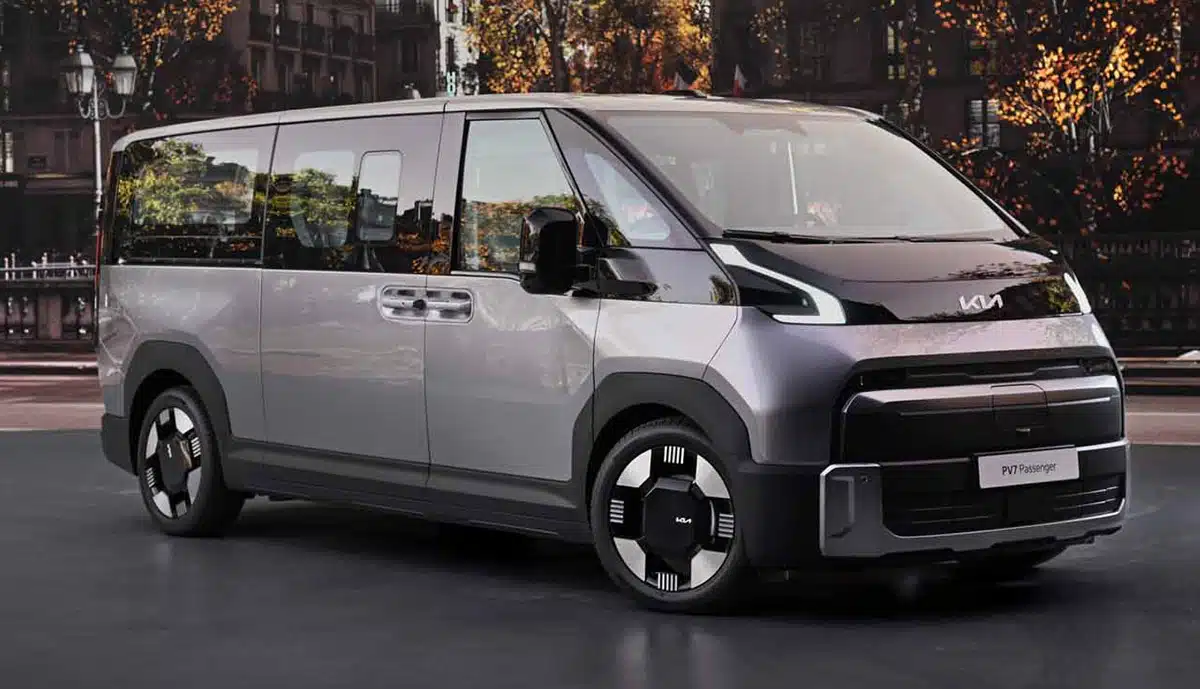
This means the van is aimed less at conventional parcel delivery services and more at demanding vehicle conversions. Other manufacturers are also expanding this segment, including with the announced Kia PV7 electric van. In the larger recreational vehicle segment, platforms with a 128 kWh battery and more than 400 km of range demonstrate how quickly heavy electric vehicles are advancing technologically.
How the new range changes everyday operations
More than 600 km of realistic range is more important to many logistics companies than the highest possible laboratory figure. This enables the eTGX to cover a large proportion of typical daily stages, with charging scheduled during breaks or at the destination. It becomes particularly attractive for predictable routes between depots.
Because of its weight, the seven-battery eTGX will not be the most economical choice for every route. Operators covering shorter distances or requiring more payload will likely be better served by six packs. MAN is therefore not creating a single long-range flagship, but a graduated system for different transport profiles.
At the same time, MAN is working with Volkswagen Commercial Vehicles on a new generation of the regular eTGE. Based on current plans, however, its market launch is unlikely before around 2028. Until then, the electrified specialist van will provide valuable real-world experience, while the eTGX is already targeting long-haul transport.