Kia PV7 Is Coming: A Larger PBV Electric Van for Businesses and Fleets
Kia is expanding its electric commercial vehicle lineup and has released the first images of the Kia PV7. The model is positioned as the next building block in its PBV strategy (Platform Beyond Vehicle) and is primarily aimed at business customers who find that the existing PV5 does not offer enough space.
The world premiere is scheduled for September 14 at IAA Transportation in Hanover. This places the unveiling directly in an environment focused on fleets, body configurations, and real-world operating costs—in other words, exactly the stage on which an electric light commercial vehicle (eLCV) must prove itself.
What the PV7 Is Intended to Do Better Than the PV5
Kia’s core message is clear: The PV7 sits above the PV5 and is intended to offer more space and greater flexibility. In day-to-day business use, that typically means more conversion options and a broader range of applications, from delivery and service vehicles to shuttles and specialized solutions.
Importantly, Kia is conceptually keeping the model within the PBV family. The PV7 is therefore not simply a larger vehicle, but another component in a modular system designed to be tailored to different tasks.
Design: “One-Box” Layout for Maximum Usable Space
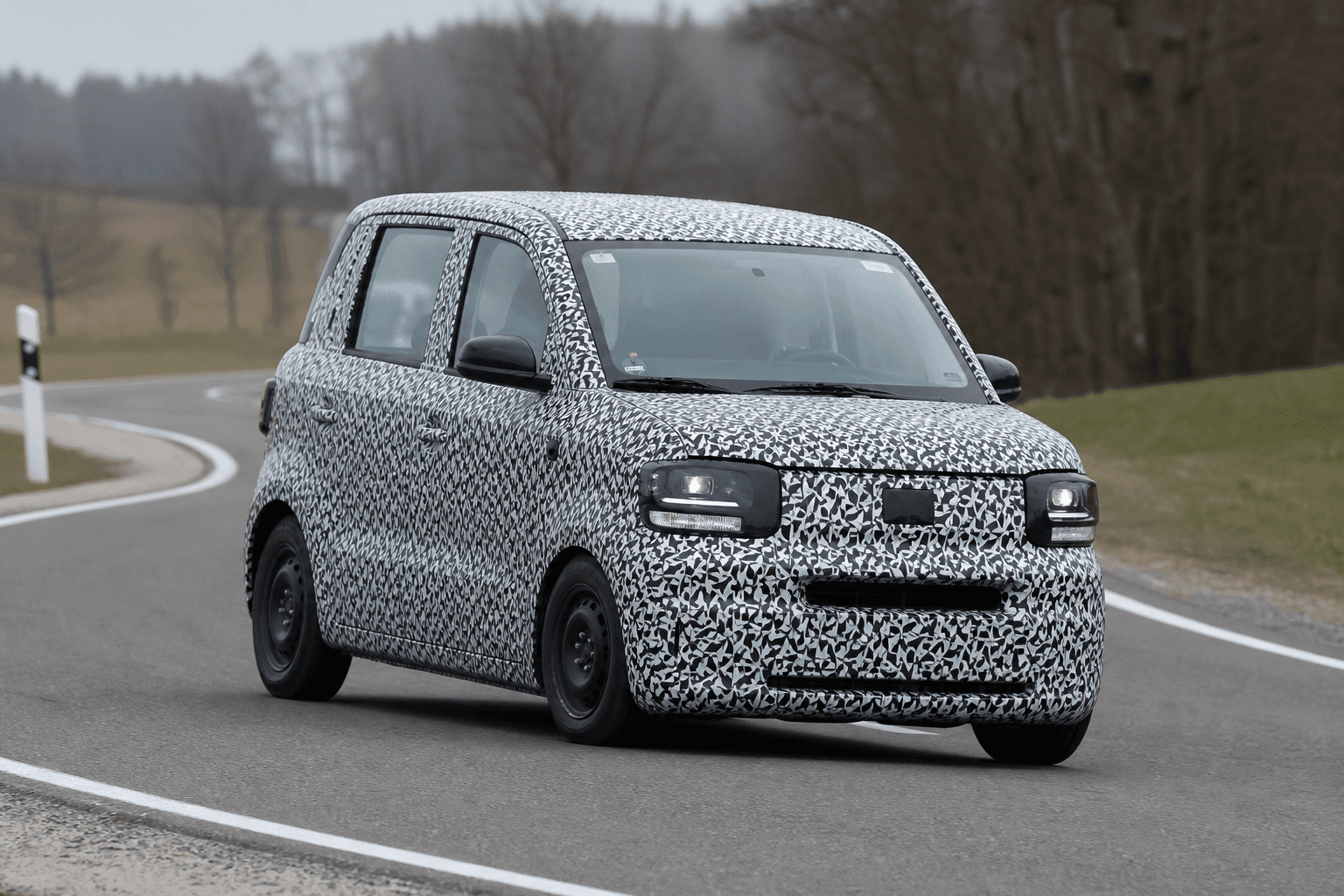
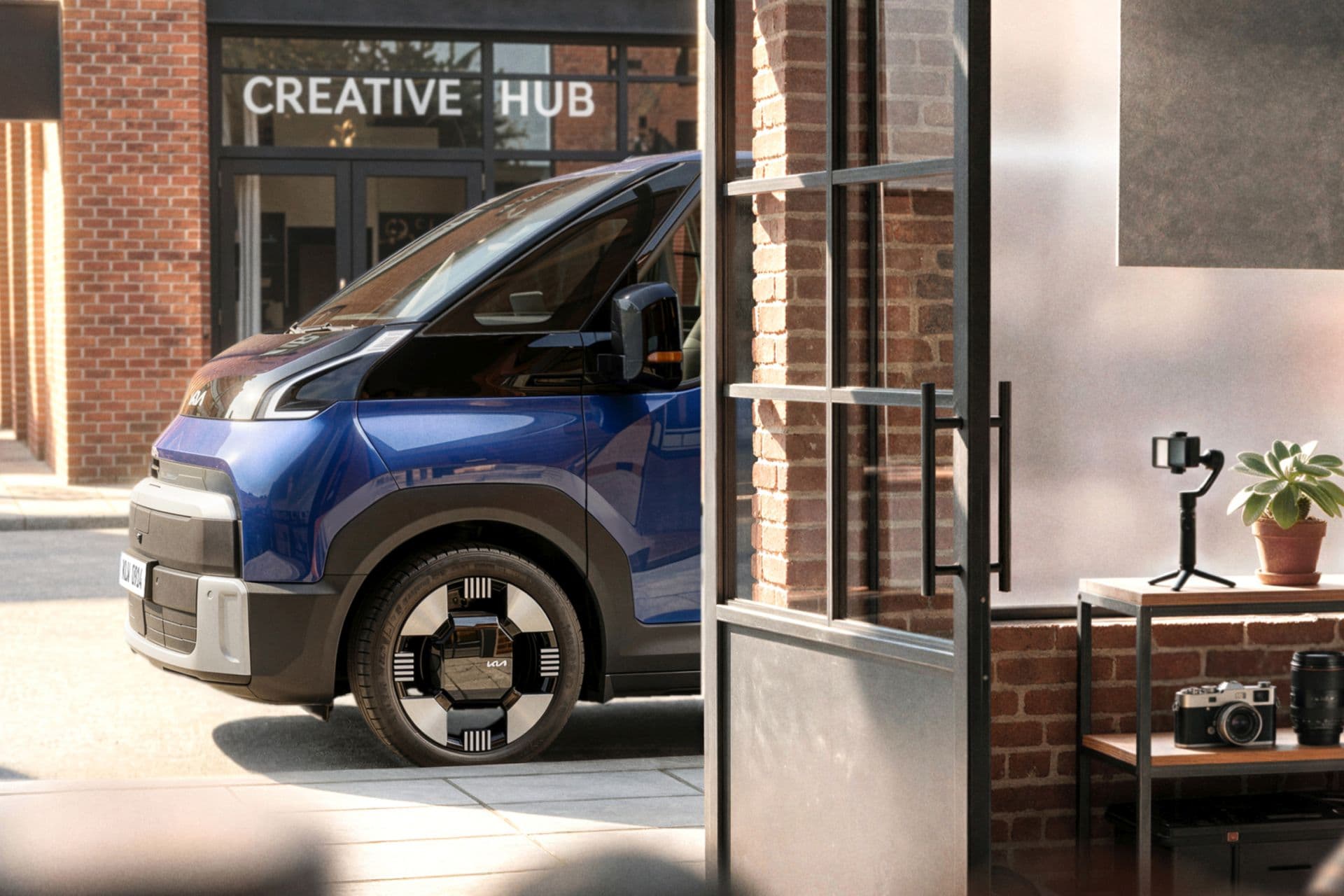
The images show a classic one-box profile. For a commercial vehicle, this is not merely a design choice but offers a clear practical benefit: short overhangs and plenty of volume where it matters—in the passenger compartment and cargo area.
Visually, Kia uses contrasting black elements on the hood and pillars, along with front and rear lighting signatures reminiscent of the PV5. This is intended to keep the PBV design family recognizable across vehicles of different sizes.
Technical Basis: E-GMP.S as a Platform for Service Vehicles
Like the PV5, the PV7 is based on E-GMP.S (Electric Global Modular Platform for Service). Kia developed this architecture specifically for service and commercial vehicles, drawing on expertise from the group’s existing electric vehicle program.
The main advantage of a shared platform is practical: Insights from development and production can be transferred between the PV5 and PV7. For fleets, this could indirectly mean that maintenance, parts supply, and vehicle configuration processes become easier to scale once several PBV models are operated in parallel.
What It Means for Germany, Austria, and Switzerland
Kia’s decision to hold the premiere in Hanover sends a strong signal to the DACH market—Germany, Austria, and Switzerland. Electric light commercial vehicles are particularly attractive here when used in city centers, on predictable routes, and in corporate fleets. These are precisely the settings in which electric powertrains can play to their strengths, including quiet operation, low costs in stop-and-go traffic, and predictable charging schedules.
At this early stage, Kia has not yet released details about the PV7’s battery, range, charging power, or available variants. These specifications will be crucial in determining how clearly the PV7 can position itself against established and upcoming electric light commercial vehicles.
PV7 and PV5 in the Context of the PBV Family
Kia says that the PV7 and future derivatives will further expand the PBV model range. This points to a modular concept in which body styles and intended uses take priority over conventional passenger-car trim levels.
Those interested in its smaller sibling can already find the Kia PV5 WAV as a wheelchair-accessible variant. More generally, the 2026 electric compact SUVs category may not help with comparing commercial vehicles, but it does illustrate how heavily range and charging times are now weighted as purchasing criteria.
What Will Be Particularly Interesting for Business Customers
- Range of variants: Panel vans, people movers, specialized bodies, and industry-specific solutions.
- Charging during operations: Predictable depot charging, potentially with load management.
- Payload and interior space: More room is only an advantage if the payload and dimensions suit the intended use.
The PV7 is aimed at customers for whom the PV5 is too small, while using the same service-vehicle platform to simplify configurations and scaling.
What We Expect at IAA Transportation
In addition to revealing the final exterior design, the trade-show premiere is likely to provide answers to the key questions for fleets: battery capacities, driving ranges, charging power, possible body variants, and the timetable for orders and deliveries. Only then will it be possible to properly assess how attractive the PV7 will be for tradespeople, delivery operators, and mobility services in Germany, Austria, and Switzerland.