Nissan Wave: the next affordable electric minicar for Europe
Europe’s electric small-car market will become noticeably more crowded in 2026 and 2027, especially in the price range where EVs can finally serve as genuine second cars or city cars again. Nissan intends to expand its offering here: following the electric Micra, which is closely related to the Renault 5, the brand is preparing to launch an even smaller and more affordable model, the Nissan Wave.
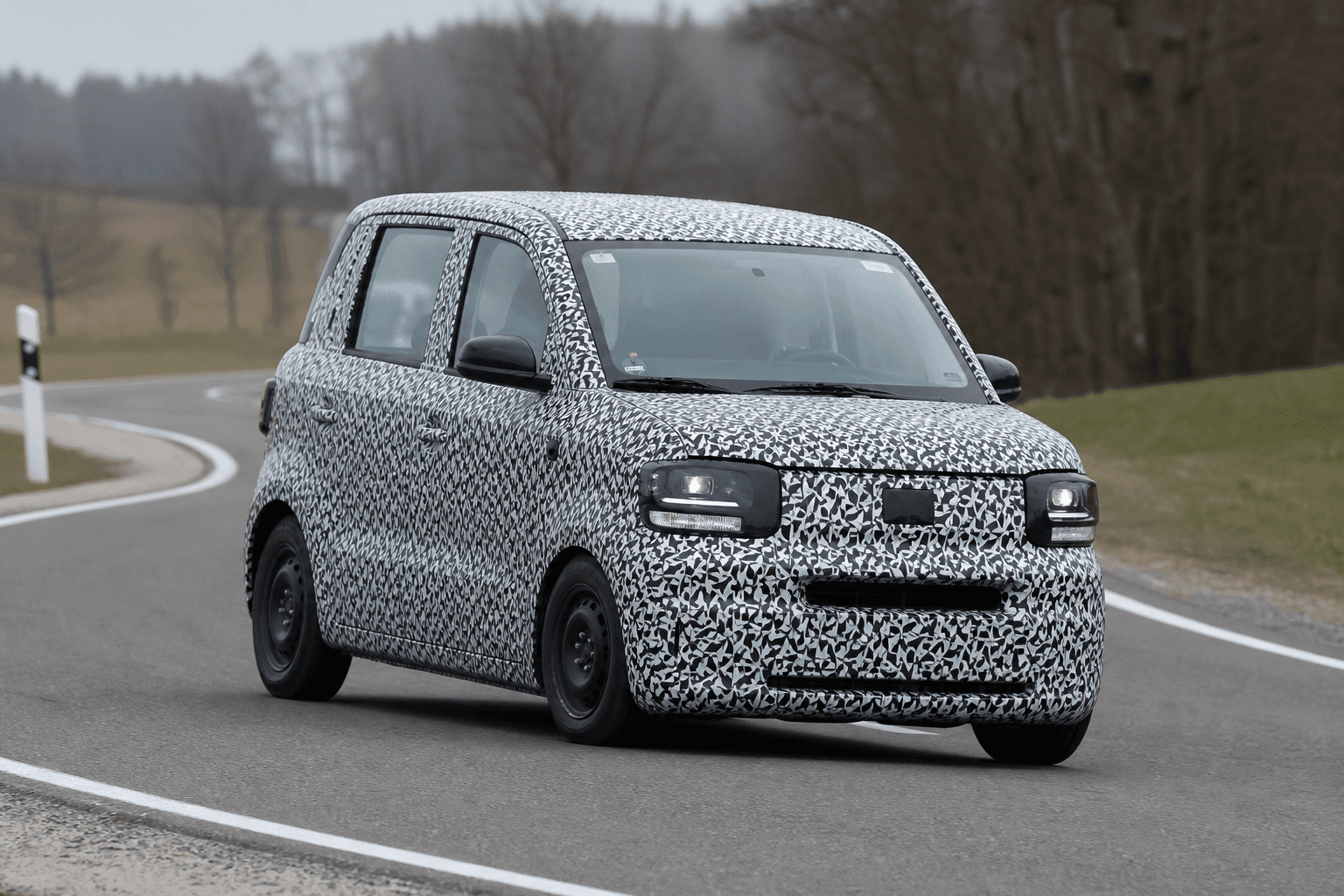
The vehicle is currently appearing in camouflage during road tests. This suggests that Nissan is already close to finalising the production setup without having started from scratch. The technical basis once again comes from the Renault-Nissan alliance, reducing development time and costs.
Technology: AmpR Small platform and LFP battery
The Nissan Wave is expected to be based on the AmpR Small architecture that Renault uses for its small front-wheel-drive models. More specifically, reports point to close links with the upcoming Twingo generation or its electric derivative. For buyers, this primarily indicates what to expect in terms of packaging, efficiency and cost structure: compact, urban and as affordable as possible.
Around 27 kWh of LFP battery capacity has been cited, apparently without a larger battery option. This fits its positioning as a minicar: less weight, lower costs and a practical range for commuting, city driving and short trips.
| Specification | Expected Nissan Wave specification (Europe) |
|---|---|
| Platform | AmpR Small (FWD) |
| Battery | approx. 27 kWh, LFP |
| WLTP range | approx. 260 km |
| Vehicle length | under 4 m |
| Price | around €20,000 (expected) |
Real-world impact: Who will find 260 km of WLTP range sufficient?
Around 260 km of WLTP range is not intended for long-distance travel, but it makes perfect sense for the targeted vehicle class. In everyday use, that means city driving and commuting should be no problem, with charging typically taking place at home or at the destination. Drivers who regularly use motorways will need to plan more carefully with the Wave, but larger batteries are available in higher vehicle segments for precisely that purpose.
The decision to use LFP is also interesting: in practice, lithium iron phosphate batteries often offer robust cycle life and are less sensitive to high states of charge. That can be a genuine advantage in a city car, as many users frequently charge to between 80% and 100% and want an uncomplicated EV.
Infotainment: Google software as used by Renault
Nissan is expected to use Google’s automotive software for the infotainment system, including the usual services and app integration through the Play Store. In everyday use, this is primarily an advantage if navigation, charging-route planning and media work seamlessly, while software updates continue to arrive reliably over the long term. At the same time, the system is likely to closely resemble what Renault offers in similar models.
Positioning: Plenty of Renault technology, but Nissan must stand out through the details
If the Micra and Wave are technically closely related to Renault models, purchasing decisions will often come down to practical factors: design, equipment packages, warranty, delivery times and, not least, dealership offers. This is where Nissan must demonstrate that the model is more than simply a badge-engineered product and delivers a coherent overall package.
For the European market, this is fundamentally good news: greater choice among EVs priced around €20,000 increases competitive pressure in the segment and makes switching to electric mobility more realistic for many households.