Wayve and Uber Launch Autonomous Trips in London
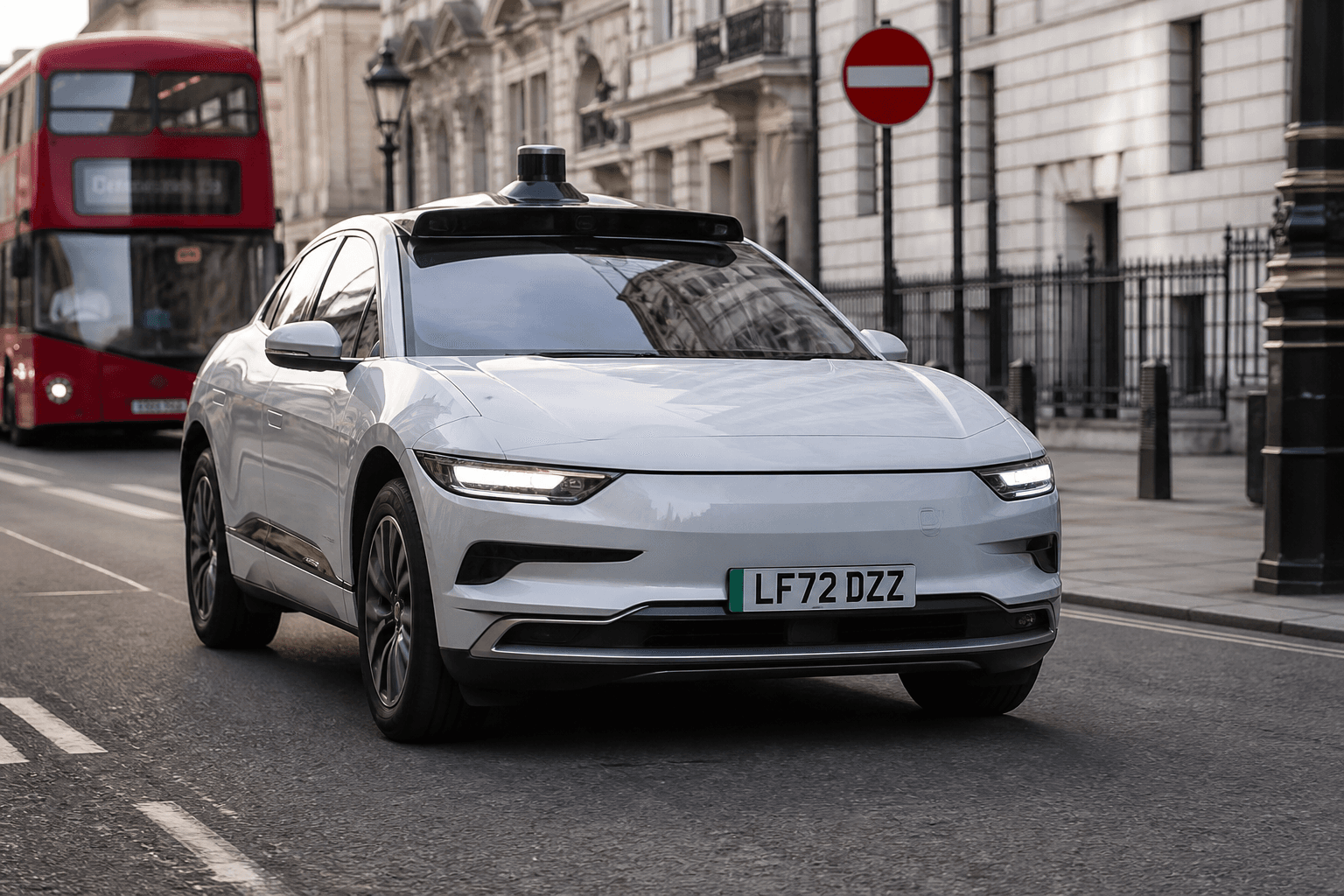
Wayve and Uber are joining forces in London to put autonomous vehicles on the road. This is particularly significant because London is a highly demanding test environment, with dense traffic, numerous edge cases, narrow streets, and a mix of taxis, buses, bicycles, and pedestrians.
For the DACH region—Germany, Austria, and Switzerland—this is less an immediate product promise than an indicator of direction and pace. If a system operates reliably in a city like London, it provides a strong argument that autonomous mobility could also scale in other European cities over the medium term, once suitable regulations and operating models are in place.
Why London as a Location Means More Than a Demo
Autonomous driving rarely fails because of highways; cities are the real challenge. London offers plenty of demanding conditions: confusing intersections, frequently changing lane layouts, numerous temporary construction sites, and aggressive merging in stop-and-go traffic. These are precisely the situations that determine whether a robotaxi service can later be operated safely and economically.
The fact that a provider is positioning itself here can be seen as a stress test with broader significance. This is particularly relevant for Europe because driving culture, traffic regulations, and infrastructure differ considerably from those in many U.S. test regions.
Wayve: An AI-Based Approach for Complex Urban Environments
Wayve is known for its strong focus on AI-based driving systems. Put simply, instead of creating a rigid rule for every edge case, the system learns from data and is therefore intended to respond more flexibly to real-world traffic situations.
That could prove crucial in everyday use: fewer “inexplicable” disengagements, less hesitation in difficult situations, and smoother driving overall. At the same time, this raises the bar for validation and safety certification because learning and generalization must be carefully controlled.
Uber as a Platform: Scaling Is the Real Goal
Uber brings reach, fleet-management expertise, and established user habits to the partnership. This is important for autonomous ride services because technology alone is not enough: dispatching, maintenance, remote support, insurance models, and local permits are at least as relevant.
Integrating autonomous vehicles into an existing ride-hailing platform could lower the barrier for users. Open the app, enter a destination, and a vehicle arrives—only without a driver, once operating conditions allow it.
Context: Robotaxi Momentum in Europe, the U.S., and Tesla’s Approach
In the U.S., robotaxis have long since become a mainstream topic. In Europe, progress has traditionally been slower, primarily because of regulation and liability issues. A launch in London shows, however, that Europe is being taken more seriously as both a market and a testing ground.
Tesla is pursuing a different path in parallel, centered on software-based scaling and a strong focus on driver-assistance features that are intended to develop step by step toward greater autonomy. Projects such as the one in London set a benchmark for real-world urban operation without automatically meaning that other approaches are inferior. Ultimately, success will depend on who can combine safety, cost per kilometer, and everyday availability.
What This Means for Users—and What It Does Not
For passengers, the prospect is clear: potentially cheaper and more readily available rides during off-peak hours once a service is rolled out at scale. For cities, the key issues are traffic flow, safety, public acceptance, and integration with public transportation.
It is also important to manage expectations: a launch in one major city does not mean that fully driverless vehicles will be available everywhere tomorrow. Rather, this marks a move from the laboratory and limited pilot zones into an extremely complex city—and therefore closer to genuine everyday use.