Li Auto Is Building a Business Around Its Own Technology
Li Auto is apparently seeking to position itself more firmly as a technology supplier. The Chinese manufacturer is reportedly planning to sell its proprietary chips, silicon carbide modules, and range extenders to external customers in the future.
Some business units could be organized more independently and backed with external capital for this purpose. However, the strategy is still at an early stage: no confirmed supply contracts, order volumes, or specific revenue targets have been announced so far.
Li Auto is trying to turn high development spending into a scalable supplier business.
Mach M100 Is Intended to Attract New Customers
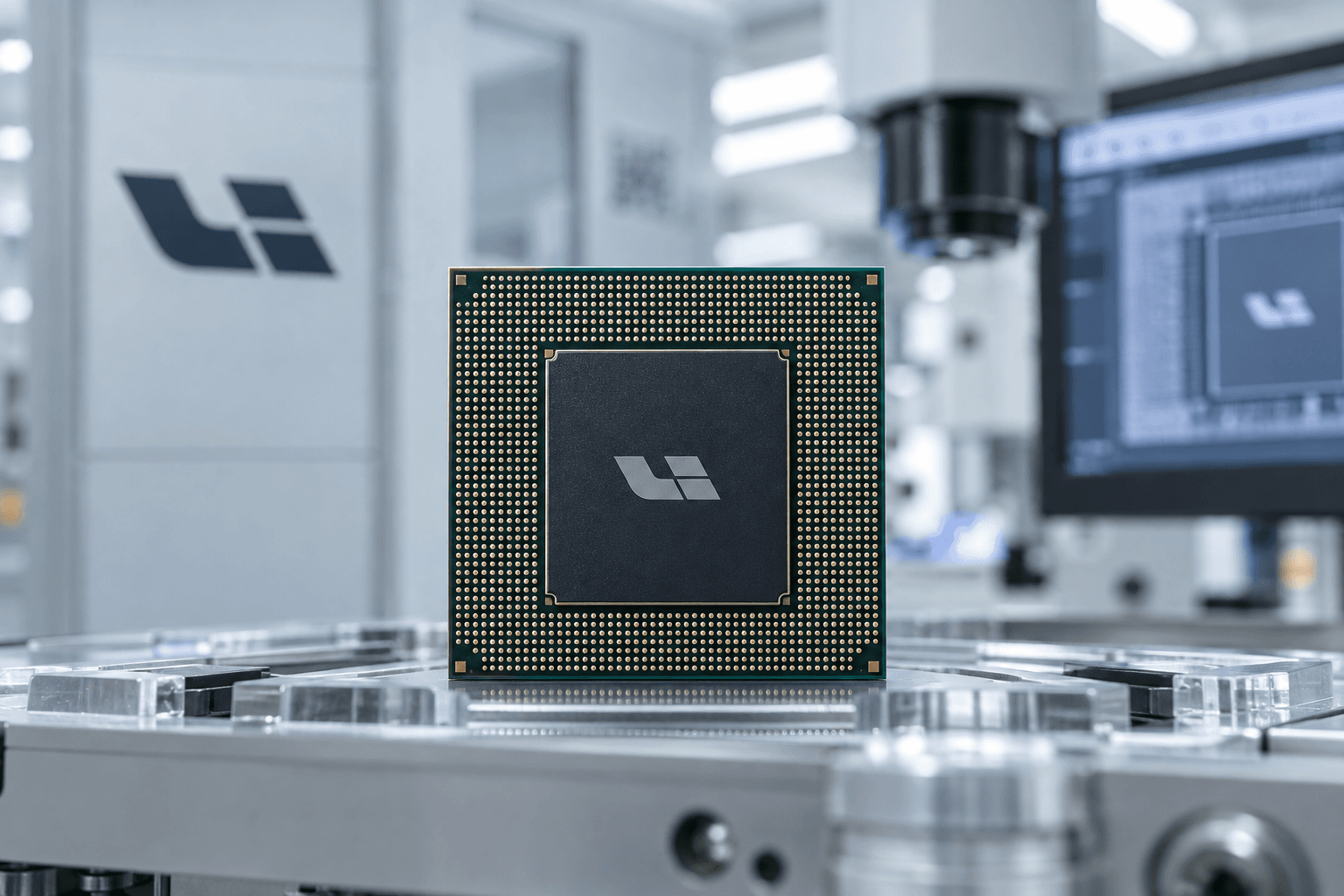
The focus is on the Mach M100, Li Auto’s first mass-produced chip for driver assistance systems. It is manufactured using a 5 nm process and, according to the manufacturer, is designed to deliver computing power of 1,280 TOPS per chip.
TOPS describes the number of computing operations that can be performed per second. However, this figure alone does not indicate how well a driver assistance system performs on the road. Software, sensor data, energy efficiency, and the calibration of the overall system are equally important.
A separate company for the chip business was established in Shanghai in July. Discussions are reportedly underway with companies in the embodied AI sector, among others, but no specific names or completed purchase agreements have been disclosed.
Software migration remains a key hurdle. A potential customer would have to adapt its existing algorithms and development tools to the new hardware, requiring time, money, and extensive testing.
Three Technologies in Focus
| Technology | Planned Approach | Key Challenge |
|---|---|---|
| Mach M100 | Sales to automakers and AI companies | Migration of existing software |
| Silicon carbide modules | Independent supplier operation with external customers | Gaining the trust of competing automakers |
| Range extenders | Supply of complete powertrain systems | Integration into third-party vehicle platforms |
Silicon Carbide Division Could Go Public
The separation of the silicon carbide business appears to be further advanced. Li Auto holds a 70% stake in the manufacturer, which was established jointly with a semiconductor company. The company now operates with independent profit-and-loss responsibility and is reportedly seeking external capital.
Preparations are also said to be underway for a future initial public offering. A broader ownership structure could make strategic sense, as other automakers may be reluctant to purchase critical power electronics from a company that is majority-owned by a direct competitor.
Silicon carbide enables lower losses and more compact designs in inverters and other high-voltage components. In everyday use, more efficient modules can contribute to lower energy consumption, better sustained performance, and more consistent charging performance.
Range Extenders Could Become a Supplier Product
Li Auto now develops and manufactures its range extenders in-house. These systems generate electricity for the electric powertrain while the vehicle is moving, with the combustion engine generally not driving the wheels directly. A similar basic principle also plays an important role in the Xiaomi SkyNomad’s range extender.
Vehicles of this kind are particularly successful in China because they combine electric driving with an additional energy source for long journeys. In Germany, Austria, and Switzerland, the concept’s regulatory and tax treatment depends more heavily on the specific vehicle, as a range-extender model is not automatically treated in the same way as a fully electric car.
For the time being, Li Auto does not intend to offer its proprietary batteries to external customers. The battery packs are said to be closely tailored to the company’s own vehicles, making adaptation to third-party platforms significantly more complex.
High Development Costs Increase the Pressure
The move comes at a time when Li Auto’s profitability is under pressure. The company recorded a net loss of 1.7 billion yuan in the second quarter, equivalent to roughly €210 million. A year earlier, it had still posted a profit of 1.1 billion yuan.
At the same time, research and development spending remained at around 3 billion yuan per quarter for six consecutive quarters. Although the company’s cash reserves of 87.5 billion yuan continue to provide a substantial cushion, an external technology business could spread costs across larger production volumes.
More customers → better utilization of development and production capacity. However, this will work only if Li Auto can offer competitive prices, reliable long-term supply, and dependable technical support.
Nio and Xpeng Are Pursuing Similar Plans
Li Auto is not alone in pursuing this strategy. Nio has already spun off its chip business into a separate company and is also seeking external customers. There is reportedly interest within the industry, but no firm series-production orders have been publicly announced there either.
Xpeng plans to offer its electrical and electronic architecture, cockpit systems, chips, and driver assistance software to additional international partners in the future. The extent of its technical progress is demonstrated, among other things, by Xpeng VLA 2.0 performing complex driving maneuvers.
What the Strategy Means for Europe
For European manufacturers, this does not yet create a new major supplier in the short term. Without confirmed orders, certifications, and robust production plans, it remains unclear which components will actually be used outside the Li Auto group.
Nevertheless, the trend is relevant over the long term. Chinese automakers are increasingly exporting not only vehicles but also chips, platforms, and software. This could allow Li Auto to generate additional revenue while exposing established suppliers to new competition from within the automotive industry.