Li Auto reveals new Mega interior—and it looks like a room on wheels
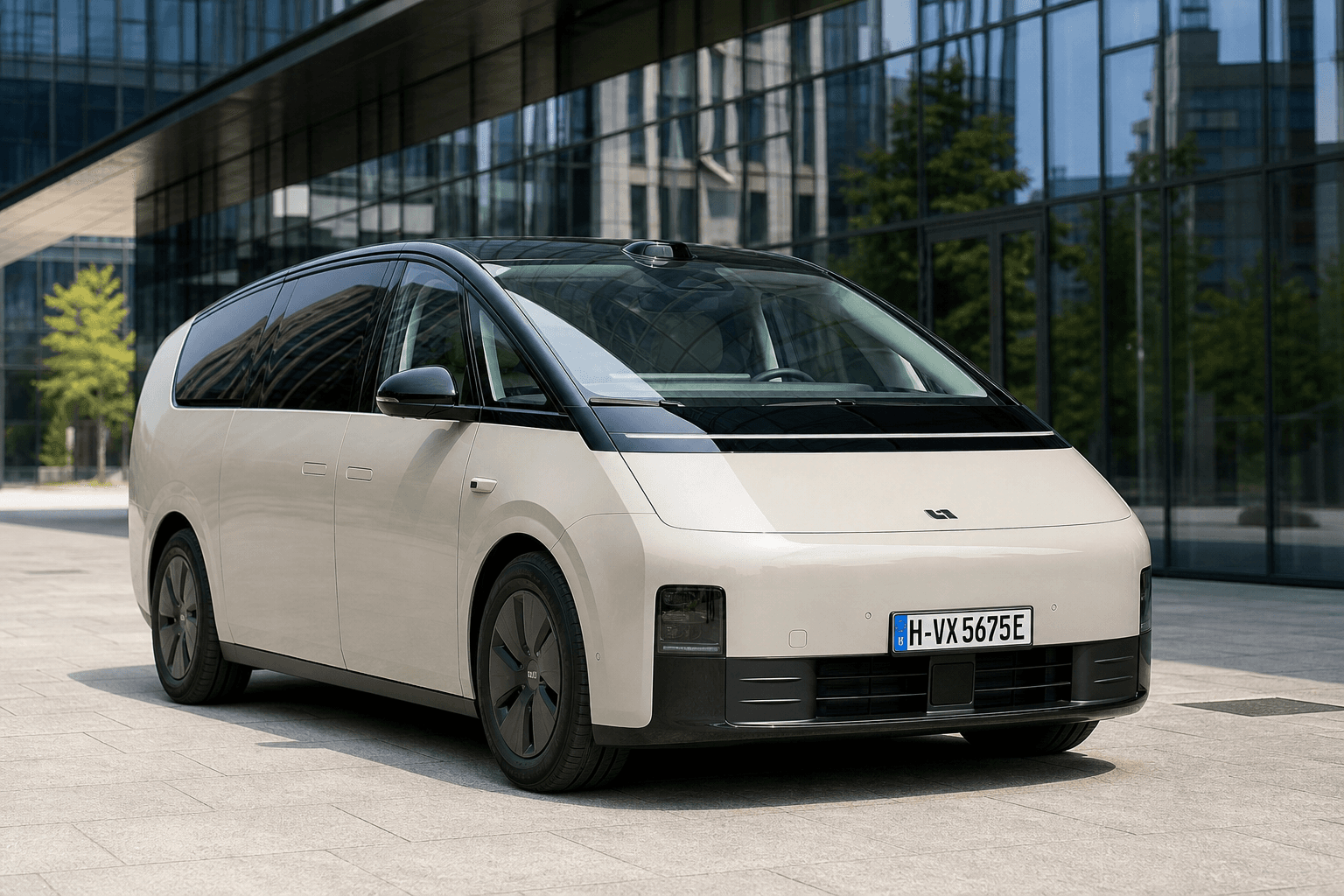
Li Auto is apparently working on a new generation of its Mega, frequently referred to as the Mega 2, although the final name has not yet been officially confirmed. A first image of the interior quickly makes the model’s objective clear: maximum space and a living-room feel behind the driver and front passenger. In everyday use, that primarily means long journeys, breaks and even overnight stays can be planned much more comfortably than in conventional family vans.
The concept also strikes a chord in Europe. Large vans may be a niche here, but they are an established one—think of the Mercedes V-Class or the VW Bus. If Li Auto expands its European ambitions, a vehicle like this could eventually become an interesting option here too, particularly for families, shuttle services or as an alternative to a camper van.
Key specifications from the regulatory filing
Because the vehicle has already been submitted to Chinese authorities, key technical specifications are known in advance. The dimensions are particularly striking, clearly placing it in luxury-van and “mobile lounge” territory.
| Specification | Known value |
|---|---|
| Length | 5.35 m |
| Wheelbase | over 3.0 m |
| Height | just under 2.0 m |
| Curb weight | around 3,000 kg |
| Powertrain | 2 electric motors |
| Power output | over 370 kW |
| Top speed | 200 km/h |
Its weight and size also reveal the downside: efficiency and tire wear will inevitably be issues for such a behemoth. At the same time, this body style is precisely why the concept can work well for everyday travel: plenty of space means fewer compromises in seating position, luggage capacity and comfort → and therefore genuine long-distance suitability for families.
Autonomous driving: more roof-mounted sensors
The driver-assistance systems point to a typically high-tech Chinese approach. The roof still features the LiDAR unit that has now become almost “standard equipment” on many models there, while the sensor suite is said to have been expanded: Instead of one radar, the vehicle is now listed with four radar sensors. This suggests a broader range of partially automated driving functions, although, as always, the software will ultimately be decisive.
For the German-speaking DACH market—Germany, Austria and Switzerland—the most important consideration is less what would be technically possible and more what is legally approved and reliably available. Tesla’s camera-based approach shows that driver-assistance systems can be highly capable even without LiDAR. Conversely, additional sensors do not automatically result in better autonomous driving, but they can improve redundancy and comfort if the overall package is right.
Fast charging as a Mega hallmark, but the battery remains unknown
There is currently no reliable information about the new generation’s battery capacity. Nevertheless, expectations are high because even the first Mega delivered exceptional DC charging performance. The model was known to sustain more than 300 kW even at an 80% state of charge, and it is said to have reached a peak of over 520 kW.
The practical benefit would be clear: short stops despite the vehicle’s enormous size. That is also why 800-volt technology and high charging rates currently make such a difference, particularly on long journeys. For context, see our overview comparing 800V vs. 400V architectures.
Why this also matters for Europe
Although discussions about Li Auto in Europe have so far tended to focus on other vehicle classes, the Mega clearly demonstrates how the upper end of the market could evolve: more space, more power and better charging performance. People in the DACH region looking for electric long-distance vehicles today often end up with conventional SUVs. The Tesla Model Y remains a benchmark in this class, but a van with this kind of interior concept would serve a different need.
From a travel perspective, it is also worth taking a look at range and real-world everyday use. If you want to explore the subject in more detail, EV range anxiety explains what really matters and what is more a question of perception.
What we do not yet know—and what will ultimately matter
The final specifications will be crucial: the battery, charging curve, efficiency, price and equipment structure. Particularly with vehicles this large, the interplay between aerodynamics, battery size and charging performance is key to ensuring that the product does not merely look impressive, but also works economically and practically.
If Li Auto actually brings the Mega concept to Europe, it would be less of a direct rival to typical electric SUVs and more of an alternative to electric camper vans and luxury shuttles. In any case, the first interior photo makes one thing clear: This is not just about driving, but about space as a feature.