Li Auto i9 Becomes the Electric Flagship
Li Auto is expanding its electric vehicle lineup with a new range-topping model. The Li Auto i9 will be unveiled on September 16, 2026, with the presentation beginning at 1:30 p.m. Central European Summer Time. The first display vehicles are expected to arrive at Chinese showrooms as early as September 11.
The new electric SUV is positioned above the i8 and will be the brand’s largest SUV to date. With three rows of seats and room for six, the i9 is clearly aimed at families that want plenty of space without driving a conventional van.
More Than 5.20 Meters Long and 400 kW of Power
Chinese vehicle registration documents have already revealed the key specifications. The i9 measures 5.23 meters in length and has a wheelbase of 3.17 meters. This makes it substantially larger than the already sizable i8.
| Specification | Li Auto i9 | Li Auto i8 |
|---|---|---|
| Length | 5.23 m | 5.09 m |
| Wheelbase | 3.17 m | 3.05 m |
| Seating capacity | 6 | not newly confirmed |
| Drivetrain | dual-motor all-wheel drive | no new information |
| System output | 400 kW | no new information |
The electric all-wheel-drive system combines a 150 kW front motor with a 250 kW rear motor. The resulting 400 kW puts the i9 in the high-performance luxury segment, where models such as the Denza N8 and the Xpeng G9L also compete for affluent families.
Home Version With Swiveling Comfort Seats
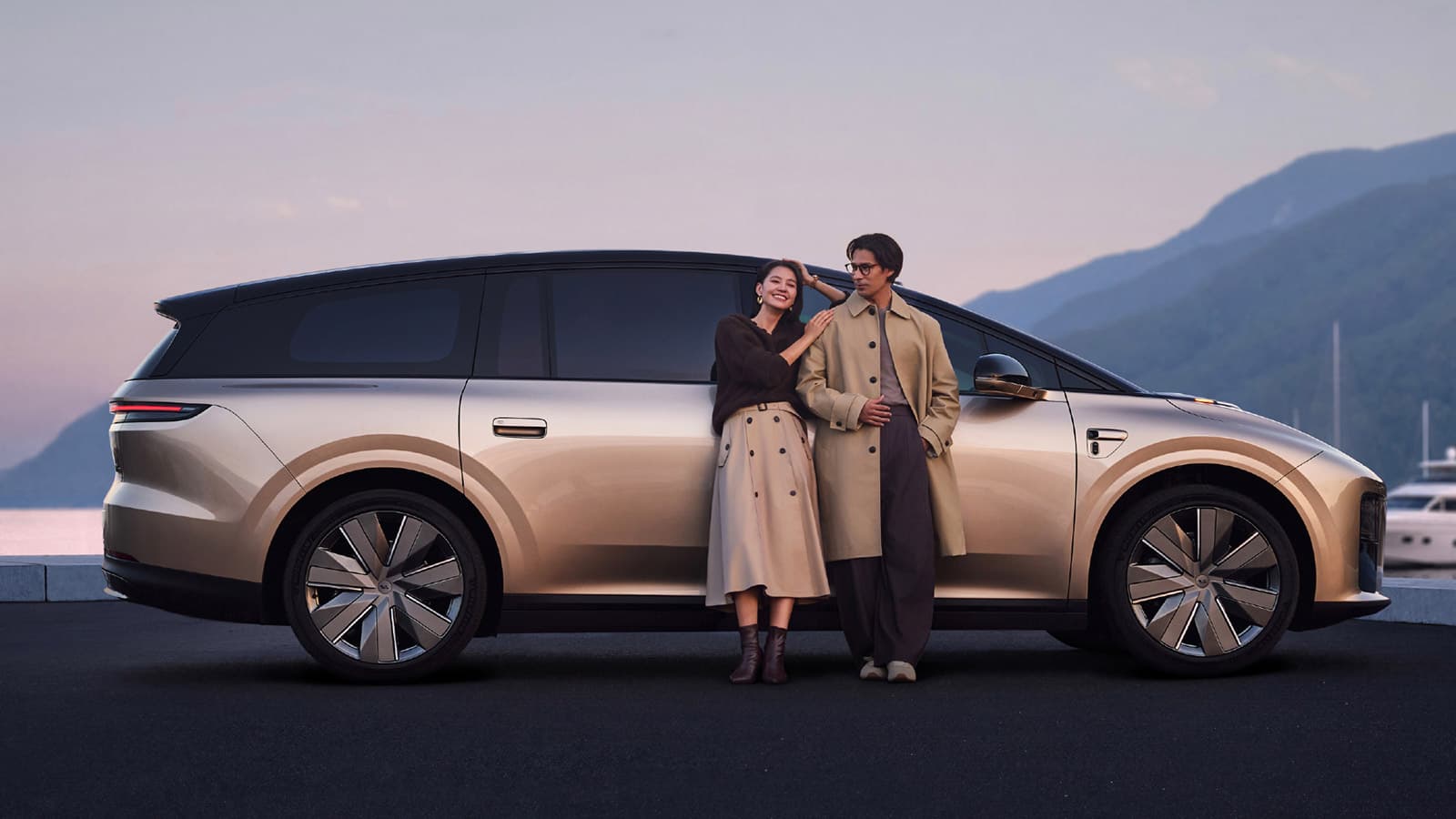
Li Auto is placing particular emphasis on the interior. In the so-called Home version, the comfort seats can swivel, allowing occupants to face one another while the vehicle is stationary. The concept is therefore more reminiscent of a mobile lounge than a conventional SUV cockpit.
Such seating functions are particularly useful during charging stops or longer periods while parked. For safety reasons, their use and seating positions are likely to be restricted while driving. Li Auto has not yet released specific details on the permitted use of the swiveling seats.
Following the Mega electric van, the i9 is the brand’s second model to offer a Home variant. While the Mega provides as much interior space as possible within a large footprint, the i9 is intended to bring similar comfort concepts to a conventional SUV body style.
CATL Will Initially Supply a 5C Battery
The first vehicles are expected to use ternary lithium-ion cells from CATL. Li Auto claims 5C charging capability. In theory, 5C corresponds to a full charge in 12 minutes, although in practice this maximum rate cannot be maintained throughout the entire charging process.
Battery capacity, system voltage, charging curve, and battery preconditioning will therefore be crucial. These details have not yet been confirmed. The choice of ternary cell chemistry also comes at a time when LFP batteries dominate the Chinese battery market.
An In-House Battery Does Not Mean an In-House Cell Factory
Once production has ramped up, Li Auto intends to switch the i9 entirely to an internally developed battery. The company will develop and manufacture the battery packs itself, determining factors including performance, quality standards, and system integration.
The cells themselves, however, are expected to be produced by external manufacturing partners. Li Auto will therefore control the product definition and technical specifications without carrying out every production step in its own cell factories. In the long term, this battery strategy is expected to be extended to additional models.
Range and Price Have Yet to Be Announced
No reliable figures are yet available for battery capacity, range, maximum charging power, or acceleration. Li Auto also apparently plans to announce the price only at the premiere. Given its size, performance, and interior, however, the i9 is clearly expected to compete in the upper end of China’s electric vehicle market.
No market launch has yet been announced for Germany, Austria, or Switzerland. The i9 will therefore remain a China-only model for now, but it demonstrates how quickly the market for large electric family SUVs is developing there.
The i9 Is Intended to Strengthen Li Auto’s EV Business
The model’s launch comes at an important time for Li Auto. In August 2026, the company delivered 37,679 vehicles, around 32% more than in the same month of the previous year. From January through August, deliveries totaled 261,619 vehicles, still 0.6% below the corresponding period a year earlier.
At the same time, vehicle margin fell from 19.4% to 9.4% in the second quarter. New electric vehicles such as the i9 are therefore intended not only to broaden the model lineup but also to stabilize sales and profitability over the medium term. Whether this succeeds will depend primarily on price, range, and real-world charging performance.