BYD is taking the kei-car concept global, with Europe on the list
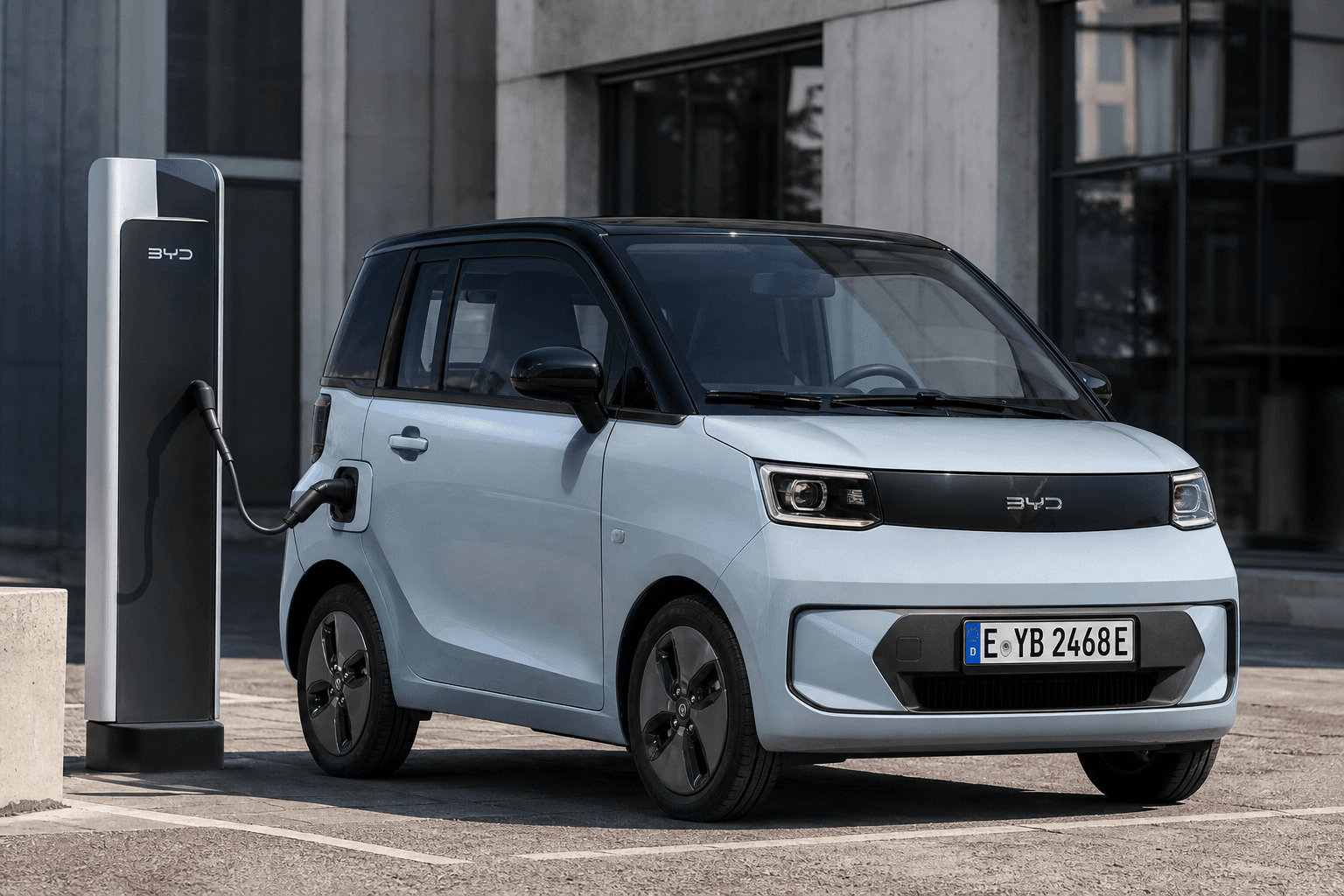
BYD is apparently working to roll out the powertrain technology from its Racco kei car, developed for Japan, not only locally but worldwide. Europe is particularly interesting because policymakers are discussing a new vehicle category based on Japan’s kei-car regulations. In the longer term, this could mean less stringent regulations and better incentives for ultracompact EVs, provided the EU actually implements the proposal.
For the DACH region—Germany, Austria and Switzerland—this would be particularly relevant to anyone looking for a genuinely small city car and unwilling to settle for “small cars” measuring 4.1 to 4.4 meters long. Every centimeter counts in densely built-up city centers, and a true mini format can make parking and maneuvering considerably easier.
X-Pack: Why BYD is moving the electronics into the battery
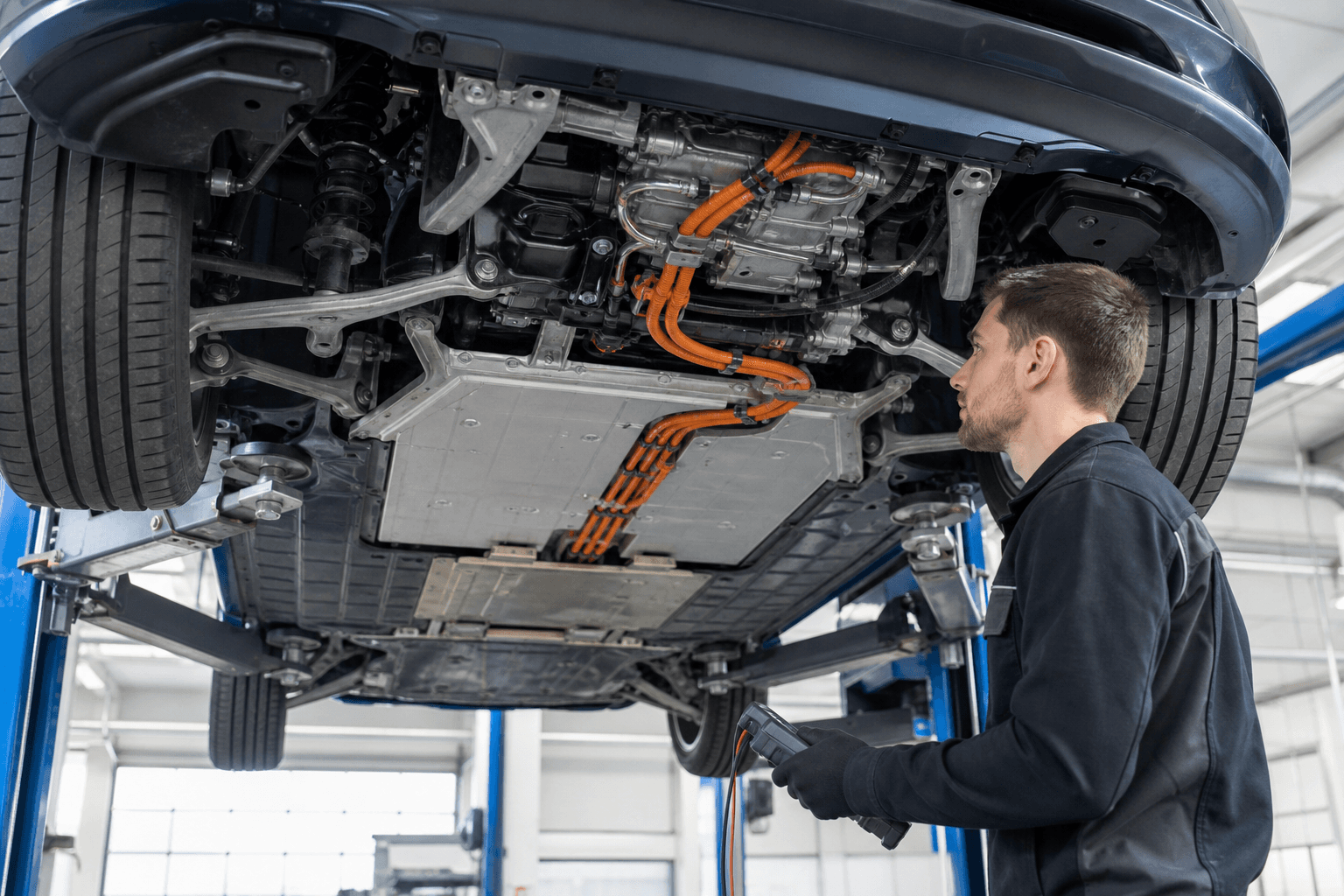
At the heart of the concept is BYD’s self-developed X-Pack battery system. The idea is that key electrical components such as the inverter are no longer installed conventionally at the front of the car but integrated directly into the battery pack beneath the vehicle floor.
For very small cars, this is more than just a packaging trick. If less space at the front needs to be reserved for power electronics and other components, there is more room for the interior and, above all, for a properly designed crumple zone. With the tight dimensions of a kei car, this can help strike a better balance between passenger space and crash safety.
What exactly is a kei car, and why is it relevant to Europe?
Kei cars are extremely popular in Japan and subject to strict regulatory limits. They may be no more than 3.4 meters long, 1.48 meters wide and 2 meters high. According to the report, the EU is discussing a new category that could be based on this concept, specifically for electric vehicles. This could provide an effective way to make particularly efficient urban EVs more attractive.
BYD Racco: Japanese specifications as a guide
The BYD Racco has been on the Japanese market since July and comes very close to the permitted size limits. Depending on the version, two battery sizes are listed, targeting different ranges. Importantly, these figures are based on Japan’s WLTC test cycle and are not directly comparable with WLTP figures, but they provide a useful indication for this vehicle class.
| Specification | BYD Racco (Japan) |
|---|---|
| Vehicle class | Kei car (minicar) |
| Length | 3,395 mm |
| Width | 1,475 mm |
| Height | 1,800 mm |
| Battery (base) | 22.4 kWh |
| Range (base) | 210 km (WLTC) |
| Battery (larger) | 35.84 kWh |
| Range (larger) | 320 km (WLTC) |
Why European production makes strategic sense for BYD
According to the report, BYD’s planned plant in Hungary, which is expected to begin series production later this year, is a potential base for a European model. Local manufacturing is a clear advantage in the current market environment because it can reduce the impact of import tariffs. Production in Europe also tends to shorten delivery times and simplify type approval and model-variant planning.
For buyers in Germany, Austria and Switzerland, a European-built model would be particularly attractive if it had a positive effect on the price. This is precisely what will determine whether mini EVs become a genuinely mass-market alternative or remain a niche product.
Assessment: Mini EVs as a counterweight to ever-larger electric cars
The market has been trending toward larger vehicles for years, including in the electric segment. At the same time, the success of compact bestsellers shows that efficiency and everyday practicality are often more important than maximum dimensions. A kei-car-style EV could excel in exactly these areas: less material, potentially lower energy consumption and easier parking.
From Tesla’s perspective, there is no contradiction here: Tesla currently competes for volume sales primarily in the compact SUV class, while ultracompact urban EVs serve a different use case. A broader range of choices will help advance electric mobility overall.