Lamborghini Lanzador: from electric flagship to plug-in hybrid
Lamborghini is backing away from its original all-electric plans for the Lanzador. The model, which was unveiled in 2023 as a preview of the brand’s first fully electric production vehicle, is now set to arrive with a plug-in hybrid powertrain. CEO Stephan Winkelmann says customers have responded very positively to the change.
For everyday use, this primarily means a different approach: Instead of running solely on battery power, a plug-in hybrid combines an externally rechargeable battery for electric driving with a combustion engine for sustained high performance and long journeys without charging stops. Particularly in the high-performance vehicle segment, this remains a decisive factor for many buyers, even though the overall trend toward battery electric vehicles is clear.
The timeline has been postponed several times, with 2030 currently looking the most credible
Lamborghini has also revised the Lanzador’s timeline several times. Following its unveiling in 2023, the initial target was 2028, with 2029 later mentioned as the launch date. The latest and most widely reported plan now points to a 2030 market launch—this time, however, as a plug-in hybrid.
This is relevant to the DACH market—the German-speaking region comprising Germany, Austria, and Switzerland—because although charging infrastructure is expanding rapidly, expectations in the premium segment often go beyond merely practical long-distance capability. A plug-in hybrid eases this concern without abandoning electric driving altogether.
Technical details remain open, but an Urus-based setup appears most likely
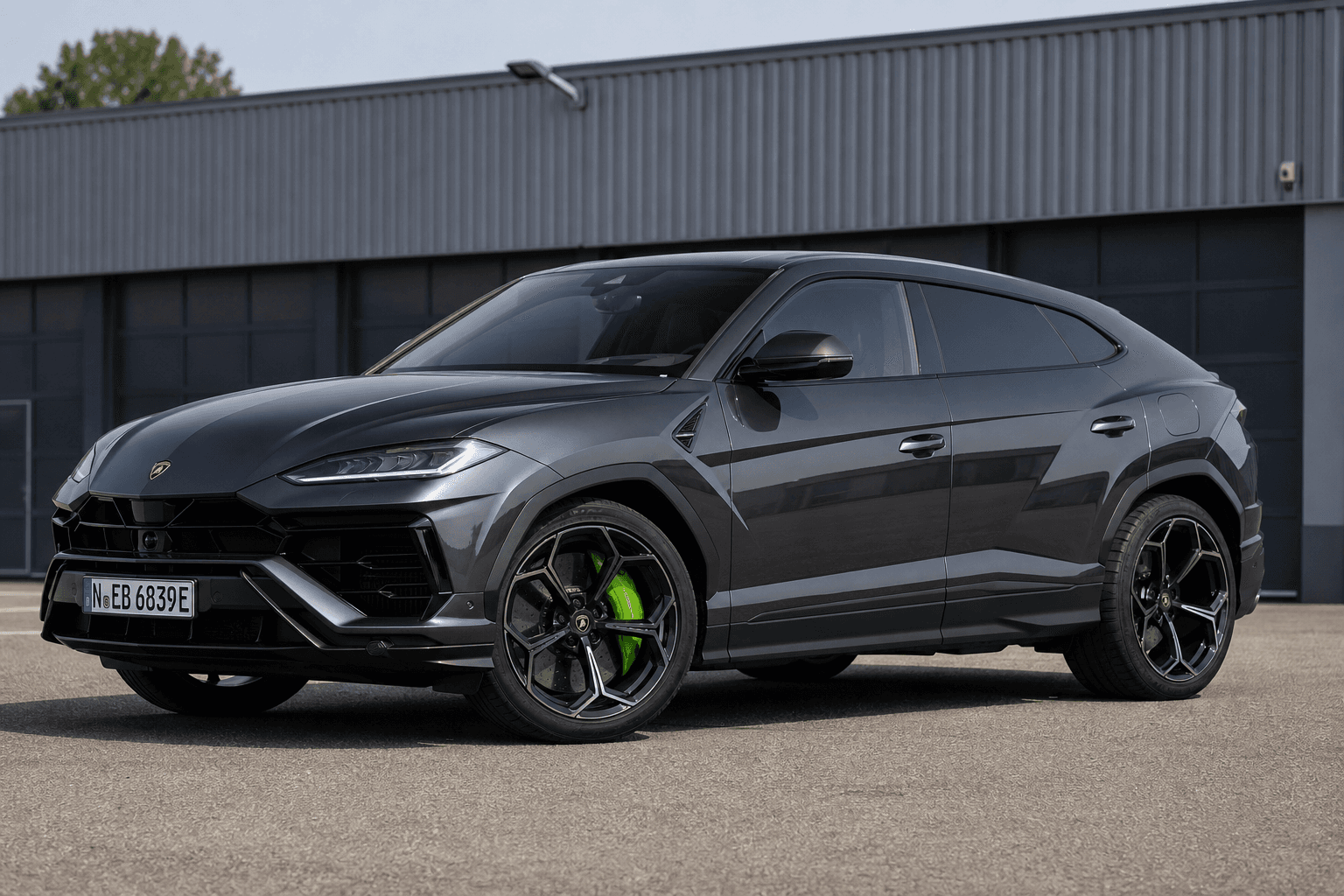
Lamborghini has not yet provided any firm data on battery capacity, electric range, total system output, or the technical basis of the new plug-in hybrid powertrain. However, it would make sense for Lamborghini to draw on an existing system from within the Volkswagen Group, such as the setup used in the Urus SE.
The Urus SE combines a 4.0-liter twin-turbo V8 with an electric motor for a total system output of 588 kW, accelerates to 100 km/h in 3.4 seconds, and reaches a top speed of 312 km/h. Its battery has a capacity of 25.9 kWh, and it is said to offer more than 60 km of all-electric driving. However, it has not been confirmed whether the Lanzador will actually adopt any of these components.
Positioning: between a supercar and an SUV
Lamborghini continues to describe the Lanzador as a “fourth model line” positioned between a traditional supercar and an SUV. That fits the basic concept of a performance-oriented 2+2 crossover, but the details remain vague.
The strategic undertone is particularly interesting: Lamborghini’s recent approach to electrification has focused less on maximizing electric range and more on electrified performance—in other words, additional power, more immediate torque delivery, and improved driving dynamics. The Lanzador could consistently carry this approach forward as a plug-in hybrid.
Will the first true electric Lamborghini arrive only after 2030?
At the same time, Lamborghini is expected to continue working on core technologies for fully electric vehicles, including battery-cell chemistry and software. These developments could also find their way into plug-in hybrids through more efficient battery packs, improved thermal management, or new control strategies for the electric powertrain.
A fully electric production model from Lamborghini is currently not expected until after 2030. This aligns the brand with a reality also seen among other performance manufacturers: Electrification is inevitable, but depending on customer expectations and product positioning, the transition will take considerably longer than originally announced.