Jeep Returns to China, With Exports Starting in 2027
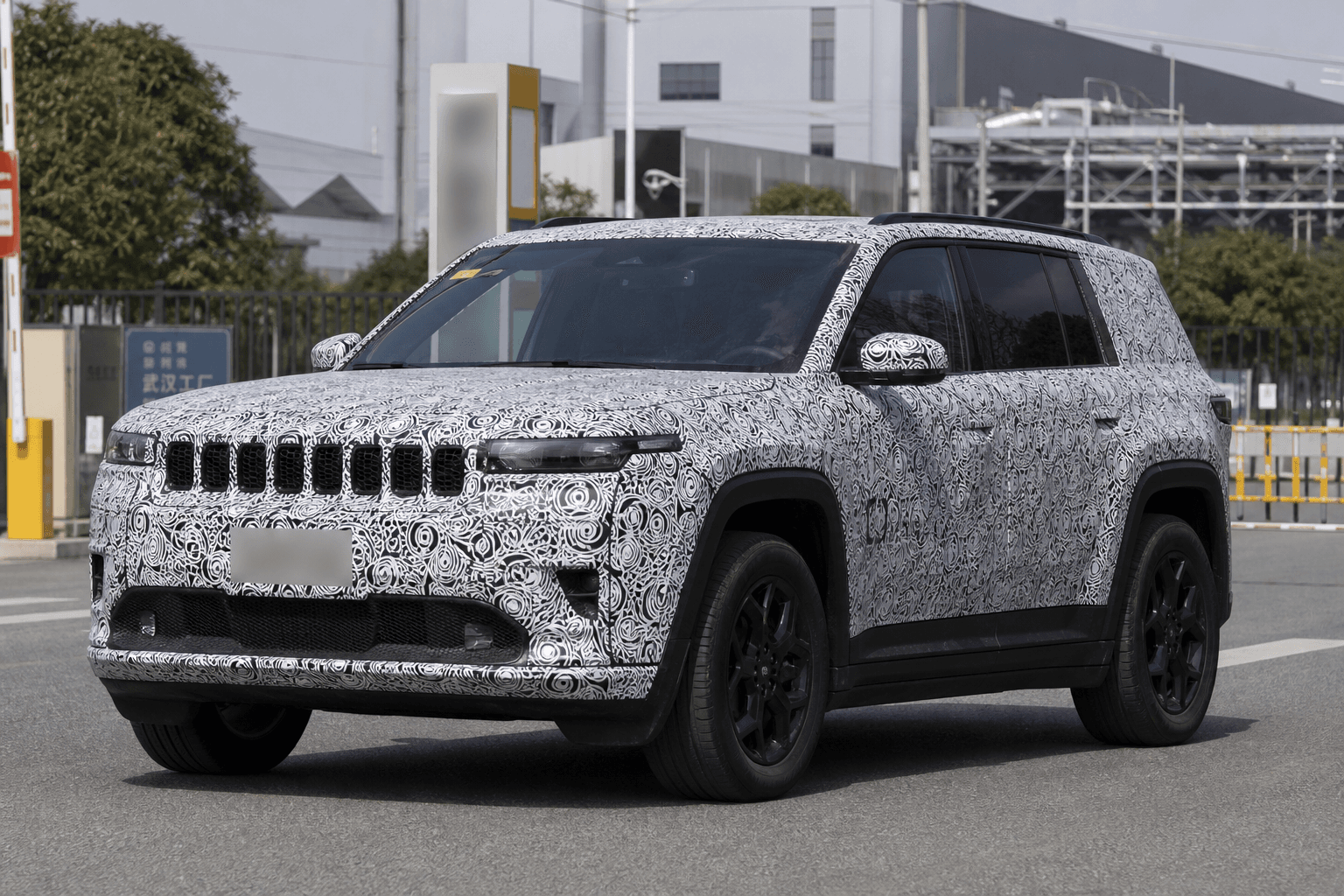
Jeep plans to resume car production in China in 2027 after suspending local manufacturing for several years. This time, the plan is more ambitious: The models built in China will not be intended solely for the Chinese market but will be exported worldwide.
However, there is one major caveat concerning the brand’s home market: The United States will be excluded from these Chinese exports. The reason is the high import tariffs on vehicles made in China, which make the business case significantly more difficult for Jeep there.
Stellantis and Dongfeng to Develop Two Electric Jeep Models
From a technical and organizational perspective, the project will be managed through Stellantis, Jeep’s parent company. Together with China’s Dongfeng Motor Group, Stellantis plans to develop two electric Jeep models. The vehicles will also be manufactured in China.
For Stellantis, this is a pragmatic approach: China moves extremely quickly in many areas of EV technology, software development cycles, and supply chains. At the same time, parts of the country’s manufacturing sector have excess capacity that can be used for export programs.
New Joint Venture With Clearly Defined Roles
To ensure that this is more than a loose cooperation project, Stellantis and Dongfeng have established a new joint venture: Dongfeng Stellantis Automotive Technology Co. The company will be responsible for developing and marketing the new electric models for Jeep and Peugeot.
An investment of 8.2 billion yuan is planned, equivalent to approximately €1 billion. The program is expected to produce two Jeep models and two Peugeot models. In addition to battery-electric vehicles, plug-in hybrids are also planned.
Who Will Do What?
According to Dongfeng, it will lead research and development, focusing on electrification and intelligent vehicle technologies. Stellantis will contribute the brands’ market presence, design DNA, and international sales and marketing network. This setup is typical of new partnerships in China: rapid local technology development combined with global scaling through established brands.
Production in Wuhan at an Existing Plant
The new models are to be manufactured at the Dongfeng Peugeot Citroën Automobile (DPCA) joint venture plant in Wuhan, China. DPCA has existed since the early 1990s and has been part of the Stellantis group since Stellantis was formed through the merger of PSA and Fiat Chrysler.
For Jeep, this provides a quick route back into local production without first having to build entirely new manufacturing infrastructure. At the same time, the plant can be used for global deliveries, provided the relevant target markets are compatible in terms of regulations and tariffs.
Why China Is Once Again Attractive to Jeep
Jeep had recently struggled in China primarily because of the rapid shift toward EVs, which has put many international brands under pressure. Stellantis ended its previous Jeep joint venture in 2022 following a sharp decline in sales. Jeep currently sells mainly imported models in China, including the Grand Cherokee, Wrangler, and Gladiator.
New electric models developed locally could make Jeep more relevant in China again. And if the vehicles are designed for export, the China project will become more than just an attempt to rescue the brand in a difficult market: It will serve as a global EV pipeline for Jeep.
What This Means for Europe and What Is Realistic
For Europe, the export strategy sounds promising in principle because it could potentially deliver new models more quickly and at competitive costs. However, this does not automatically mean that specific Jeep EVs from Wuhan will be offered in Germany, Austria, or Switzerland. Between “global exports planned” and a “confirmed EU launch” lie homologation, pricing, and the question of how Stellantis will strategically position the Jeep lineup in these markets.
The bottom line is clear: Jeep wants to regain momentum in electric mobility, and Stellantis is consistently drawing on Chinese development expertise and existing manufacturing capacity to achieve that goal.