Hyundai Staria Cargo Electric launches in Germany
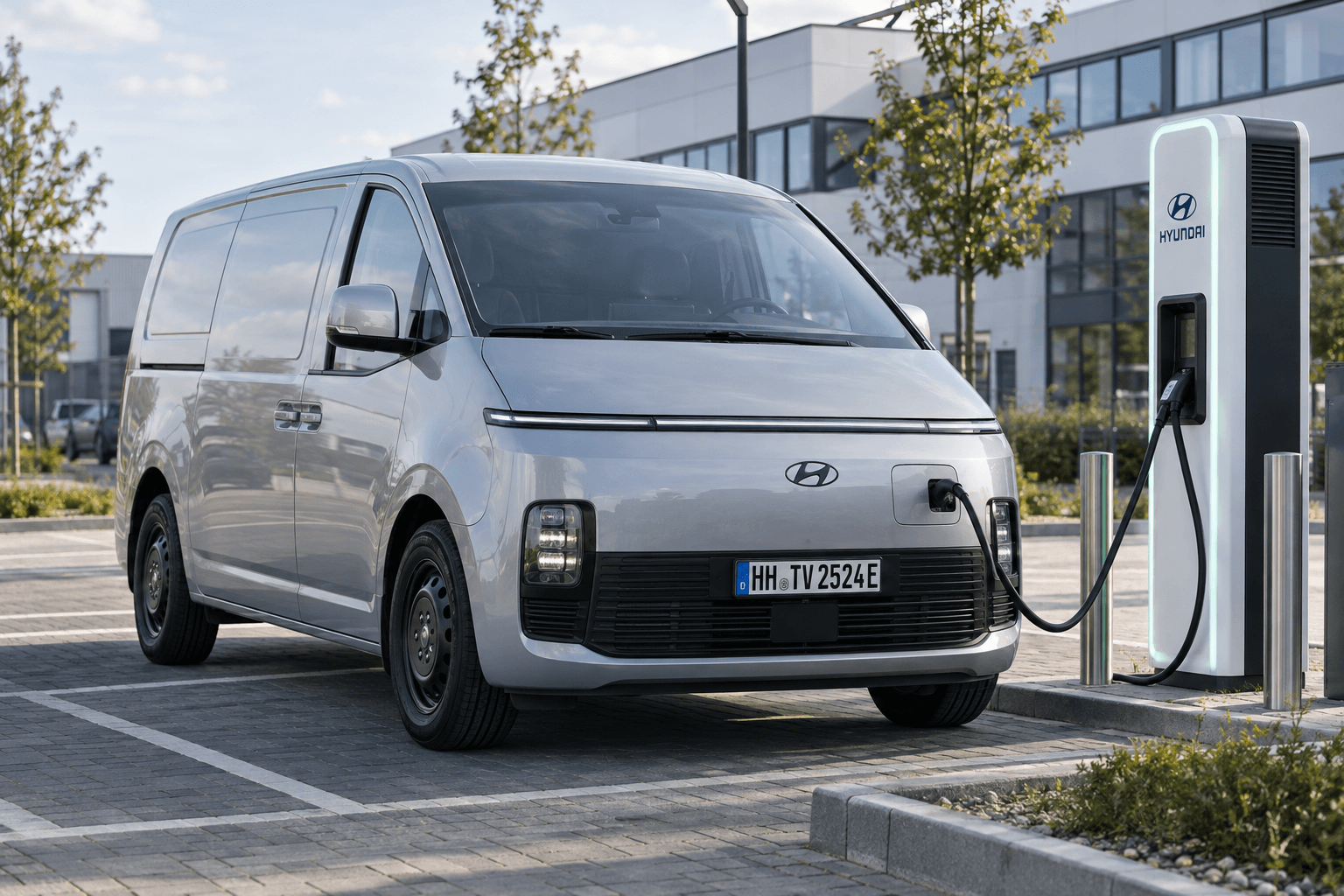
Hyundai is returning to Germany’s light commercial vehicle segment with the all-electric Staria Cargo. The N1-approved van—an EU classification for light commercial vehicles weighing up to 3.5 metric tons—can be ordered from participating Hyundai dealers at a list price of €48,315 before tax. Including German VAT, the price is €57,495.
Prices and ordering options for Austria and Switzerland have not yet been announced. This initially makes the market launch particularly relevant to German companies seeking to operate their fleets with zero local emissions.
800 volts and up to 450 km of WLTP range
The technical platform is remarkably modern for a van. Hyundai combines an 84 kWh battery with an 800-volt architecture, a technology previously associated primarily with high-performance electric cars. Our comparison of 800- and 400-volt systems explains the advantages it offers over conventional 400-volt systems.
WLTP range is up to 450 km, while combined standardized energy consumption is 20.7 kWh per 100 km. Under optimal conditions, the battery is expected to charge from 10% to 80% in 20 minutes at a suitable DC fast-charging station. According to Hyundai, just 15 minutes of charging can add enough energy for up to 280 km.
A short charging break, a major range boost: This is precisely where 800-volt technology can make a noticeable difference in everyday commercial use.
However, the charging power available at each location remains crucial. The maximum charging speed can only be achieved at sufficiently powerful fast-charging stations and with the battery at a suitable temperature. A heat pump and battery heating system are included as standard, helping to stabilize energy consumption and charging performance at low temperatures.
Key specifications of the Staria Cargo Electric
| Specification | Hyundai Staria Cargo Electric |
|---|---|
| Powertrain | Electric motor with 160 kW and 350 Nm |
| Battery | 84 kWh |
| Architecture | 800 volts |
| WLTP range | Up to 450 km |
| DC charging | 10% to 80% in around 20 minutes |
| Standardized energy consumption | 20.7 kWh per 100 km |
| Top speed | 184 km/h |
| Payload | Up to 1,102 kg |
| Towing capacity | Up to 2,000 kg |
| Seats | 3 |
| Cargo capacity | Up to 3 Euro pallets |
| German list price | €48,315 before tax |
More than one metric ton of payload
For tradespeople, service fleets and delivery companies, range and charging time are not the only important factors. The Staria Cargo Electric can carry a payload of up to 1,102 kg and tow trailers weighing up to 2,000 kg. Its cargo area accommodates up to three Euro pallets, while the front offers seating for three people.
Sliding doors on both sides make access easier on narrow streets or construction sites. There is also a low loading sill and a slip-resistant cargo floor. These details may seem unremarkable, but they are often more important than additional comfort features when loading and unloading frequently.
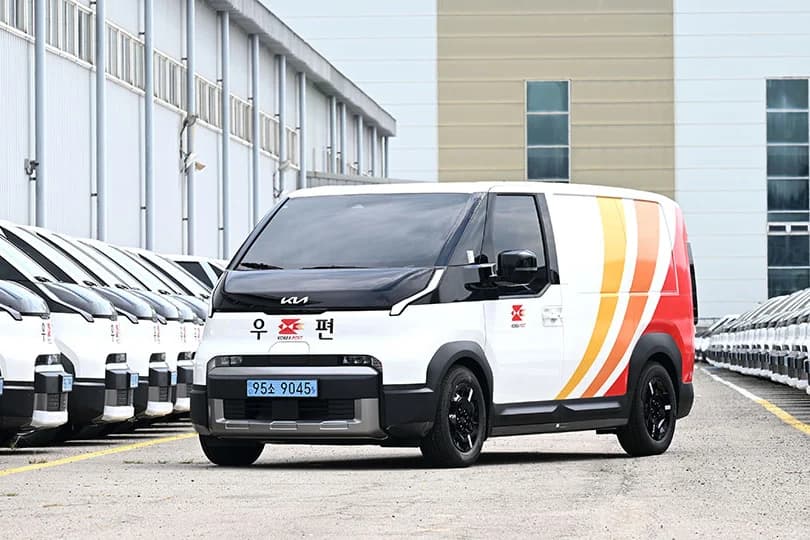
With this combination, Hyundai is positioning the Staria as a serious electric work van. Competition will come from new models including the announced Kia PV7 electric van, expanding the selection in what has so far been a relatively limited vehicle class.
V2L powers tools directly from the vehicle
Vehicle-to-load, or V2L, is available as an option. It allows the high-voltage battery to supply power to external devices such as electric tools, chargers or lighting systems. For mobile jobs, this can eliminate the need for a separate generator or external power supply.
However, V2L is not standard equipment and is instead part of an additional package. It also does not automatically provide the more comprehensive capability to feed electricity back into a building or the power grid. Hyundai and Kia are simultaneously working on more advanced solutions for bidirectional charging and smart charging.
Digital features without compromising commercial capability
The cockpit features a 12.3-inch digital instrument cluster and a touchscreen of the same size. Wireless Apple CarPlay and Android Auto, as well as over-the-air updates, are also standard. Several driver-assistance systems are included, although Hyundai does not provide a detailed breakdown of their exact configuration for each trim level.
In addition to the V2L package, navigation, winter, lighting and tailgate packages are available. Commercial customers can therefore tailor the van more closely to long-distance driving, cold operating regions or frequent loading and unloading.
An appealing electric van for predictable routes
The Staria Cargo Electric combines a high payload with a standardized range suitable for long-distance travel and unusually fast charging technology. It is particularly interesting for businesses with predictable routes and access to high-powered DC charging points or a dedicated depot charger.
The entry price before tax is not low, but for a commercial vehicle it must be considered alongside energy, maintenance and operating costs. Whether the economics work depends heavily on annual mileage, electricity rates, payload and charging infrastructure. From a technical perspective, however, Hyundai has delivered a compelling package that brings fresh competition to the electric van market.