Kia PV5 Cargo enters postal service
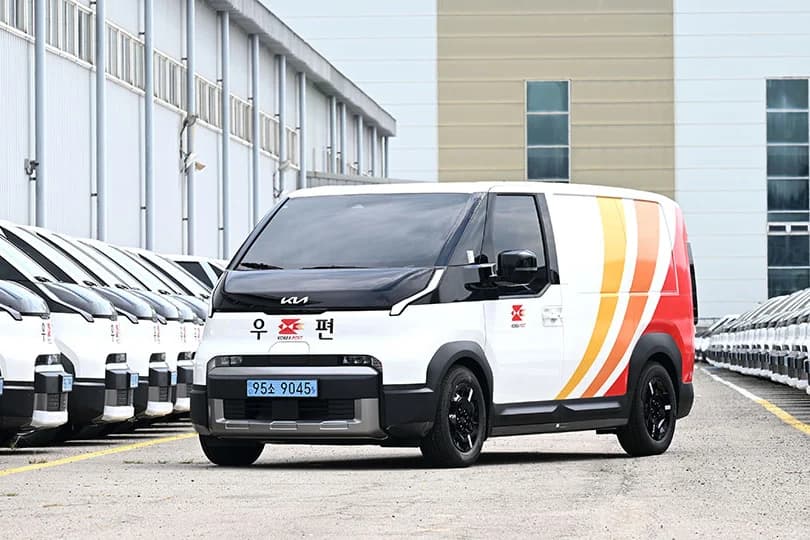
Kia is putting its new electric van straight to work in a demanding fleet application. 200 PV5 Cargo vehicles will be delivered gradually to post offices across South Korea, where they will be used for daily deliveries.
The vehicles were not simply ordered from the catalog. Before making its decision, Korea Post tested the PV5 Cargo in real-world operations for around two months. Between September and November, the vans were deployed at key post offices in all nine of the country’s regional postal administrations.
Real-world trial first, large order second: Kia was able to tailor the PV5 Cargo specifically to postal delivery operations before the fleet rollout.
Low floor reduces strain on delivery workers
The PV5 Cargo is based on the E-GMP.S electric platform, which Kia developed specifically for purpose-built vehicles, or PBVs. These vehicles are designed around clearly defined uses, such as parcel delivery, passenger transport or accessible mobility.
The vehicle’s low floor is particularly important for Korea Post. Delivery workers get in and out frequently during their routes. A lower step-in height can reduce physical strain and speed up workflows.
The cargo area has also been adapted for postal operations. A conversion partner is installing an aluminum floor to create as level a loading surface as possible. An additional protective device is also intended to prevent the doors from being damaged during frequent loading and unloading.
Real-world feedback incorporated into the vehicle
The trial assessed how well the electric van suited typical delivery routes and operational processes. Feedback from employees was then incorporated into the final specification. The package also includes driver-assistance systems tailored to commercial use.
Kia is not merely supplying the vehicles. Training for fleet managers is also planned, along with suitable charging and maintenance solutions. For larger electric fleets in particular, this complete package determines whether the transition, charging schedules and day-to-day vehicle availability work effectively.
The PV5 is the starting point for an entire model family
The PV5 is the first model in Kia’s new PBV family. Passenger and Cargo versions are available initially, with additional body styles set to significantly broaden the range of applications.
| Variant | Intended use |
|---|---|
| Passenger | Passenger transport |
| Cargo | Delivery and postal services |
| Open Bed | Transport with an open cargo bed |
| WAV | Accessible transport for wheelchair users |
| Chassis Cab | Basis for custom body configurations |
Further partnerships with South Korean companies and organizations are expected to follow. These include the energy utility Korea Electric Power Corporation. Kia is therefore positioning the platform not as a single van, but as a flexible, adaptable system for large fleets.
What the order means for Europe
The contract with Korea Post is initially a project for the South Korean market. Nevertheless, it is also relevant to Germany, Austria and Switzerland. Postal services, tradespeople and logistics companies need electric commercial vehicles that can reliably handle short stops, frequent door operation and predictable daily routes.
The PV5 covers the more compact segment. Above it, Kia is expanding its lineup with the larger Kia PV7, which is expected to offer more cargo space and an 800-volt architecture. Our comparison of 800-volt and 400-volt systems explains the advantages this technology offers for fast charging.
For Kia, the order for 200 vehicles is therefore more than a single fleet contract. It provides robust operational experience and demonstrates that the PBV strategy appeals to professional users. This testing would be an important argument in favor of future deployment in European delivery fleets.