Ford Transit City gains more body options
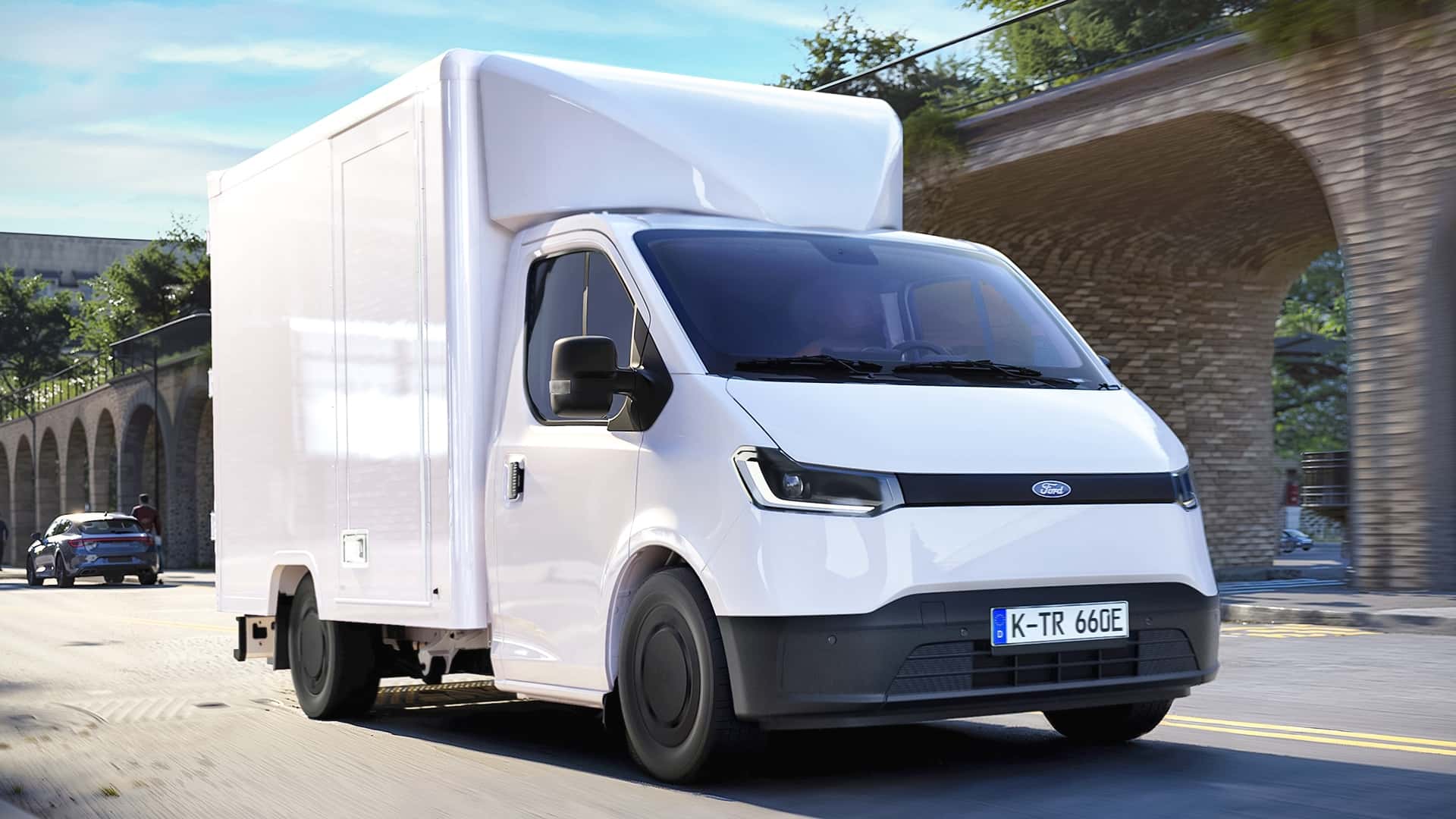
Ford Pro is expanding its range of electric commercial vehicles for tradespeople, delivery services and municipal fleets. The focus is on the compact Ford Transit City, which will no longer be offered solely as a conventional panel van.
Developed for urban driving, the model competes in the 1-tonne payload segment. The panel van is available in two lengths and two heights, while a new chassis also provides the basis for various specialist bodies.
Dropside, box body or shelving system
Several ready-to-use variants will be available directly from the factory or through Transit Centres. These include a box body, a dropside truck and a panel van with a shelving system.
For more specialised requirements, Ford draws on a network of 39 certified body manufacturers. This is crucial for commercial customers, because with a van, the number of available extras matters less than whether the body and interior are tailored precisely to everyday working needs.
| Model | Application | Key update |
|---|---|---|
| Ford Transit City | Urban use, 1-tonne segment | Panel van in several sizes, chassis, dropside, box body and shelving system |
| Ford E-Transit | Larger transport tasks, 2-tonne segment | 96 kWh battery, up to 432 km of range and charging at up to 180 kW |
E-Transit achieves up to 432 km
Ford is also upgrading the larger E-Transit. A new battery option with a capacity of 96 kWh provides up to 432 km of range. That is 115 km more than the version with a 68 kWh battery.
This also makes the electric van more appealing for longer regional routes. More battery capacity → fewer charging interruptions during a shift, although the distance achievable in practice will still depend on the body, payload, weather and driving profile.
At a suitable DC fast-charging station, the E-Transit can charge at up to 180 kW. Charging from 10% to 80% is expected to take 28 minutes. According to Ford, up to 120 km of additional range can be added within ten minutes.
The new battery is available for the panel van and double-cab versions. This positions the E-Transit in a growing segment where, among others, the announced Kia PV7 large electric van is expected to introduce new competition. For specially converted vehicles, the electric motorhome with a 128 kWh battery also demonstrates the potential that large batteries offer for heavy body configurations.
DHL fleet set to continue growing
Ford is also expanding its partnership with DHL. More than 5,000 fully electric Ford Pro vehicles are already operating for the logistics provider in Germany. Further E-Transit models are to join the fleet by the end of 2027.
Electric vans are particularly well suited to parcel delivery, with its predictable routes and regular returns to the depot. Vehicles can be charged there overnight or during longer periods of downtime, without drivers having to schedule additional charging stops.
Vehicle data intended to detect failures earlier
Alongside the vehicles, Ford Pro is introducing new paid services for fleet operators. Ford Uptime Services and Ford Uptime Insights analyse vehicle data to identify technical risks, where possible, before they cause unplanned downtime.
Ford Uptime Services includes direct support from service staff. They can coordinate repair appointments and arrange for the required replacement parts to be available through the network of more than 200 Transit Centres. Fleet operators also receive weekly summaries.
Ford Uptime Insights is aimed more specifically at companies with their own fleet management operations. The service provides daily reports and risk assessments for individual vehicles. For smaller fleets, there is also a model in which regional dealers handle the monitoring.
Ford says proactive monitoring can reduce downtime by up to 50%.
The approach is particularly relevant for commercial vehicles because an unplanned workshop visit does not only result in repair costs. It often also leads to cancelled routes and jobs, as well as lost working time. The combination of more versatile body options, greater range and data-based maintenance therefore addresses several key cost factors in commercial operation.