BMW’s range strategy pays off with the iX3
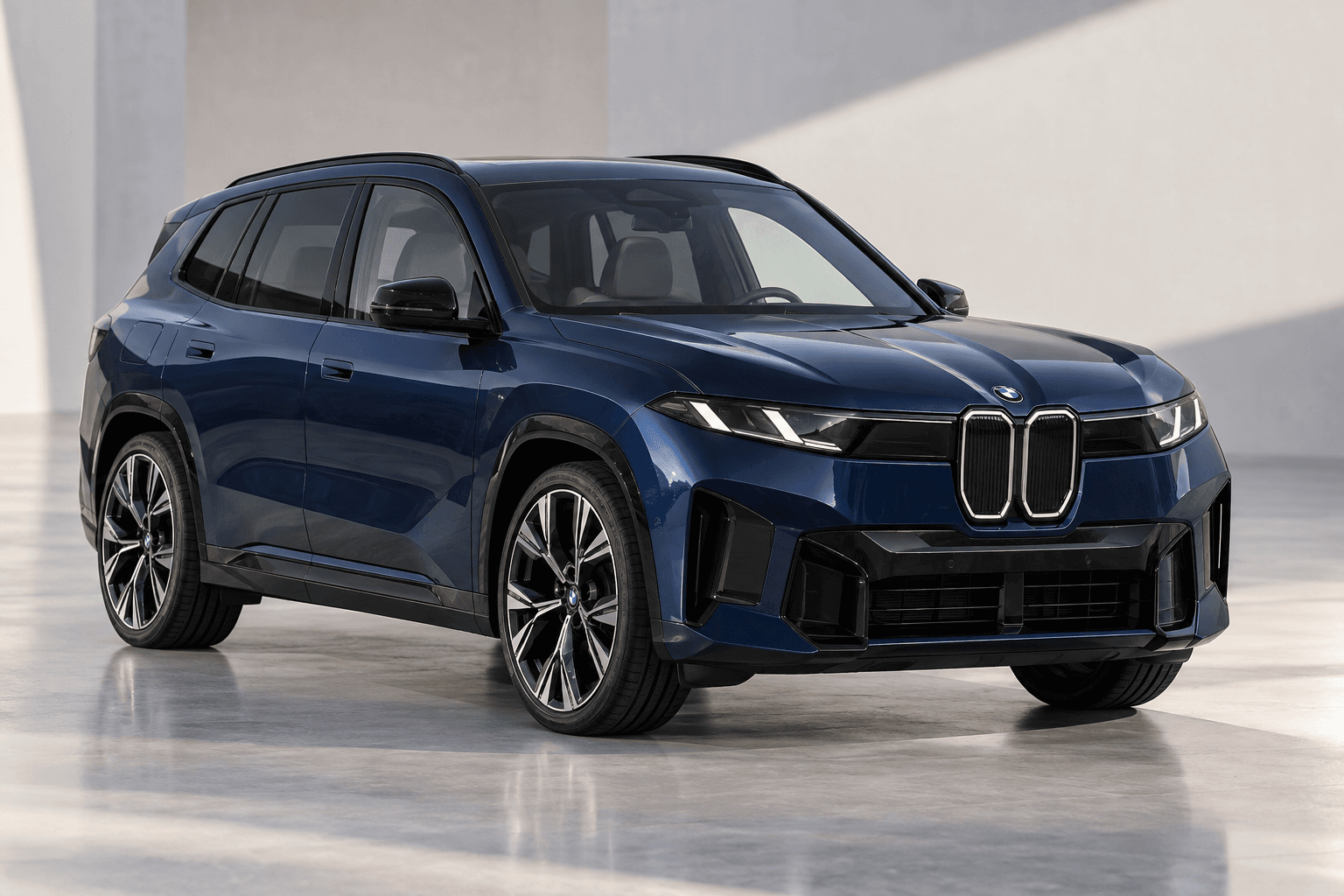
With Neue Klasse, BMW’s next-generation electric vehicle platform, the company has comprehensively revamped its EV technology. With the iX3, the manufacturer is focusing not only on short charging stops but above all on long range enabled by a correspondingly large battery.
This strategy appears to be working in the premium segment. The electric iX3 is regarded as the most successful model launch in BMW’s history to date and already accounts for a significant share of the X3 lineup.
A large battery, long range, and fast charging give the iX3 an overall package that is apparently winning over many traditional SUV buyers.
Key BMW iX3 figures
| Metric | Figure |
|---|---|
| Orders in the first year | more than 100,000 |
| Electric share of X3 sales | around 50% |
| Starting price in Germany | more than €67,000 |
| Version offering up to 805 km WLTP | from €74,400 |
| Maximum DC charging power | up to 400 kW |
It is important to distinguish between orders and actual deliveries. Even so, the figures show that interest is not confined to a small group of particularly tech-savvy buyers.
Why the large battery matters despite 400 kW charging
High charging power alone does not solve every range-related issue. Buyers of an electric car in this price bracket often expect to cover long distances with few interruptions and want as much flexibility as possible when planning routes.
This is precisely where the combination of an 800-volt system, a large battery, and charging power of up to 400 kW demonstrates its strengths. Long range reduces the number of stops, while fast charging shortens the remaining breaks. Our comparison of 800-volt and 400-volt electric car architectures explains the key technical differences.
The stated 805 km is a WLTP figure and should therefore not be equated with guaranteed highway range. Speed, outside temperature, wheels, and heating all have a significant impact on energy consumption. The latest highway energy-consumption test featuring the BMW iX3 also assesses how competitive the BMW is under realistic conditions.
A new cockpit instead of a conventional driver display
The success is unlikely to be attributable solely to the battery and charging power. BMW has also fundamentally redesigned the interior, replacing the conventional instrument cluster behind the steering wheel with a panoramic display at the base of the windshield.
This moves important information closer to the driver’s natural line of sight. In addition to speed and navigation, the system can show other individually selectable content without permanently filling the central touchscreen with driving data.
The new BMW i3 will be the next test
Following the SUV, Neue Klasse is also expected to demonstrate its range capabilities in sedan form. The forthcoming i3 has the potential to surpass the iX3 in efficiency and range because its lower body offers aerodynamic advantages.
Technically, this model has little in common with the earlier electric subcompact of the same name. The Neue Klasse-based BMW i3 LWB provides an initial impression of the platform, cockpit, and range ambitions.
Chinese prices are not directly comparable with German prices
The market launch in China also appears to have been successful. Converted into euros, some of the prices quoted there are considerably lower than in Germany, but they cannot be compared directly.
Local production, taxes, equipment, vehicle versions, and intense price competition in the Chinese market all have a significant impact on pricing. For buyers in Germany, Austria, and Switzerland, the key question is therefore whether BMW can justify its current price level over the long term through range, software, and charging performance.
Assessment: Premium customers accept large batteries
The iX3 demonstrates that long range remains a strong selling point in the premium segment. Efficiency is still important, but many buyers do not want to have to choose between a small battery and more frequent charging stops.
BMW therefore combines both: a large energy reserve for long journeys and high charging power for quick stops along the way. The strong order intake suggests that this approach is closer to many customers’ expectations than a concept rigorously optimized around the smallest possible battery.