Geely plans solid-state battery pilot from 2027
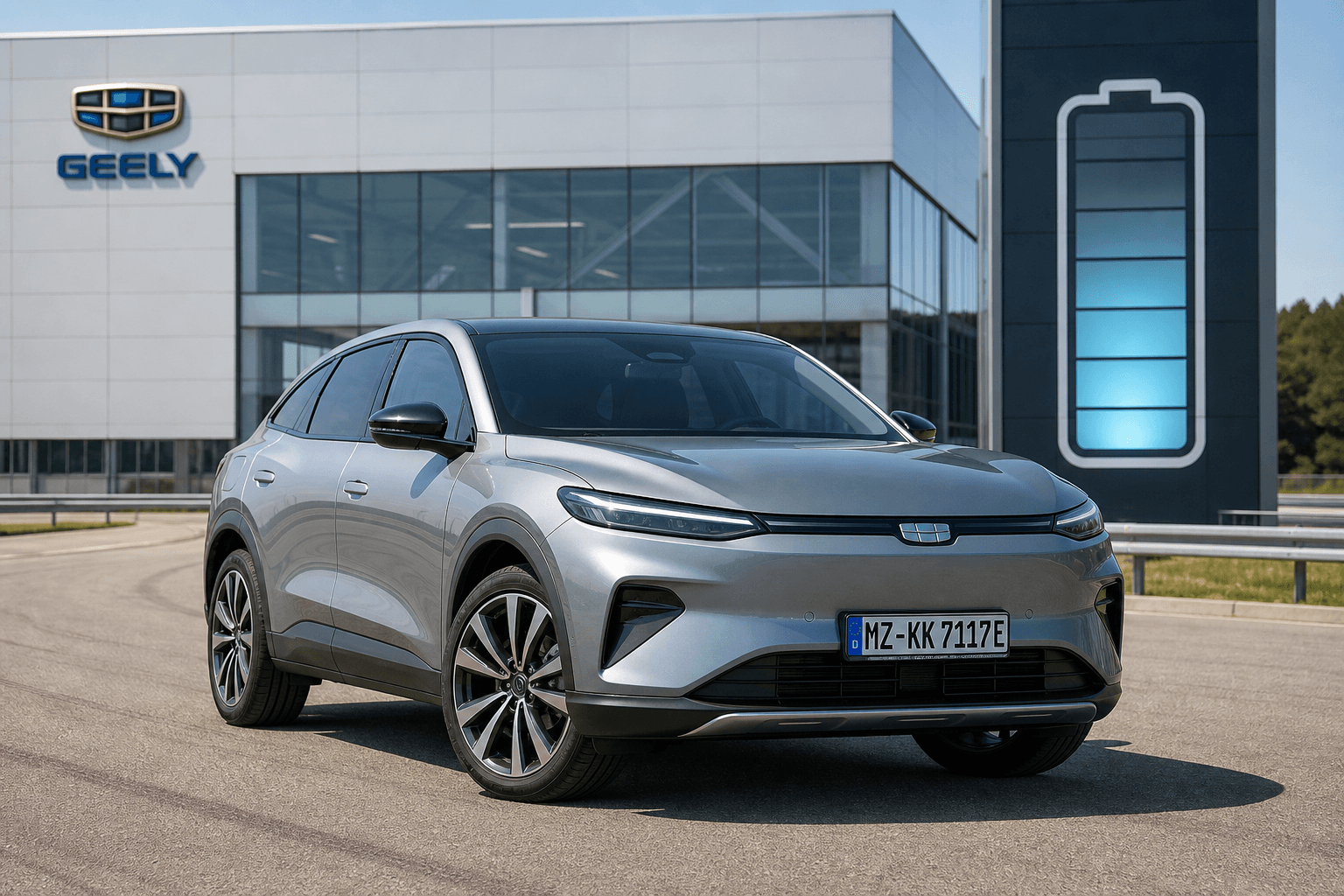
Geely is bringing momentum to solid-state batteries and has announced a concrete milestone: From 2027, the first vehicles in the group’s portfolio are set to be tested with solid-state batteries as part of a pilot program. Validation under real-world conditions, rather than only in the laboratory, is already underway in parallel.
For context, a pilot program is not yet mass production. It is the stage at which manufacturers assess whether the technology works reliably in everyday use, production, and servicing, and whether it can be scaled up economically.
Up to 500 Wh/kg, but no firm details
Geely is targeting an energy density of up to 500 Wh/kg for the highest-performance version of its solid-state batteries. According to reports, this figure refers to the battery pack level, rather than merely to individual cells. That would be a highly ambitious figure, as pack-level measurements typically include the weight and volume of the housing, cooling system, structural components, and safety equipment.
For comparison within the group, the first generation of a mass-produced Zeekr battery is reported to have an energy density of around 128 Wh/kg at pack level. This illustrates how large the gap remains between today’s production battery packs and the stated solid-state targets.
What a range of 1,000 km could mean—and what it might not
Geely associates its solid-state technology with ranges of more than 1,000 km per charge. That sounds comparable to a diesel vehicle, but it is difficult to assess without knowing the test cycle. Without information on the vehicle class, aerodynamics, speed, and measurement method, it remains unclear whether this is an optimistic laboratory figure or a realistic real-world value.
Ultimately, everyday usability depends on the overall system: Energy density is only one factor. The charging window, cell temperature management, usable capacity, degradation, and, of course, the fast-charging network are equally important. If range is a general concern for you, our guide to EV range anxiety can help put it into perspective.
Which brands could benefit: Volvo, Polestar, Smart, and more
Geely Holding encompasses many well-known brands, including Geely, Zeekr, Lynk & Co, Volvo, Polestar, Lotus, and Smart. It is not yet known which models will receive solid-state batteries first. A pilot could make particular sense for premium-focused platforms, where higher battery costs are easier to accommodate.
With that in mind, it is worth looking at Geely-affiliated electric models already on the market, such as the Polestar 2 and Polestar 4, although these currently still use conventional lithium-ion batteries.
Materials: Temperature stability from -40 to +120°C
According to the report, Geely is working with US chemical company Dow on materials development. This includes an adhesive for solid-state cells designed to remain stable across a broad temperature range of -40 to +120°C.
This is more than a minor detail, because the interaction between material layers, contact surfaces, and mechanical stability is crucial in solid-state cells. Temperature fluctuations, vibrations, and aging are precisely the issues that a vehicle pilot program will expose without mercy.
2027 as a pilot year for BYD and CATL as well
Geely is not alone in pursuing this timeline. Other industry heavyweights have also identified 2027 as the year for initial pilot applications: BYD plans to demonstrate solid-state batteries in prototype vehicles from 2027 and, according to media reports, is considering small-scale production using a dual-solid-electrolyte system. BYD had already confirmed in 2025 that it had produced its first solid-state cells, although broad commercialization is not expected until closer to the end of the decade. We also have a dedicated overview: BYD plans solid-state batteries from 2027.
CATL is also working on the technology and is targeting pilot production from 2027, but it is tempering expectations. The current level of maturity is still described as requiring substantial improvement, which helps explain why mass-market adoption will probably take longer.
Increasingly, 2027 looks like the year when solid-state batteries will be tested in the first vehicle fleets—not necessarily the starting signal for mass production.
What this means for Tesla and the market
For Tesla and other manufacturers, this does not initially create immediate competitive pressure in the mass market as long as production remains limited to pilots and small volumes. At the same time, the timeline shows that several groups are seriously advancing solid-state batteries toward vehicle testing, which could influence the industry’s technological direction over the medium term.
Until solid-state batteries arrive at scale, high charging rates, efficient powertrains, and 800-volt architectures will remain the practical levers for improvement. If you want to understand where 800 volts delivers genuine benefits today, our 800V vs. 400V comparison provides a useful foundation.